Category: Uncategorized

  • The Start

    A busy month has passed since my last entry and I am super stoked to be back in the shop this week for our fall session.

    On Monday we welcomed a small group of new students to the school, and returning students John and Alberto to the Composing and Upward Spiral programs. It’s wonderful to have you both back.

    Thursday signalled the start of something new for me. In the morning I finished weaving the seat of my chair, marking the end of a year and a half of going deep into Vidar’s chair, building another immediately after completing my first one and guiding another student through the process. I felt a great sense of accomplishment to have reached this point, tired and happy.

    Then I jumped into my first round of individual consults with the students following the afternoon lecture, which I shall be doing once a week this session. My excitement for this work rose up quickly as I talked to our new students about spokeshaves, my most used and loved tool for this last period of chairmaking. I loved feeling their shared excitement as they got to know their tools, shaping their Gumby legs to gleaming sheared surfaces.

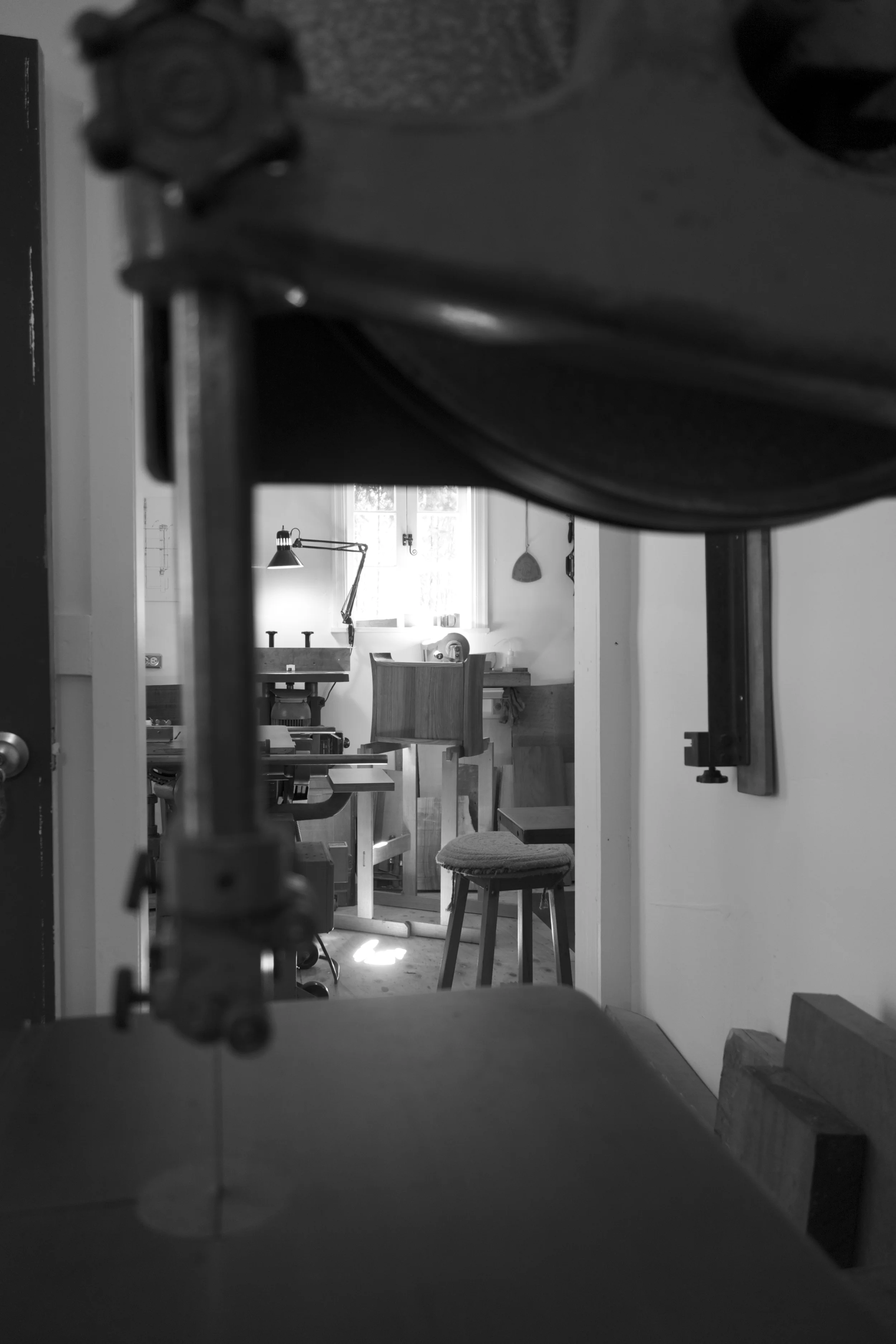
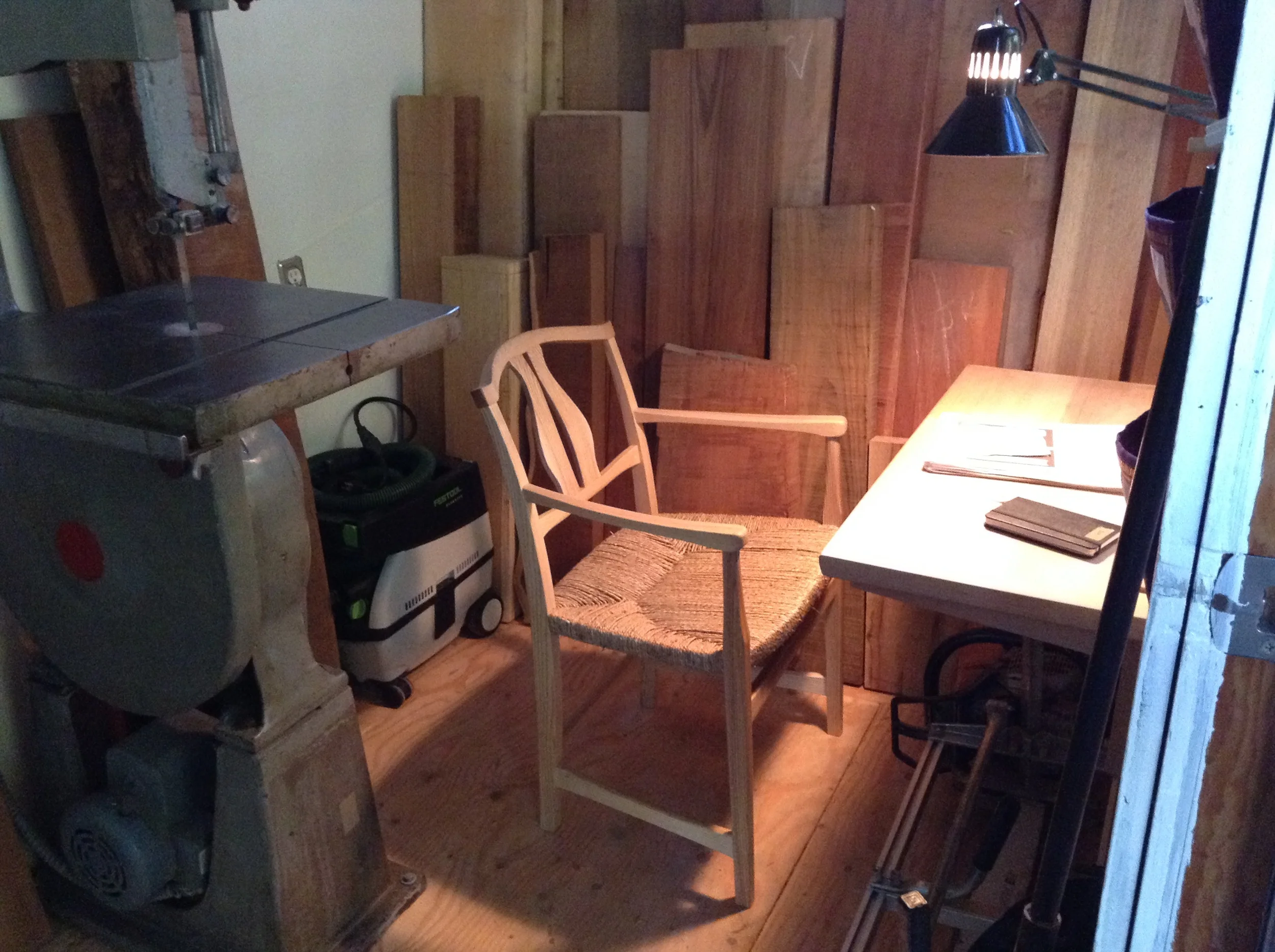
    After cleanup, I delivered my chair on foot to Robert’s shop at home, just 300 metres up the road from the school. It gave me great joy to set it down at Robert’s red cedar writing desk, knowing it will live next to JK’s bandsaw, surrounded by planks of precious wood that have been with my teacher for many years.
     Shop Chair

    Robert and I then sat down for some tea. Sometime during our discussion of my next project, Robert had an idea, went into his shop and came out with an incredible plank of European boxwood. The wood is hard and heavy, butter yellow, with the smoothest finest grain. Then Robert handed me one of JK’s planes and plane hammer and I took a couple of shavings.
  • Living Simply

     collecting rainwater
    collecting rainwater

    “I live in a beautiful place. I work at something I love, I make enough money to live, and my demands on the world’s resources are very meagre. What’s so unusual about this idyllic circumstance is that there is plenty of room for more to join.” – John Brown

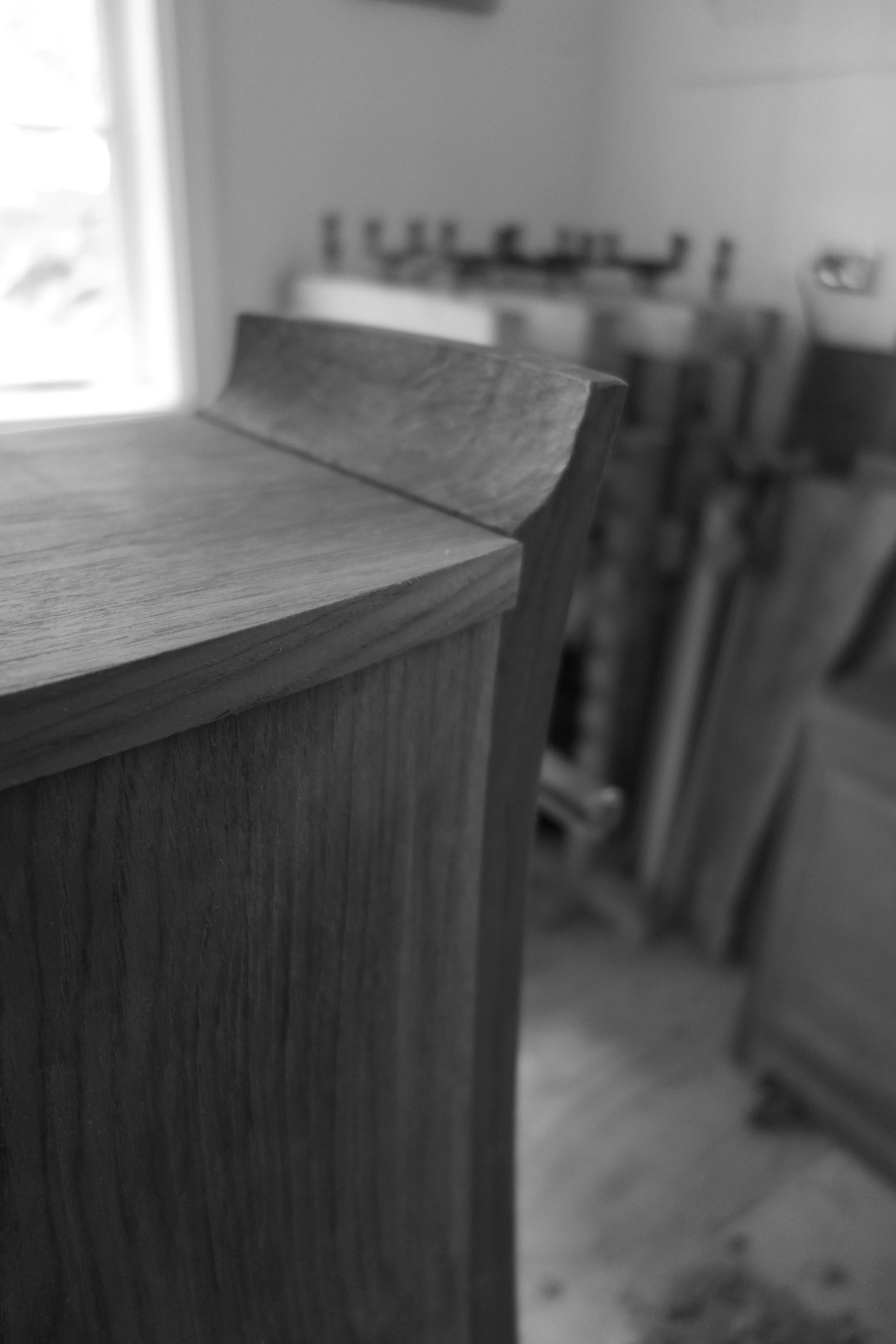
    This is one of my favourite quotes by one of my favourite authors, one I write on the board, at the beginning of each of our sessions, as I really do feel it best conveys what our little school is all about, or perhaps at very least, my hopes for our students. With the doors for my cabinet roughly shaped, and the rest of my stock resawn and resting, I set my work in the shop, and my writing aside and turned my attention to home preparations for the fall.

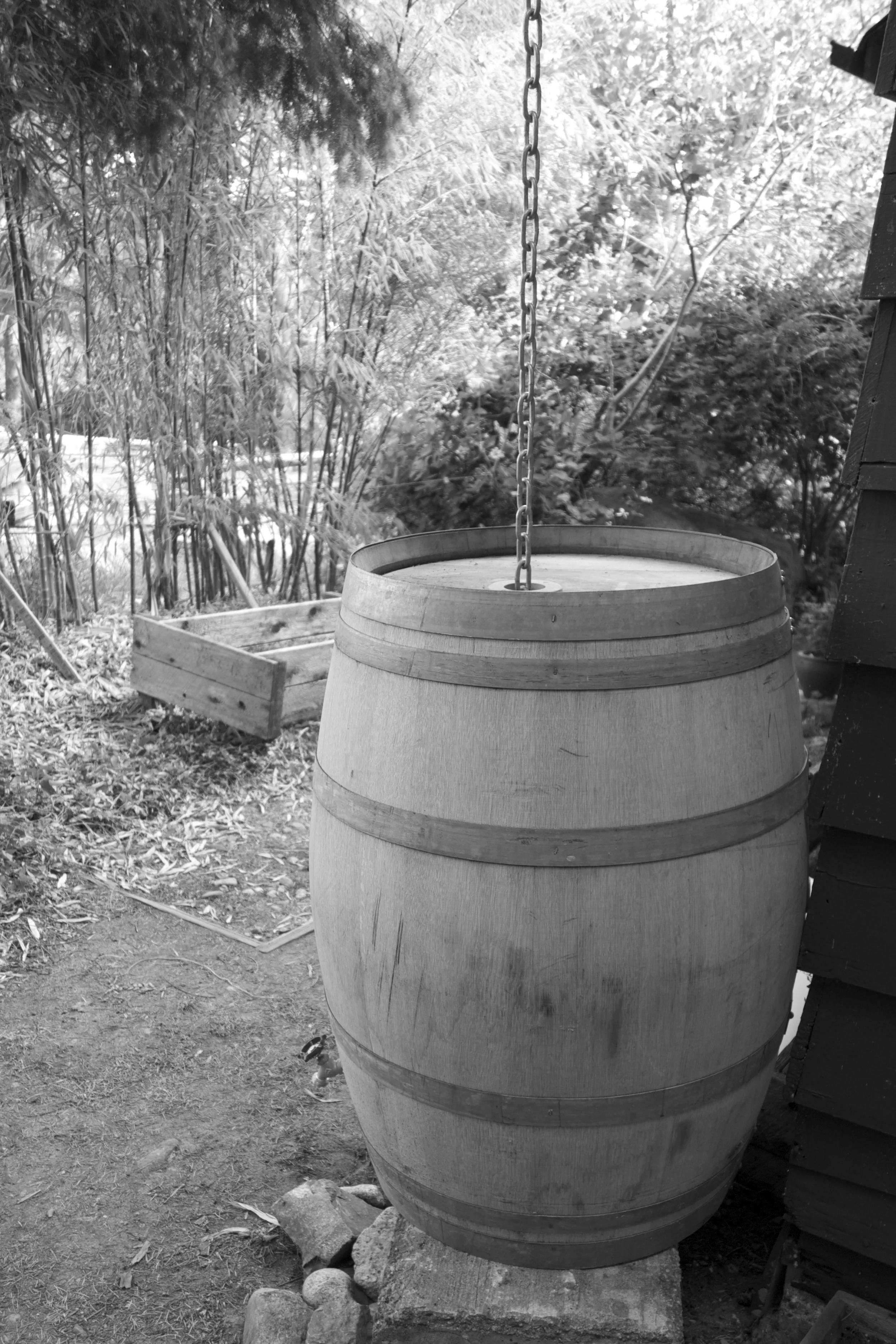
    A few weeks back, when Caroline and I were on the wood run, we picked up a couple of oak wine barrels. This past week, Yvonne and I converted two of them into rain barrels for our home. We have always collected rain water using old buckets and containers, but this gives us more capacity and a simpler solution to changing buckets during the rainy season. We will eventually add two more at the front of our home. 

    Today, I steered our old 1987 Volkswagen Westfalia out of the shed, and down to the road. It was with a heavy heart, that I put out the For Sale sign. It was two years ago this past May when after doing significant restoration work on it, the transmission went. At the time, having invested significant time and money, we made the decision, to lessen our carbon footprint further, and see if we could survive a year without a vehicle. 

    We live just a few hundred meters from the school, and the Sunshine Coast has a wonderful public transportation system. Even when I travel to teach, I can pick up a bus across the street from the school in Roberts Creek and arrive at the International Airport in Vancouver in about the same time as it would take to drive. I use the bus to pick up our groceries and other necessities. We use a wheel barrow to move offcuts and heavier items to and from the school. We shop locally, and we were delighted to learn that many of our suppliers deliver for a modest fee. We are able to rent a truck locally to go on wood runs. Meanwhile, two years later, It was easier than we thought, and while I am not naive enough to think that it is for everyone, it fits our lifestyle. 

    Tomorrow, with the shed nearly empty, we will begin to haul and stack the wood that will keep our little cottage warm in the coming months. As we stack our wood, it is my hope, that John Brown will be smiling upon us.
    Be well and enjoy your work,
    Robert


  • Robert Whelan – Edmonton Alberta

    Inside Passage and Roberts Creek has been a life changing experience. A place where I have built dear friendships, beautiful memories and special moments. It is hard to pick just a few to write about. It is not only about becoming sensitive to this craft. It is not only about making your work better. It has fundamentally been about making yourself better. You have to open yourself up to it; let yourself be surrounded by it. It has been about soft spoken memories and kindred spirits of a Scandinavian woodworker and his student who both wanted to let people know that it is possible. That it is possible to to take this passage and be changed forever. 

  • Sticks & Stones

     curves in transition
    curves in transition

    I felt a bit disjointed in my work, this week. Perhaps it was just a bit of a change in what has come to be my cherished summer routine. This has been a special time for me. I feel more connected to my work than I have for quite some time. 

    In the beginning of the week, Caroline and I ended up doing a last minute wood run to the lower mainland. It is always wonderful to see young craftsman so enthusiastic for our chosen material. Looking under everything, in corners, climbing all over the piles, looking for surprises or possibilities. We returned with a few precious sticks of wood, most of them harvested within a hundred and fifty kilometres of the school.

    With the stock for my drawer pocket settling, I returned to the shaping of my doors. The teak has moved quite a bit since it was first cut, the curves had sagged a bit and I had to work hard to get every bit of the pinch I had intended. I laid out the inside curves and something didn’t look right. I adjusted my lines, stepped back and looked again. That was better. I went out to have another look after dinner and they are just fine. Funny how ones perspective changes when you get away from something for a while. 

    The teak is wonderful to work, however even with a couple of planes and spokeshaves on the go, it was giving my stones a workout. Be well and enjoy your work, I know I am.

  • Eastern Influence

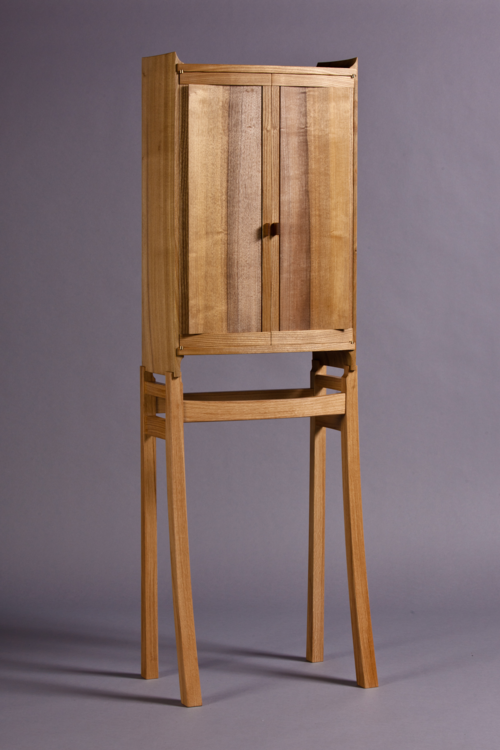
     'Buddha'
    ‘Buddha’

    I spent a couple of days at the school, preparing for the fall term, then returned to my little shop to continue with my work, and to write. I set aside the chairs I had been working on. This was familiar work, and can be done in the mornings before I teach this fall. 

    One of my students had asked me to bring out the little ‘Buddha’ cabinet I had started a while back and had set aside, because the next stage would require more focus and regular shop time. When I was preparing my shop for our end of session elephant, I sat with it a while and decided that now might be a good time to return to it. It is good to have curious students.

    I had the carcass and the doors, but it took me a day or so to find the rest of the wood, and hardware. As I began to look at each of the pieces, I realized that there had been some significant movement, most notably the bottom which had cupped nearly 6mm. My tolerances were pretty tight with the doors, and after thinking on it, I decided to replace the bottom. I looked through my stock and found one nearly as good as the first. 

    This week, I mocked up the interior. As the cabinet is quite low, I had initially intended to have three drawers across the top, in the end I opted for one, with open sides. I resawed the stock for the partitions, drawer and frame and panel back. The partitions would be teak, consistent with the carcass, as would the rear frame. The panels and drawers of Lebanese cedar. The drawer front, a small piece of yakka, I have had with me for many years. After allowing the pieces for the partition to rest a few days I jointed and thickness planed each of the pieces closer to their final dimension. The replacement bottom, I was able to joint, but the planer head on JK’s old machine wasn’t wide enough to thickness it. I have access to one just down the road, but I would have it done in the time it would take me to walk down to the school,  so I would do it by hand. 

    When I came in the shop this morning, ready to mill the stock to final dimension I realized, it had moved again. They were flat the day before, and had been stored carefully. I have told my students before, that we are dancing with a living material, but were not always leading. I decided that my tolerances were too tight, even for Jim’s fine old machines. I would leave them another day or so and do them by hand, an exercise, I have my students do regularly, ensuring them that it is something that they will need to do from time to time. Teak is wonderful to work, but it is tough on edges. I would need to sharpen often. I brought down a couple of Jim’s old planes, and one I had made from a piece of mesquite and an iron, he had left for me, and tomorrow will began to make shavings. 

    Be well and enjoy your work,
    Robert


  • Welcome to my Journal

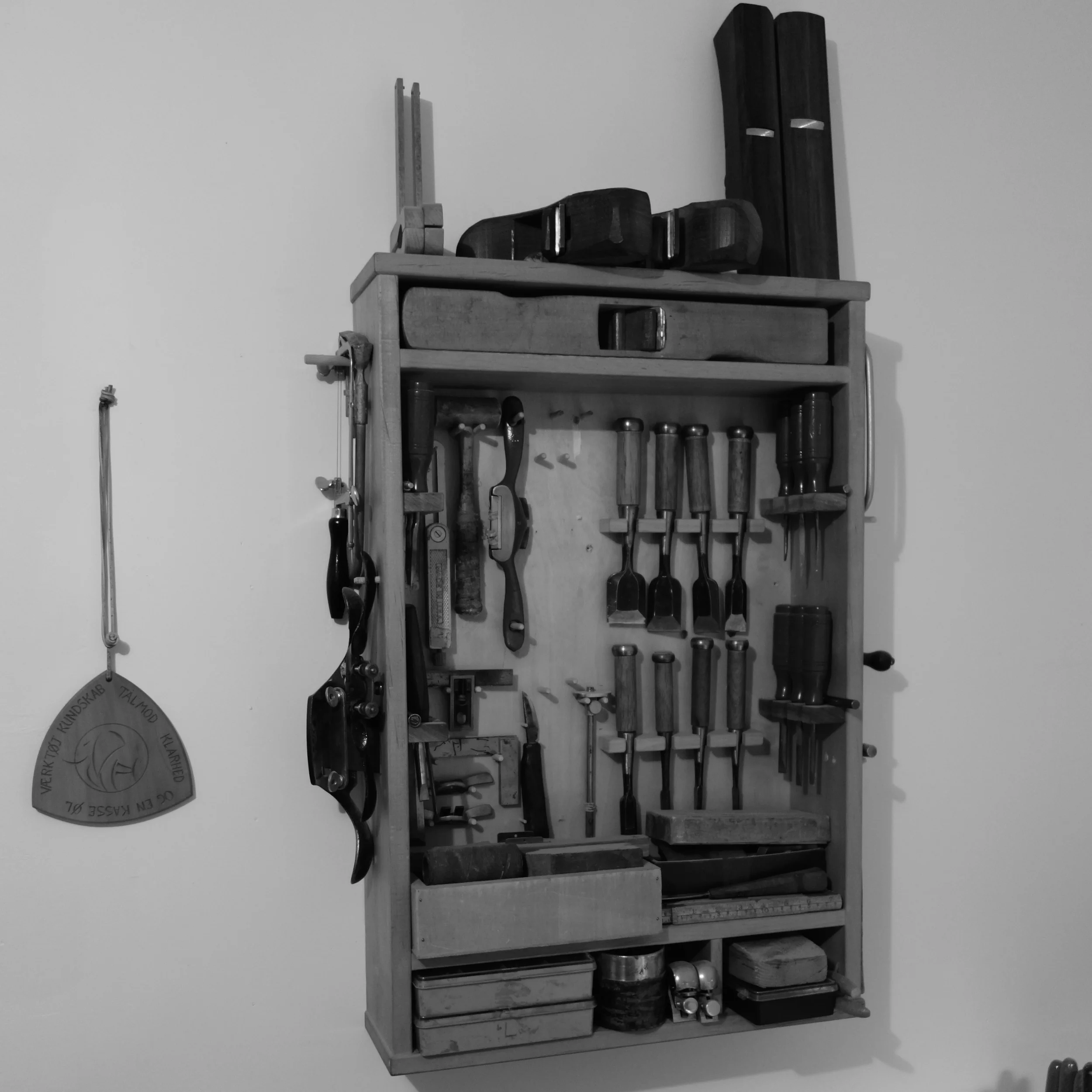
     JK's hand tools
    JK’s hand tools

    Welcome to our new website. I would like to take this opportunity to thank Craig Johnson for his support and guidance through the process. Craig is a fine craftsman and an even finer person, we are very grateful for his ongoing involvement with the school. It has been a pleasure to watch him develop as a student, an gifted craftsman and we look forward to him taking on a teaching role at the school.

    At the school, we are nearing the completion of our summer session of the Impractical Cabinetmaker Program. We have been very fortunate to have yet another group of beautiful people originating from five continents. In a few days we will hold our final Elephants at our home where our students will have the opportunity to see what I have been up to in my shop, including Jim’s original hand tools and machines. They will also have the opportunity to experience one of his cabinets, while we listen to one of his farewell addresses he delivered to our students a few years back. While it there will be difficult goodbyes to say, I am very much looking forward to some time in my shop and the opportunity to work on my book. After having been set aside for several years, Heart Hand & Eye is scheduled for publication in the fall of 2015.

    Yvonne and I have settled on the dates for our tenth annual Student Alumni & Faculty Exhibition, which will take place on May 2, 2015 at the Roberts Creek Community Hall. We would like to take this opportunity to invite our alumni, friends and family to join us for a retrospective of work past and present. A welcome Elephant will take place at the school Friday night, with a Alumni Brunch at the Gumboot Cafe on Sunday morning following the exhibition. Please stay tuned for more details. 

    Since completing her second year of study, Caroline Woon has stayed on for a residency, and has moved into a teaching assistant role at the school. Yvonne and I are very grateful to have this fine young craftsman and person join us at the school.

    I would like to thank all our students, past and present. This school not only exists for you, but because of you. I would also like to thank Yvonne, my partner in life and work. None of this would be possible without all your years of loving support.

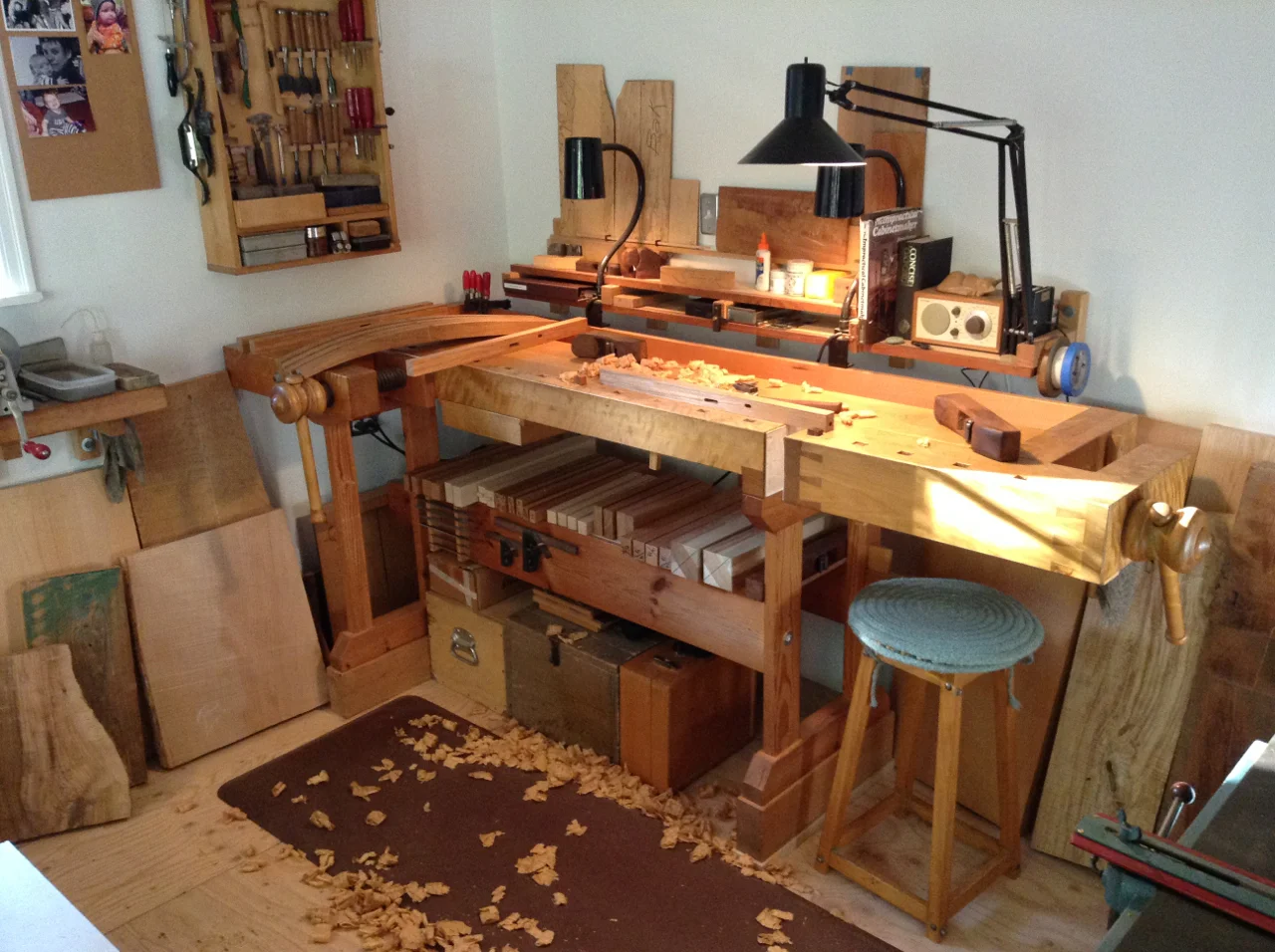
    This journal will focus on my current shop work and reflections on teaching. The image above was taken in my shop this morning. You will notice that there are a few tools missing. That is because they were at my bench in use. My next entry will focus on what I have been up to in my shop. 

    Be well and enjoy your work,
    Robert

  • 2015-09-05 Student Alumni & Faculty Exhibition

    Student Alumni & Faculty Exhibition


    Saturday, May 2, 2015
    6-9pm
    Inside Passage School
    of Fine Cabinetmaking

    Join us as we celebrate our tenth year of providing craft education for the aspiring amateur

    Welcome Elephant

    Friday, May 1, 2015, 5pm
    IPSFC

    Alumni Brunch

    Sunday, May 3, 2015, 11am
    IPSFC

  • Welcome to Caroline’s Journal

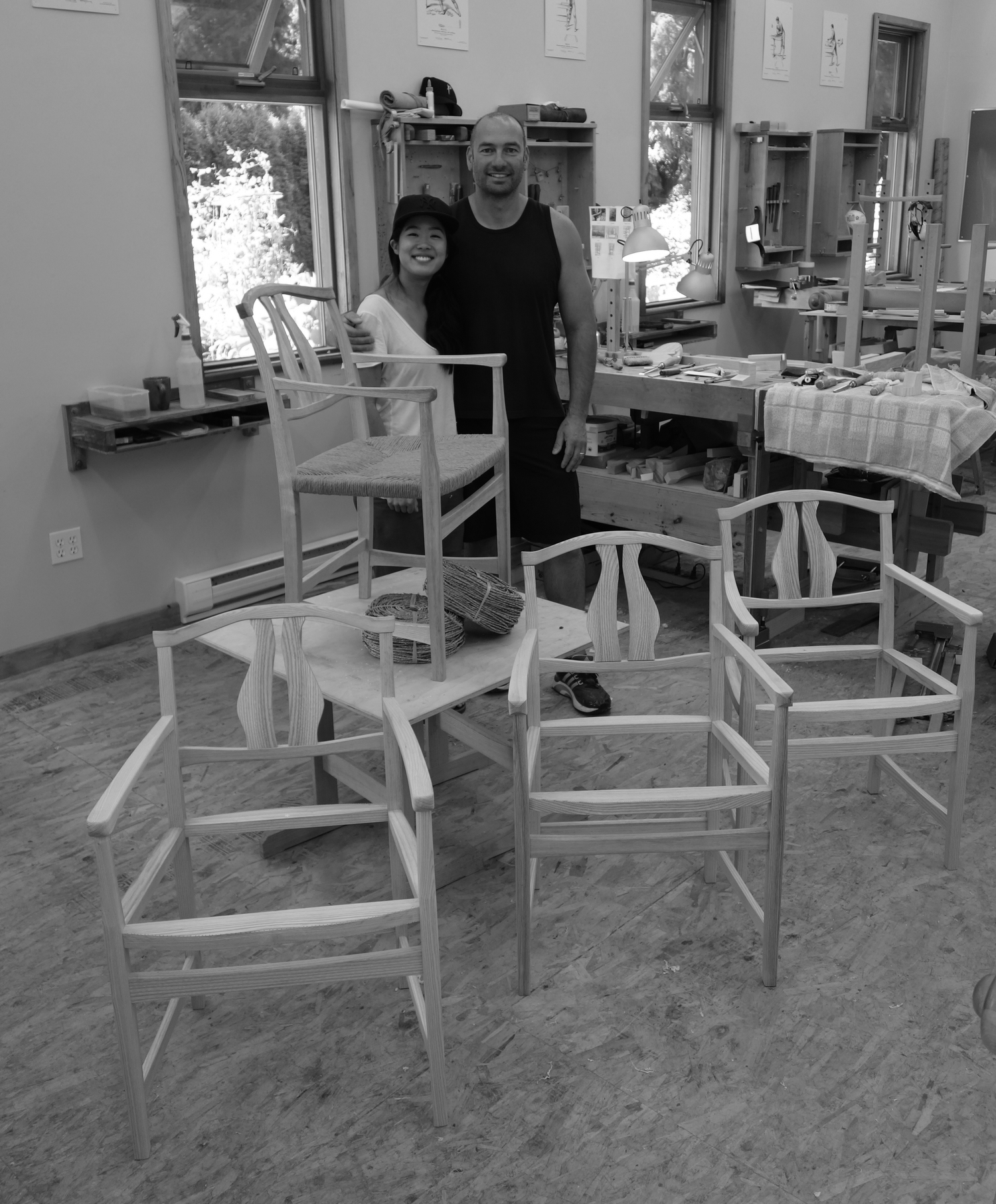
     Nondas and I with our chairs nearing completion
    Nondas and I with our chairs nearing completion

    Hello and welcome to my journal. I am honoured and excited to have this space to share with you a look into our work and life at the school.

    For the last ten weeks I have been assisting in the Vidar’s Chair program, working alongside Nondas as he builds a set of two. Soon his chairs will be travelling across the country to Nondas and Melissa’s new home in Maine, to find their place at the dining table. 

    Here we are in the final stages of fitting and shaping of arms and back splats, looking forward to our final assemblies.

    It has been a most enjoyable shared learning and teaching experience for me and I am grateful to have crossed paths with this fellow woodworker. Nondas, your unfailing kindness and amazing energy will be missed in the shop. 

     Robert and Nondas looking for chair parts
    Robert and Nondas looking for chair parts

    As I complete my second build of this chair in the next few days, I will be reflecting more on this summer session, a very significant one for me as a craftsman and in my life here in the Creek. For now I give deepest thanks to Robert and Yvonne for creating this warm and beautiful place, where I come to enjoy my work.

  • Summer 2014

    Resident Craftsman & Teacher

    Robert Van Norman – Canada

    Admissions & Student Services

    Yvonne Van Norman – Canada

    Teaching Assistant

    Caroline Woon – Singapore

    Relief Teacher

    Gary Kent – Canada


    Vidar’s Chair

    Nondas Iacovou – Cyprus 

    Impractical Studies

    Marchand Van Rooyen  – South Africa
    Jose Alberto Perez Gonzalez  – Spain
    Fei Shi – China
    Vanessa Cruse – New Zealand
    Eli Mara – Canada
    Robert Whelan – Canada

  • May 2, 2014

    It has been a year since we changed the format of our program, enabling our students to take our Impractical Cabinetmaker program a session at a time. Our Impractical Studies program, a foundation in the teachings of James Krenov, maybe taken a week at a time or as a complete ten-week program, and is a prerequisite to each of the other three ten-week programs. The Upward Spiral program is an exploration of the solid wood construction of an established piece, and serves as a prerequisite to our Composing program, where students have the opportunity to compose a piece from a plank to a cabinet under the guidance of the Resident Craftsman and Teacher, further exploring the many subtleties of our craft including the use of shop sawn veneer, curves and glass. Vidar’s Chair program is a comprehensive lesson in grain graphics, increasingly complex joinery and shaping. This fine chair, originally made in Jim’s little basement shop in Bromma Sweden, in 1970 by his dear friend Vidar Malmsten. At the same time as we changed the format of our program, we reduced our class size by over forty percent. In just three weeks we will begin our tenth year of offering craft education for the aspiring amateur in a supportive and creative environment located in the quaint seaside community of Robert’s Creek on the beautiful Sunshine Coast of British Columbia.

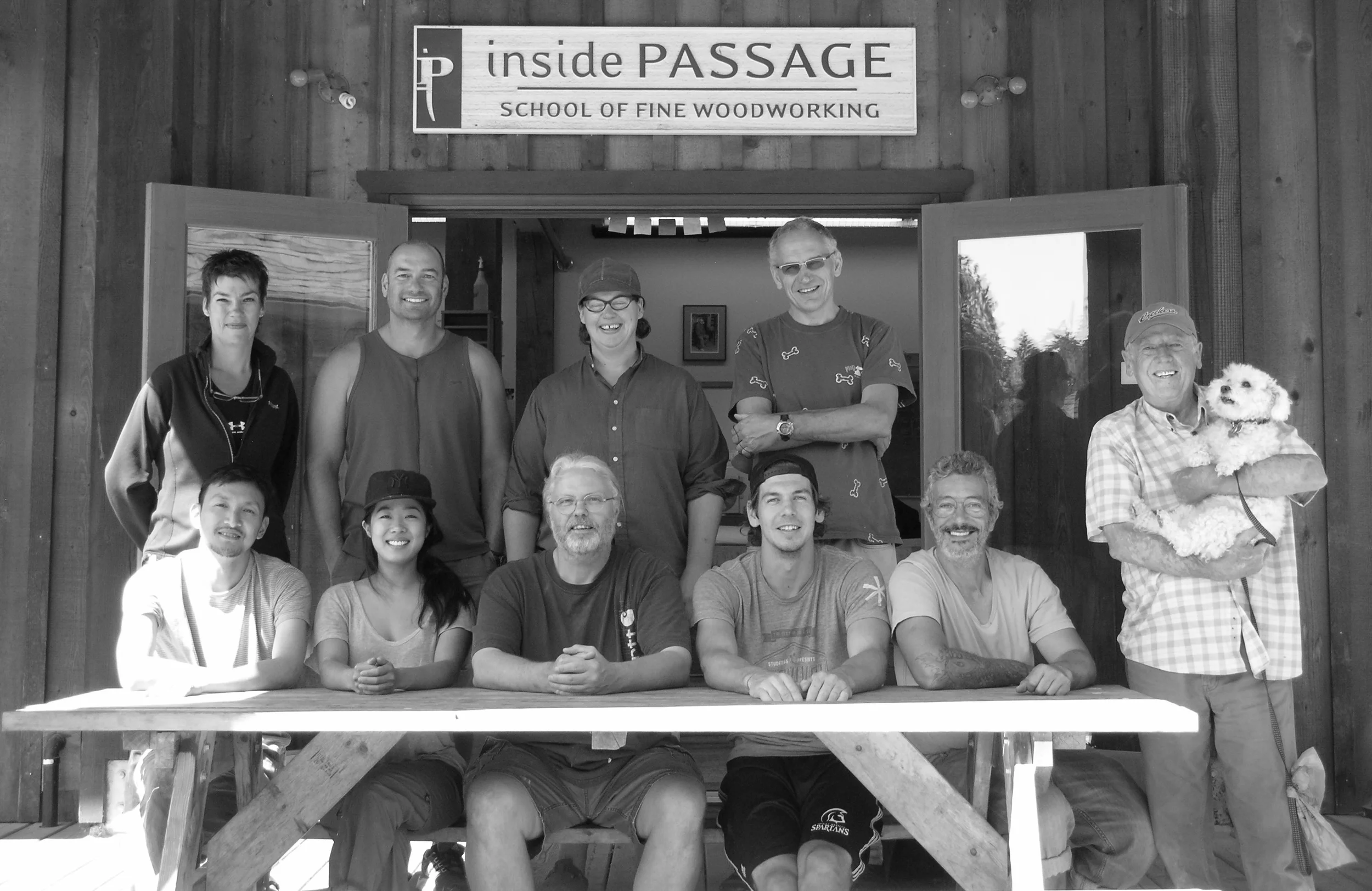
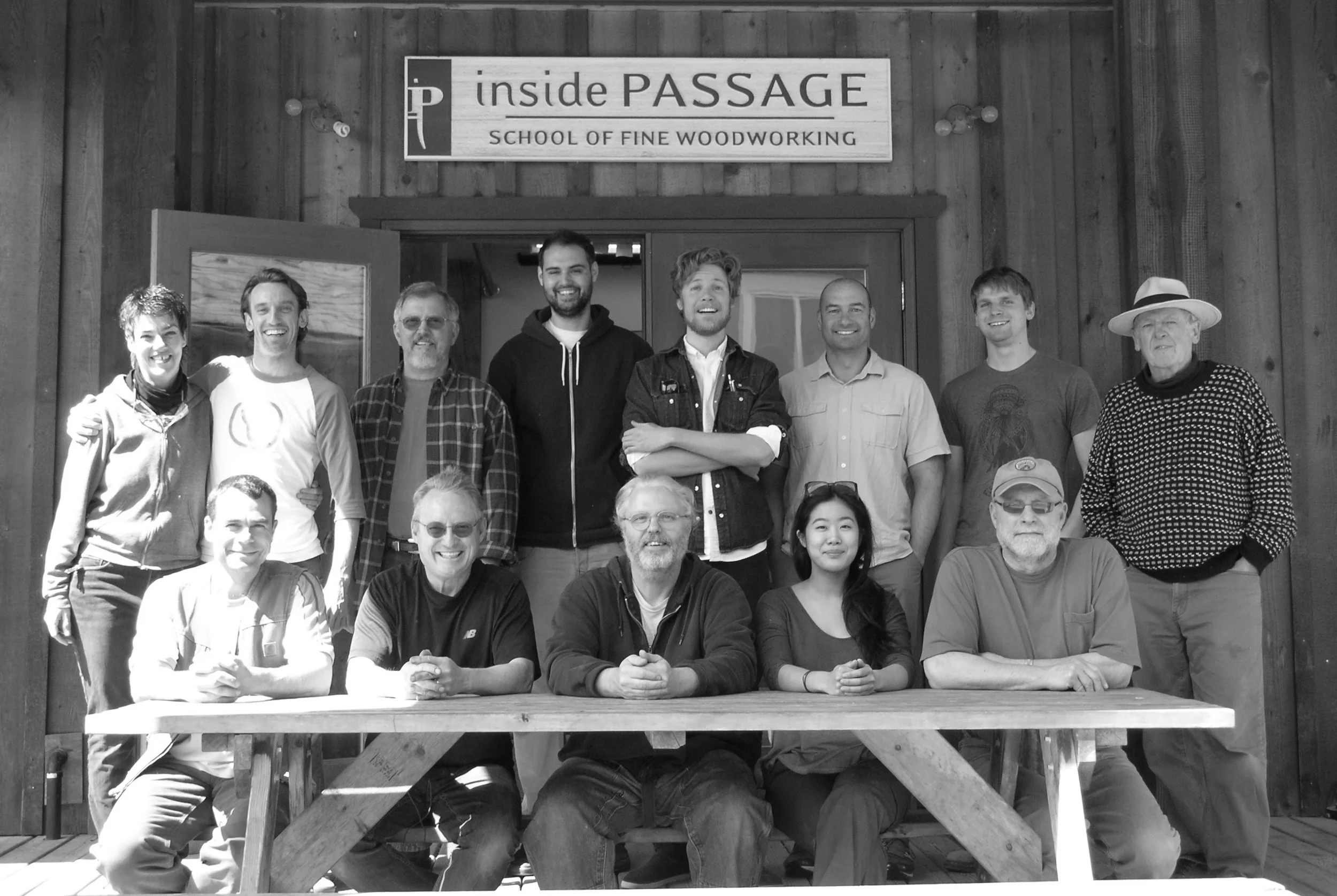
    back row from left: Yvonne, Brad, Russ, Kelly, Kevin, Nondas, Chris & Gary
    front row from left: Gavin, John, Robert, Caroline & Tom

    Caroline Woon, who recently completed her second year of study and is undertaking a residency at the school will begin her training as a teaching assistant in the coming program. With a student enrolled in Vidar’s chair program, she will be making a chair along side him, as she guides him through the process. Having recently completed the chair, she has proven herself as one of the finest craftsman to come out of our small school. Yvonne and I are very grateful to have such a fine young craftsman join us in providing craft education, in the Krenovian tradition.

    Yesterday the final Elephants of this session, took place at our home just down the road from the school. We began with a tour of my little shop and listened to a farewell address lecture Jim had given at the school back in 2007. Students then had an opportunity to see first hand some of my work, the work of my students and of course one of JK’s cabinets that grace the floor of our home. I also brought out some of Jim’s archive to share with the students. We had a bon fire where in keeping with tradition, I burned my Wabi Sabi exercise cabinet. It was a night of good food and wonderful people including alumni from our first year. I was filled with a deep sense of gratitude for all the wonderful people in my life.

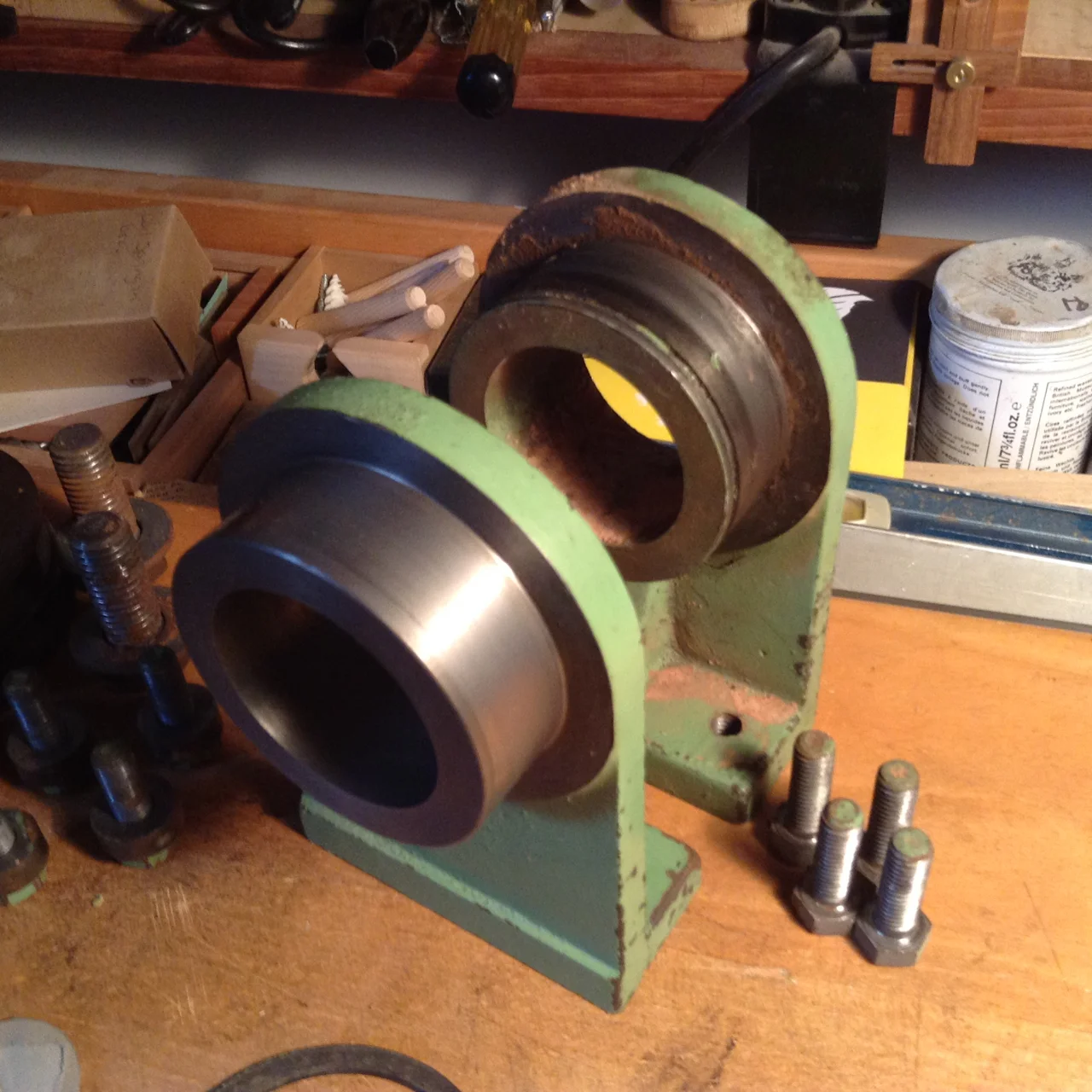
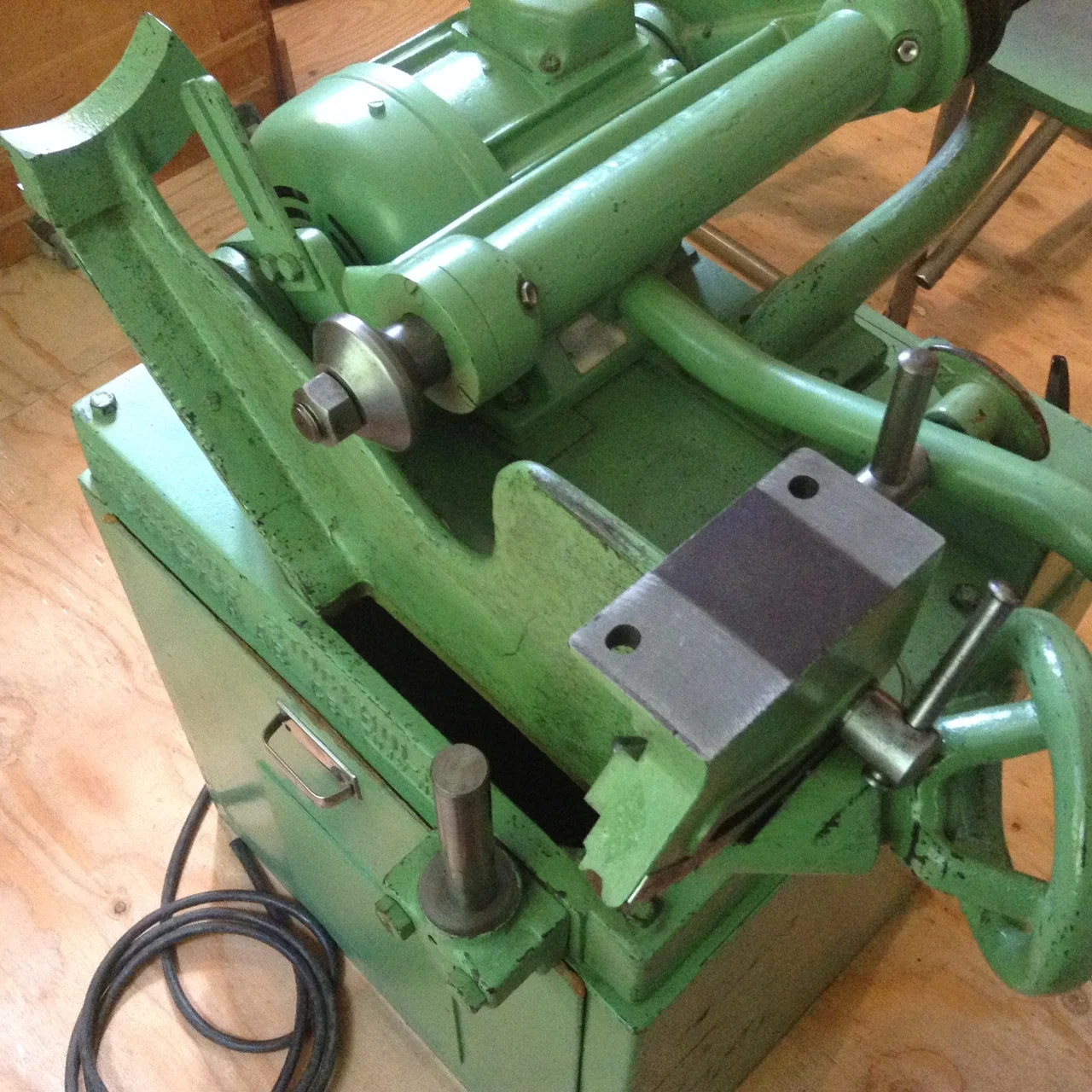
    This past week, after spending nearly two months dismantling, cleaning, lubricating and setting up Jim’s Stenberg table saw and mortiser, I decided to set aside the restoration of his remaining machines for a while and make some shavings. I installed the phase converter and all the machines are up and running except the tablesaw and mortiser, which is awaiting a part for the switch. The following is from my notes of the past two months: Jim often said “make sure they know you’ve been there.” While he was referring to our work, I have taken this approach with their restoration. Each machine would need to be disassembled, cleaned, lubricated and tuned. Twenty years of salty sea air had taken its toll on them and while, they had been cleaned before their arrival, I wanted to get to know them better, to prepare them for another lifetime of use. I began with the tablesaw and mortiser. After dismantling the machine, I removed all surface rust, despite a little pitting no parts required machining. All paint is original, with two exceptions, the motor for the table saw had been rebuilt about six years ago. When it returned from the rebuilder, it had a paint inconsistent with the original Stenbergs green. The dust bin had also been modified and fitted with a dust collection port. In an effort to return them to as they were in Jim’s little basement shop in Bromma Sweden, I made a minimalist patch for the dust bin, neatly covering the hole and attached it using the same screw holes. The patch and motor were the painted to paint carefully tinted to match the rest of the machine. In preparing the motor to repaint, I located and uncovered the motors specification plate. Once completely dismantled all surfaces where thoroughly cleaned and lubricated and I began to reassemble. I began with the arbor assembly, it which pivots on two bushings. The photograph below shows one cleaned with surface rust removed prior to lubrication, the other is as the machine arrived.

    When the machine arrived, the raising and lowering of the arbor and chuck, which run on the same shaft, was a bit rough. Cleaned and lubricated, it works beautiful including the micro adjustment which is smooth and a delight to use. Each of the machines, are built with simplicity in mind, but built for many lifetimes of use, like our work. I then attached the saw casting and trunions. The tilting table had not seen much use so when it arrived, the trunions were nearly seized. After a lot of cleaning and sensible lubrication, they are as smooth as the day they left the small family run factory. The pulley was then cleaned and reinstalled on the motors shaft. With one grunion attached to the top, the top was carefully lipped into place and was reattached, and the table tilt stop set pretty close for the time being. The tilting of the saw is smooth in both directions and the locking mechanism solid.

    I began work on a pair of chairs underway in narra. With mortising of the legs complete, I turned my attention to the tapers on the front and back legs. I brought down a couple of Jim’s planes, ground the irons and put on a fresh edges. I could have cut the tapers on the bandsaw first, but decided to set on of the planes for a heavier cut to plane in the tapers and the other set very fine to take the tapers down to final dimension and surface. I was reminded of the following quote as I made the first shavings in my little shop.

    “ I stand at my workbench. Shavings curl from the plane in my hands, swish-and-slide, as I rock to the motion of work. The smell of fresh cut wood, a slick, silvery yellow surface gleaming under the tireless plane, and a feeling of contentment. Nothing is wrong. Here I am, here is my work-and someone is waiting for the fruits of these fleeting hours. My contentment is bound by the whitewashed walls of my little cellar shop, by the stacks of long-sought woods with their mild colors and elusive smells, by the planked ceiling through which I hear the quick footsteps of a child- and yet it is boundless, my joy…” – James Krenov  A Cabinetmakers Notebook 

    We will be launching our new website in the coming weeks. Our new website, was built on simplicity and will enable weekly Journals, even for a luddite like myself. I will be sharing my personal work and thoughts on teaching, and Caroline, who will be completing a residency at the school, will be sharing her work, and the work of the students. The rest of the site will be a work in progress, your patience is very much appreciated.

    Over the next few days we will be saying goodbye to a few very special people. We will be preparing the school, and ourselves for our tenth year of offering craft education for the aspiring amateur founded on and dedicated to the teachings of James Krenov. Yvonne and I would like to thank the over three hundred alumni from over thirty five countries who have entrusted our school for their craft education, and are reminded that this school not only exists for you but because of you.
    Be well and enjoy your work,
    Robert