Author: robert@insidepassage.ca

  • Celebrating a Decade of Craft Education

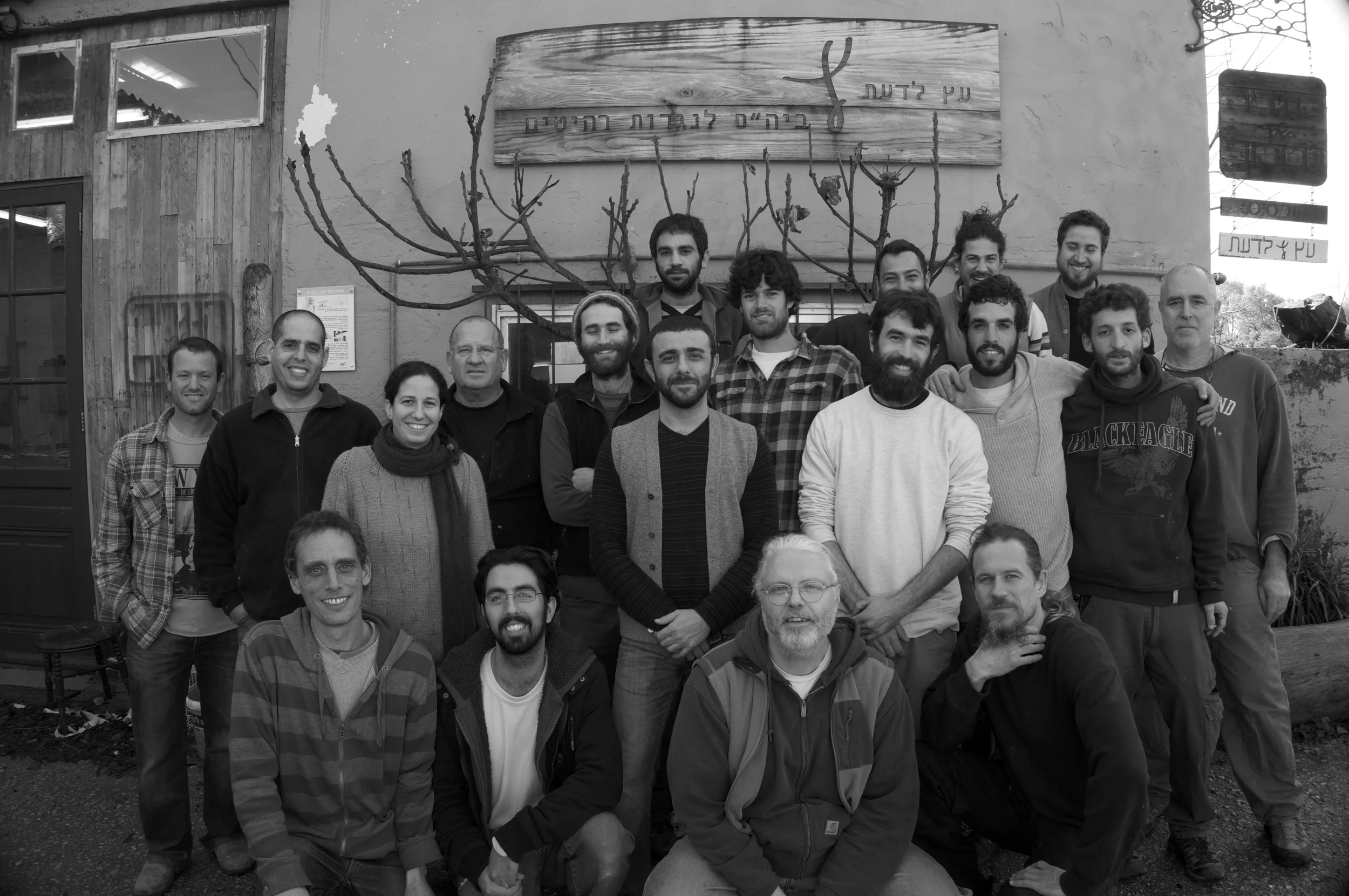
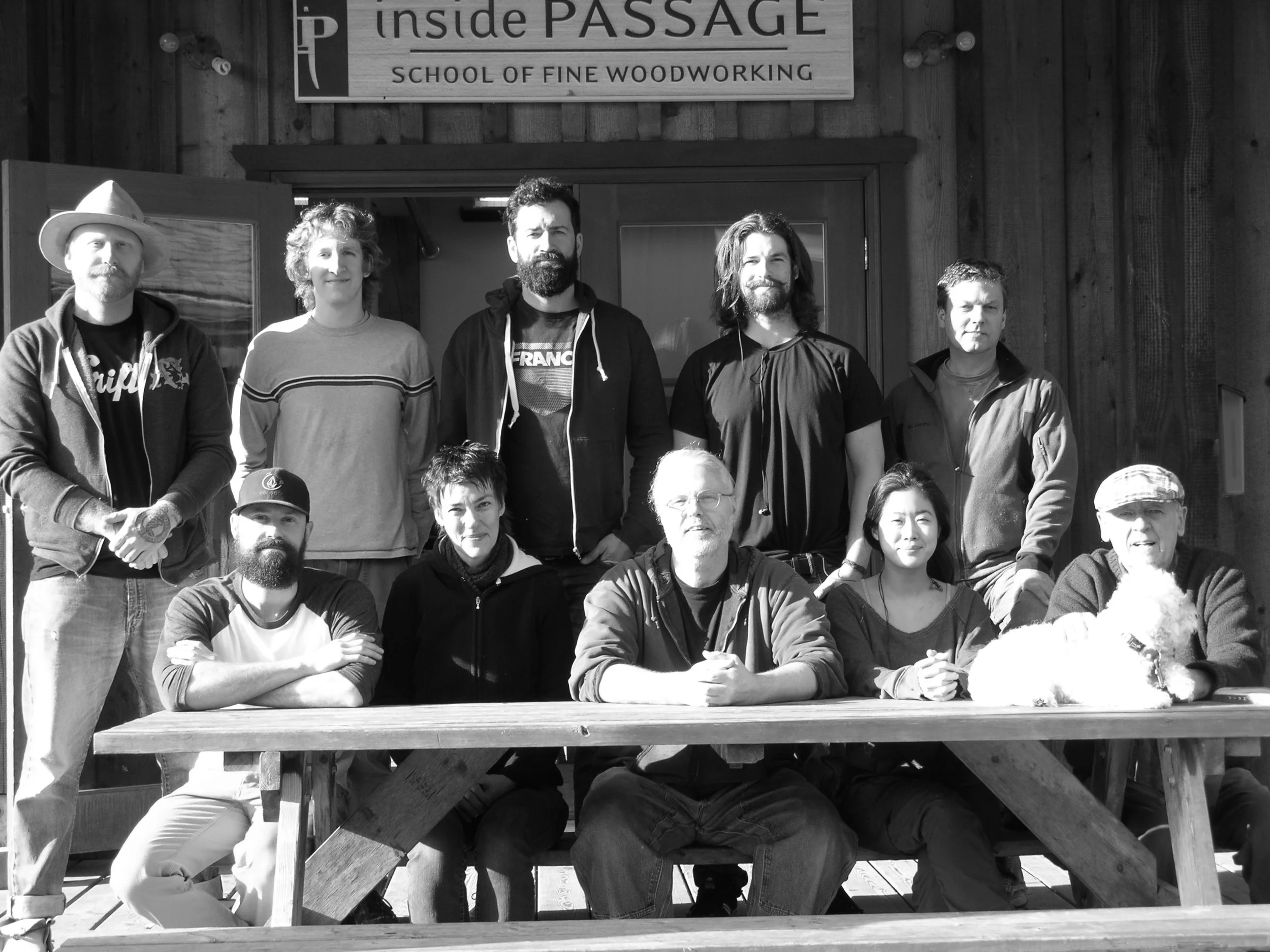
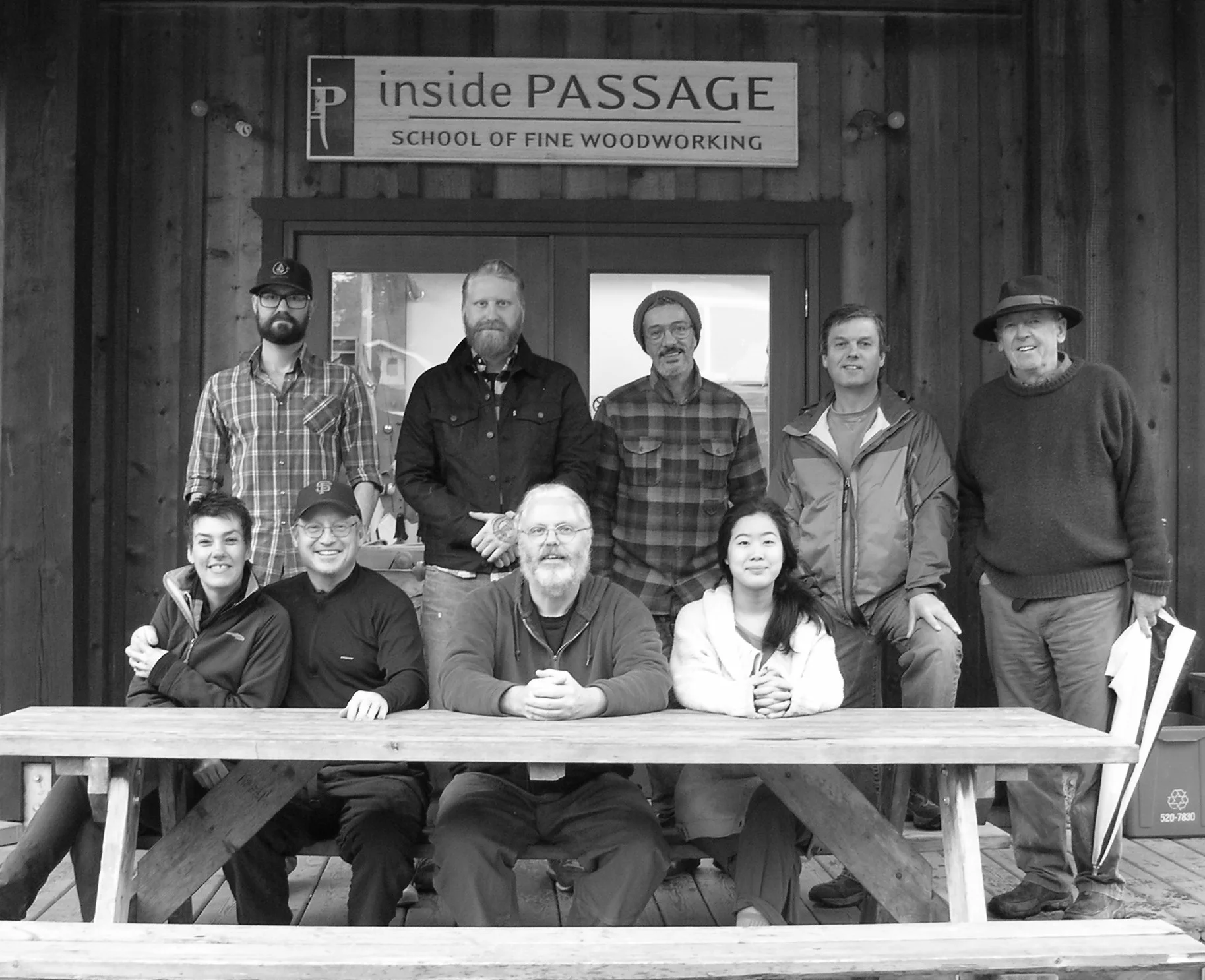
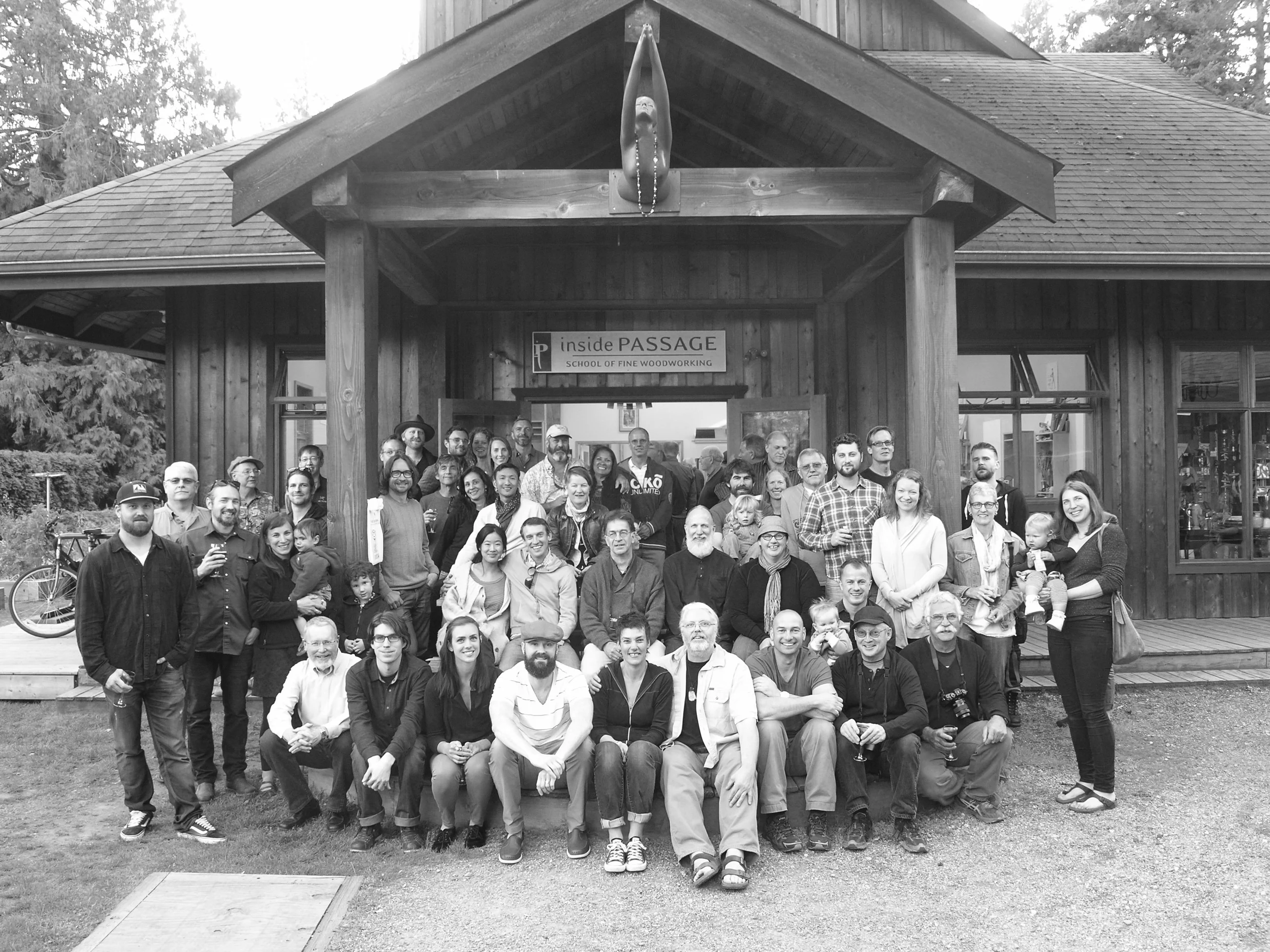
     Celebrating a decade of craft education at IPSFC (missing a few...sorry)
    Celebrating a decade of craft education at IPSFC (missing a few…sorry)

    It has been three weeks since we were joined by friends and family where we celebrated a decade of craft education for the aspiring amateur at IPSFC. I must say, that I was overwhelmed at the response, with several students from each of the first ten years of the school, including students from the northern Canada, the eastern seaboard, southern California, and everywhere in between. Eupho, a two year graduate of the program, joined us all the way from Japan for the weekend. It was so good to reconnect with so many old friends, including a few we have lost touch with over the years. And yes, I did say the first ten years. 

    Leading up to the exhibition, we were informed the the complex where the school has been located since its inception, is up for sale. While we have a lease that will withstand a change in ownership. It was this, combined with my desire to return to my own work, had me thinking that perhaps it was time to step aside, and let someone else take the reins for a while. As I stood before a packed house at the exhibition, I suggested that in another ten years, I hoped that it would be Caroline, and not me standing at the front of the room.

    The truth is I love teaching, and while it has become, and cherished part of my life, I have felt something missing in my life for some time. After returning from our five day retreat, I returned to my shop with a new found energy, perhaps even passion and realized that the time has come. We have been preparing the school for this for a while now. Caroline has been with us for three years, and has been assisting with our program for the past year. Later this fall she will be easing into a teaching role at the school. Each afternoon following my afternoon lecture, she will assist students in there work, and in time allow me to return to my little shop each afternoon to rekindle my passion for the craft.

    If I have learned anything in the last ten years, life is about finding a balance that works for you. Each year at the beginning and the end of the program, I make reference to the John Brown quote, “I live in a beautiful place, I work at something I love, I make enough money to live and my demands on the worlds resources are very meagre.” I have always felt that these are words to live by, and as a teacher they have always embraced my hopes, for all the who have passed through our doors. While there are many moments that will stand out for me from the weekend, I will always cherish a late night conversation I had with Don Stenner. He made reference to the quote and suggested that he was doing just that. I thought to myself, this is the greatest gift a teacher can ever receive.

    Yvonne and I would like to take this opportunity to thank all of those who joined us for the celebration, and those who joined us in spirit. I remind you that this school not only exists for you but because of you. In the past ten years, you have shaped the school and our lives, and we are so very grateful for the memories.
    with peace & love,
    Robert
  • Spring 2015

    Vidar’s Chair

    Jake Maughan – Canada
    Andrew McKay – Canada

    UPWARD SPIRAL

    Spencer Barnard – Canada 

    IMPRACTICAL STUDIES

    Katie Billo – Canada
    Michael Lindsey- Canada
    Cal Burnouf – Canada
    Chad Harris – Canada

    RESIDENT CRAFTSMAN & TEACHER

    Robert Van Norman

    ADMISSIONS & STUDENT SERVICES

    Yvonne Van Norman

    TEACHING ASSISTANT

    Caroline Woon

    RELIEF TEACHER

    Gary Kent

  • Tree of Knowledge School – Israel

    “The moment you think about giving up, think of the reason you held on for so long.”

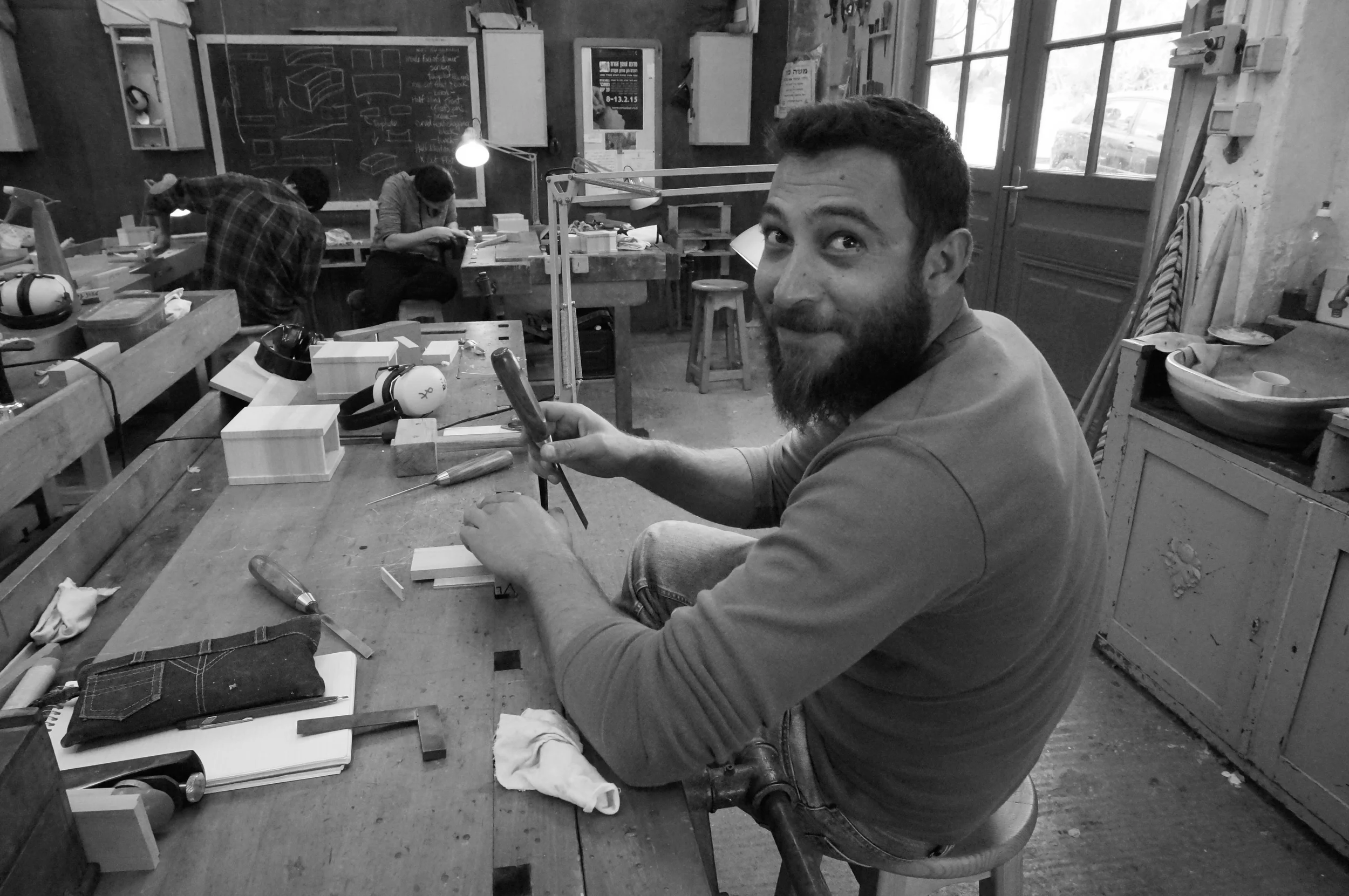
    After finishing up our winter term at the school, Yvonne and I traveled to Amsterdam for a few days, before heading to Israel, where I taught a six day class on the subtitles of making and fitting a drawer on the curve.

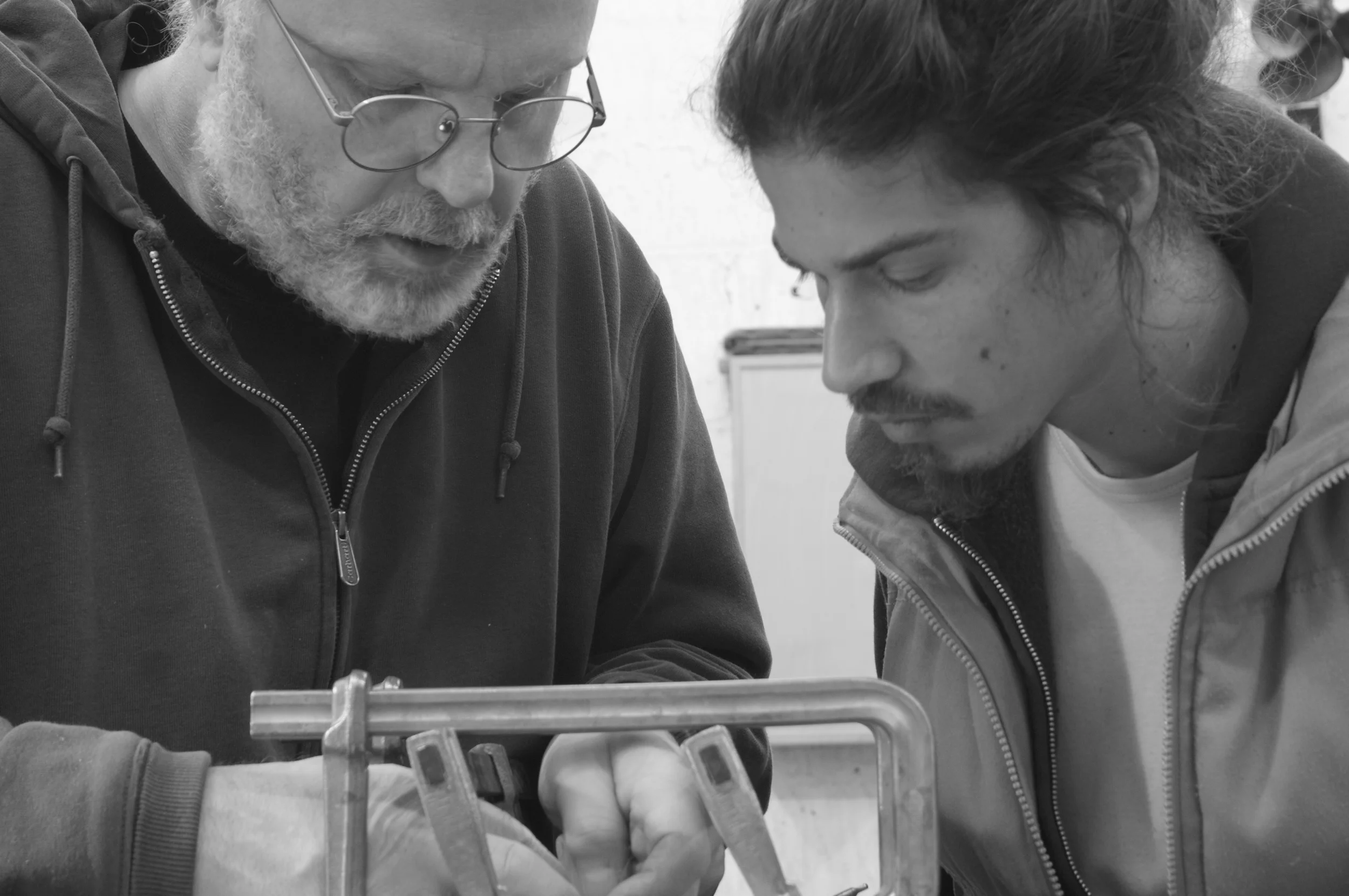
     Robert & Oren assembling Robert's drawer
    Robert & Oren assembling Robert’s drawer

    The Tree of Knowledge School was founded by IPSFC alumni Oren Feigenbaum and Nathan Vanthof. The school is nestled in a beautiful area between the sea of Galilee and the Mediterranean Sea, and has fostered a wonderful community of woodworkers. 

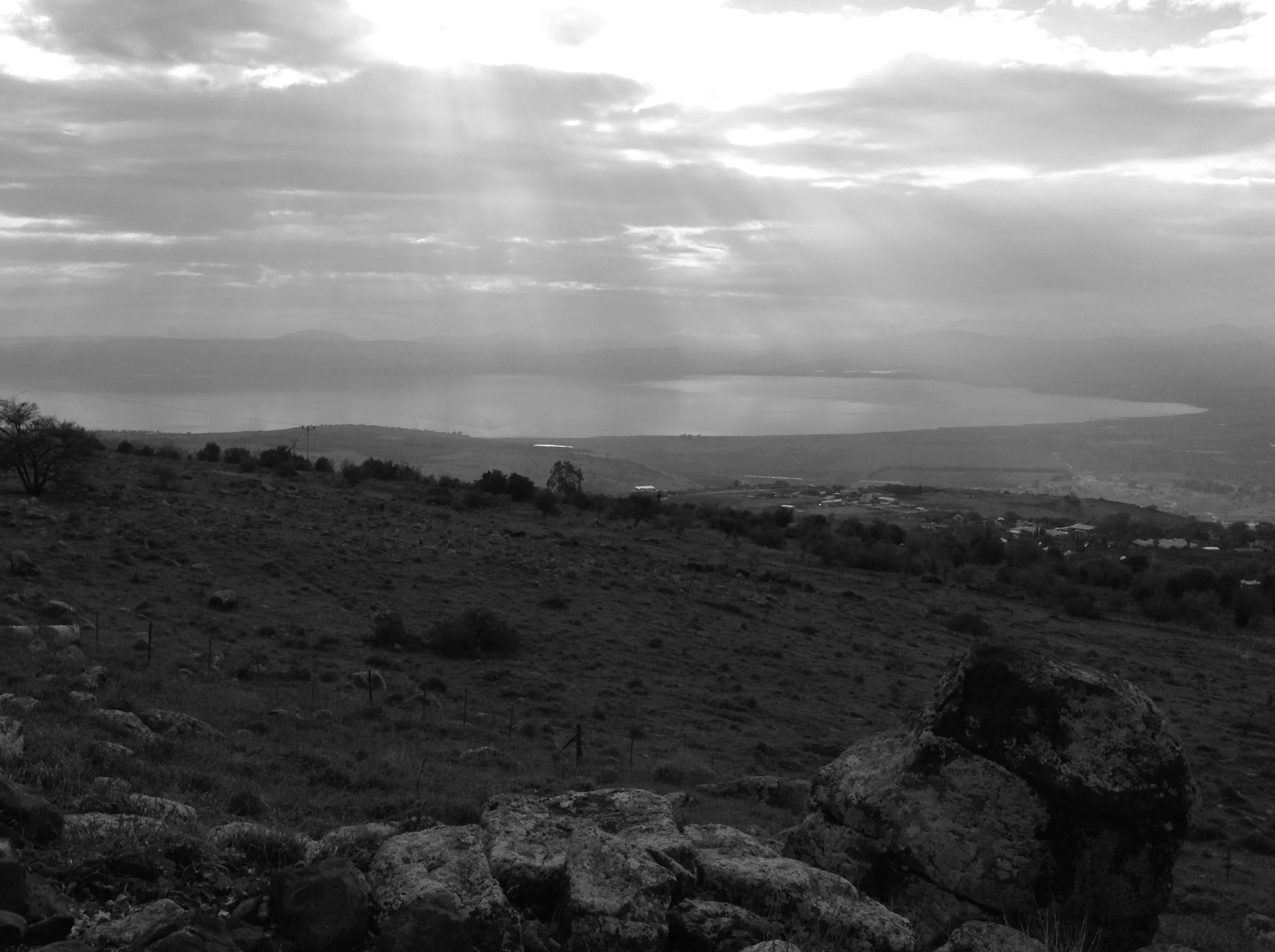
     Sea of Galilee
    Sea of Galilee

    This was my second visit to the school, in as many years. The class consisted of fifteen students with three of the schools teachers also participating in the class. While Oren and Nathan continue as the primary teachers at the school, they have enlisted the assistance of Amir Aharon, a graduate from the Tree of Knowledge’s first long program and Chen Lekach, a graduate of the College of the Redwoods. The school has created a creative and supportive environment with a strong reverence for the teachings of James Krenov. 


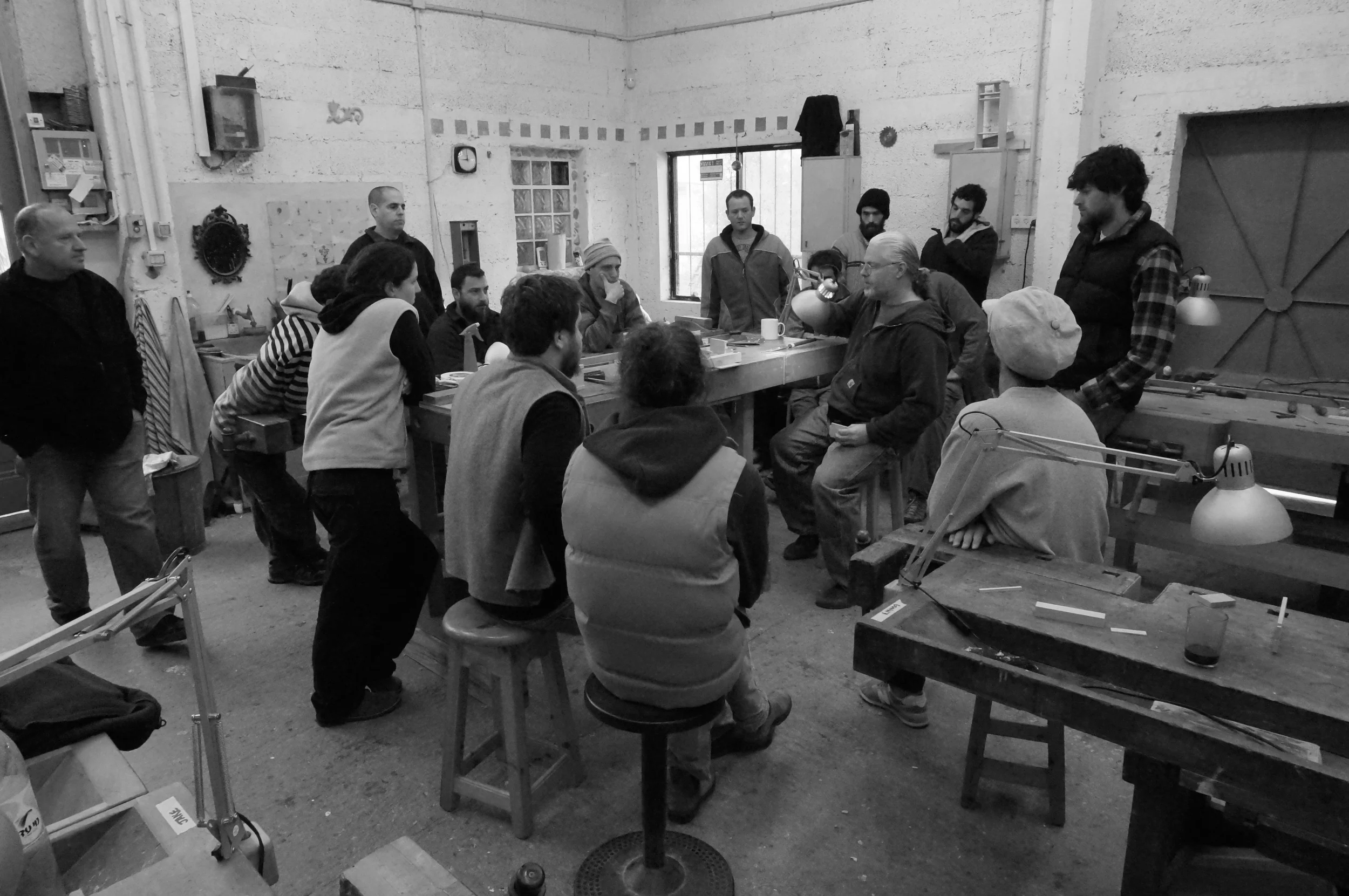
     morning lecture
    morning lecture

    Following the program, Yvonne and I joined Oren and Nathan and their lovely families for a wonderful meal in the ancient seaside port of Akko, which for me is a very special place. The next morning we all traveled to Golan Heights where from atop of Mount Hermon, we could see the green orchards of Syria to the east.


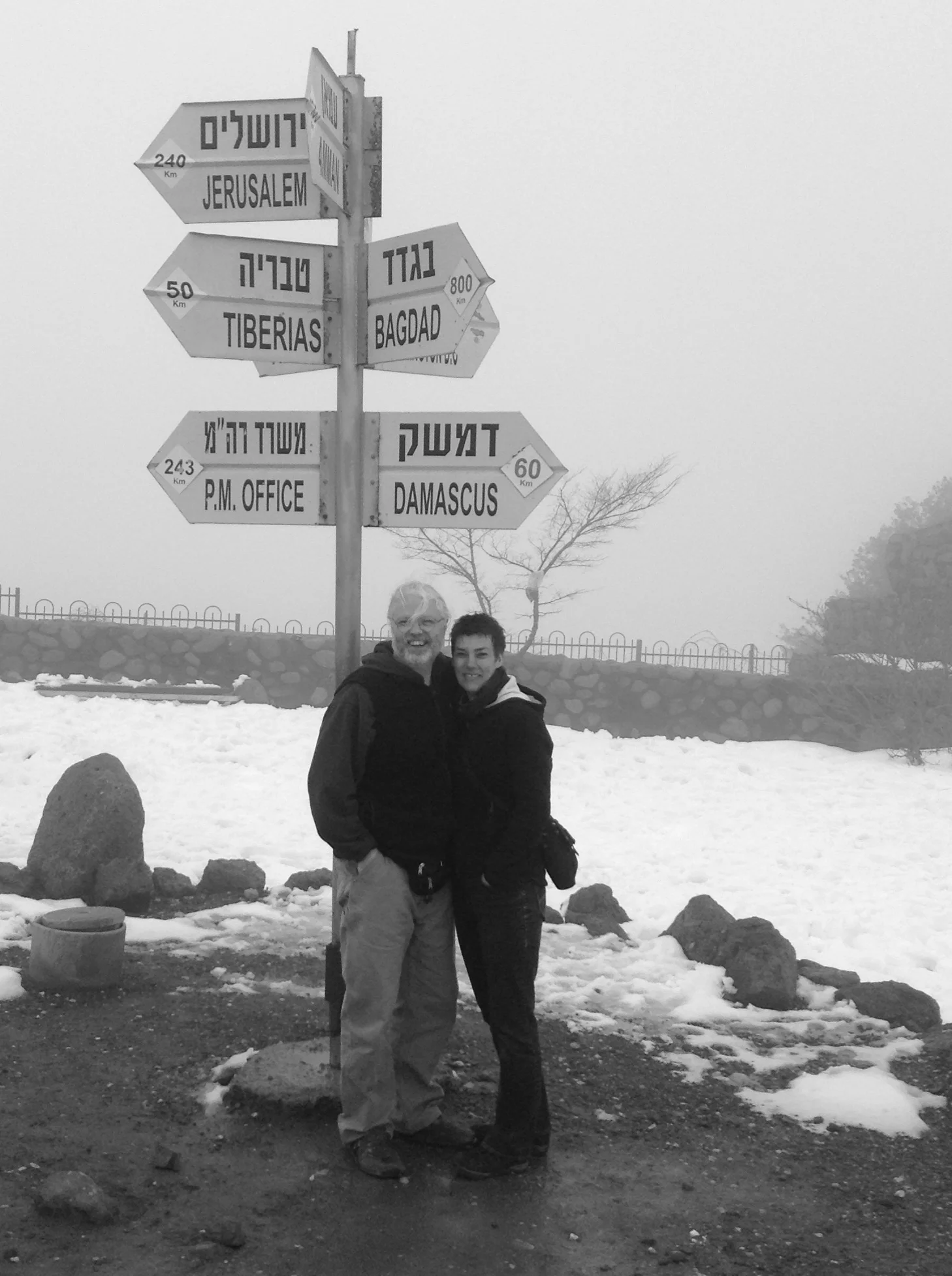
     Mount Hermon
    Mount Hermon

    We traveled further south and stayed in a yurt overlooking the Sea of Galilee, and enjoyed a traditional meal over a fire. The next morning we traveled south to the Dead Sea stoping by a desert monastery where the restoration of several buildings and mosaics where underway. Swimming in the Dead Sea and enjoying the natural hot springs adjacent to it will be something that Yvonne and I will not soon forget. We then traveled to the south of the Dead Sea where we spent the night in one of the most unique places we have ever experienced. The vibe there was very Sababa. Sababa is a hebrew word meaning relax or chill. We found that the people of Israel, are a very soulful group of people. The next morning we began our journey home stopping by David’s Falls and  back to the Kibbutz where we were staying for one more night. The next day I spent at the school before boarding the train from Nahariya to Tel Aviv. After nearly twenty four hours later, we arrived home in Roberts Creek and after a few days of rest, began preparing the school for the spring session which begins on Monday. 

     Drawer Making & Fitting on the Curve
    Drawer Making & Fitting on the Curve

    The beauty of this small country on the Mediterranean is only surpassed by the beauty of their people. We very much look forward to our next visit.

     my bench mate Amir, a very sweet man
    my bench mate Amir, a very sweet man
  • Henry Tsang – Toronto Ontario

    Henry joined us for the first two weeks of our Impractical Studies Program, and posted a blog sharing his experience here. Our Impractical Cabinetmaker Program consists of four eleven week sessions, the first of which is, Impractical Studies.

  • Winter 2015

     Winter 2014

    Resident Craftsman & Teacher

    Robert Van Norman

    Admissions & Student Services

    Yvonne Van Norman

    Teaching Assistant

    Caroline Woon

    Relief Teacher

    Gary Kent

    Upward Spiral

    Jake Maughan – Canada
    Andrew McKay – Canada
    Mike Noble – Canada

    Impractical Studies

    Spencer Barnard – Canada
    Will Yarrington – United States
    Mike Bodnar – Canada

  • Exhibition & Guest Faculty Programs

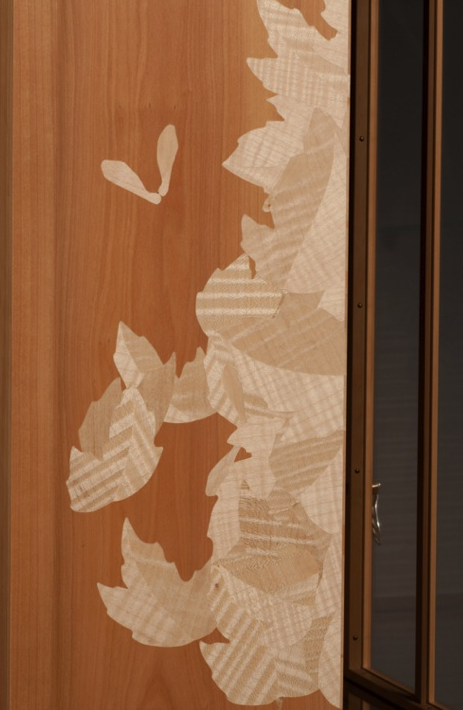
     Marquetry Cabinet by Barbara Shelton photography by Ingeborg Suzanne
    Marquetry Cabinet by Barbara Shelton photography by Ingeborg Suzanne

    Friends,
    As many of you are aware, our school is in it’s tenth year of providing craft education for the aspiring amateur. We would like to invite each of you to join us for a weekend of celebration, May 1-3, 2015 as we look back on the journey. It has been a decade of highs and lows, trials and triumphs. We have made many friends, and lost influential people in our lives. We have watched relationships foster, children grow and babies born. I am grateful for it all. It has shaped our school, and our lives. We are reminded every day that our school exists not only for you, but because of you. Each of you have made a profound impact on our lives.

    On Friday May 1, 2015 at 5pm a Welcome Elephant will be held at the school, with a keg of local craft beer on tap. On Saturday May 2, 2015 from 6-9pm, we will be presenting a retrospective Exhibition of work from our students, alumni and faculty. Refreshments will be provided and an informal gathering for our alumni, family and friends will follow. On Sunday an alumni brunch will take place at the Gumboot Cafe. Following brunch, for those interested, I will be providing a tour of my new home shop, which is now home to JK’s handtools and original Swedish machines.

    On the following Monday we are pleased to announce that Jacques Breau 2006-2007,  will be kicking off our Guest Faculty programs for 2015.  Jacques will be offering a program on Curved Joinery May 4-15, 2015. Lael Gordon  2006-2007, will be presenting Parquetry August 3-15. If you are interested in attending either class, please contact the Yvonne for more details. 

    As there is much planning to be done, please let us know if you plan to attend, and how many pieces if any you intend to bring. These pieces may include pieces made as a student at the school, as well as work done after graduation. This will be a wonderful opportunity to catch up with old friends, and meet like minded craftsman, their families and friends.  Yvonne and I would be most grateful if you could join us for this celebration.
    Be well and enjoy your work,
    Robert & Yvonne 

  • Monroe Robinson – Little River California

    Jim Krenov’s machines, the ones written about and pictured in “The Fine Art of Cabinetmaking” have a new home with Robert Van Norman who operates the Inside Passage School of Fine Cabinetmaking in Roberts Creek, British Columbia.  Jim Krenov is most known for his use of hand tools and a caring attitude to create fine and creative small cabinets each one a treasure, but because of Jim’s writing about his measured use of these four finely produced machines through his years in Sweden, they, too, are a part of his legacy.   When he moved from Sweden he brought his Stenbergs machines with him and they were part of the machines used by students in the Fine Wood Working Program he started in Fort Bragg, California. As the years passed Jim did not wish this level of use day in and day out on the machines and they were removed as other machines were acquired by the school.

    Twenty-nine years ago Jim told me he was thinking of selling his machines and wondered if I wanted any of them.  I told him I thought he should not sell them but keep them for the day he might to longer teach at the Fort Bragg school and would have another shop of his own.  A week later we repeated this conversation and then when asked for the third time I answered that if I were going to purchase his machines that I would like to purchase all of them.  Jim said he was hoping that is what I would say.  When the transfer was made it was with great reverence for these machines but Jim was clear that they were mine with no commitment as to their future.

    I have long thought Jim’s machines at their best should be part of student’s inspiration in learning the craft of fine cabinetmaking that Jim practiced and spoke about with such rare elegance.  Using Jim’s machines was a treasure to me every day but they no longer filled my dream of the machines being close to aspiring students.  I knew Robert Van Norman was the right person for these machines and every communication I had with him and his wife, Yvonne, clarified the decision.  Jim Krenov’s wife, Britta, said Jim would love the machines moving to Robert where they would be close to the students at the Inside Passage School.  

    My wife, K., and I entered the quaint picturesque village of Roberts Creek along the Sunshine Highway in British Columbia to a reception we will never forget.  Large black and white pictures of Jim working at his bench hung on the walls of the Inside Passage School benchroom as students worked. Robert Van Norman has created a setting where the very best of Jim Krenov’s spirit lives on.  Everyone walked to Robert’s home to help unload the machines. I gave Robert my copy of The Fine Art of Cabinetmaking in which Jim had written a little note to whoever might care for these machines in the future.  I shared memories as his student during the third and forth year of his teaching at the woodworking program in California.  A cabinet on the wall of Robert’s small shop contained many of Jim’s hand tools and I thought it must feel somewhat like Jim’s small basement shop in Sweden.  Robert and Yvonne’s sole use of public transportation reminded me of Britta saying how she had not learned to drive until they moved to California.  Another picture of Jim Krenov had a caption from his writing, “Ours is a simple craft. But it is a rich one, too.  At its best, the simple becomes obvious: a band of small discoveries, strung like pearls of curiosity, lending richness to our work.”

    Reading Jim Krenov’s first book, A Cabinetmaker’s Notebook, I knew immediately I wanted to train with Jim who had trained with Carl Malmsten of Sweden who had trained with Edward Barnsley of England.  After graduating from the Fine Woodworking Program in Fort Bragg, California, I felt a part of a linage of fine craftspersons who created their own work while passing the inspiration and skill to the next generation.  Robert Van Norman also trained with Jim at the same program in California and is now dedicating his life to passing his own and Jim’s skills and inspiration to a new generation of fine furnituremakers. Students from around the world work at the Inside Passage School of Fine Cabinetmaking with the same enthusiasm for their training with Robert that I remembered from my training thirty years earlier with Jim. The machines having moved to this school are now a part of inspiring the next generation.

    Monroe Robinson
    Woodworker and purveyor of fine old growth redwood lumber in Little River, California

  • Fall 2014

     Fall 2014
    Fall 2014

    Resident Craftsman & Teacher

    Robert Van Norman – Canada

    Admissions & Student Services

    Yvonne Van Norman – Canada

    Teaching Assistant

    Caroline Woon – Singapore

    Relief Teacher

    Gary Kent – Canada

    Composing

    John Rinehart – United States

    Upward Spiral

    Jose Alberto Perez Gonzalez  – Spain

    Impractical Studies

    Andrew McKay  – Canada
    Jake Maughan – Canada
    Michael Noble – Canada

  • Boxwood and Beech

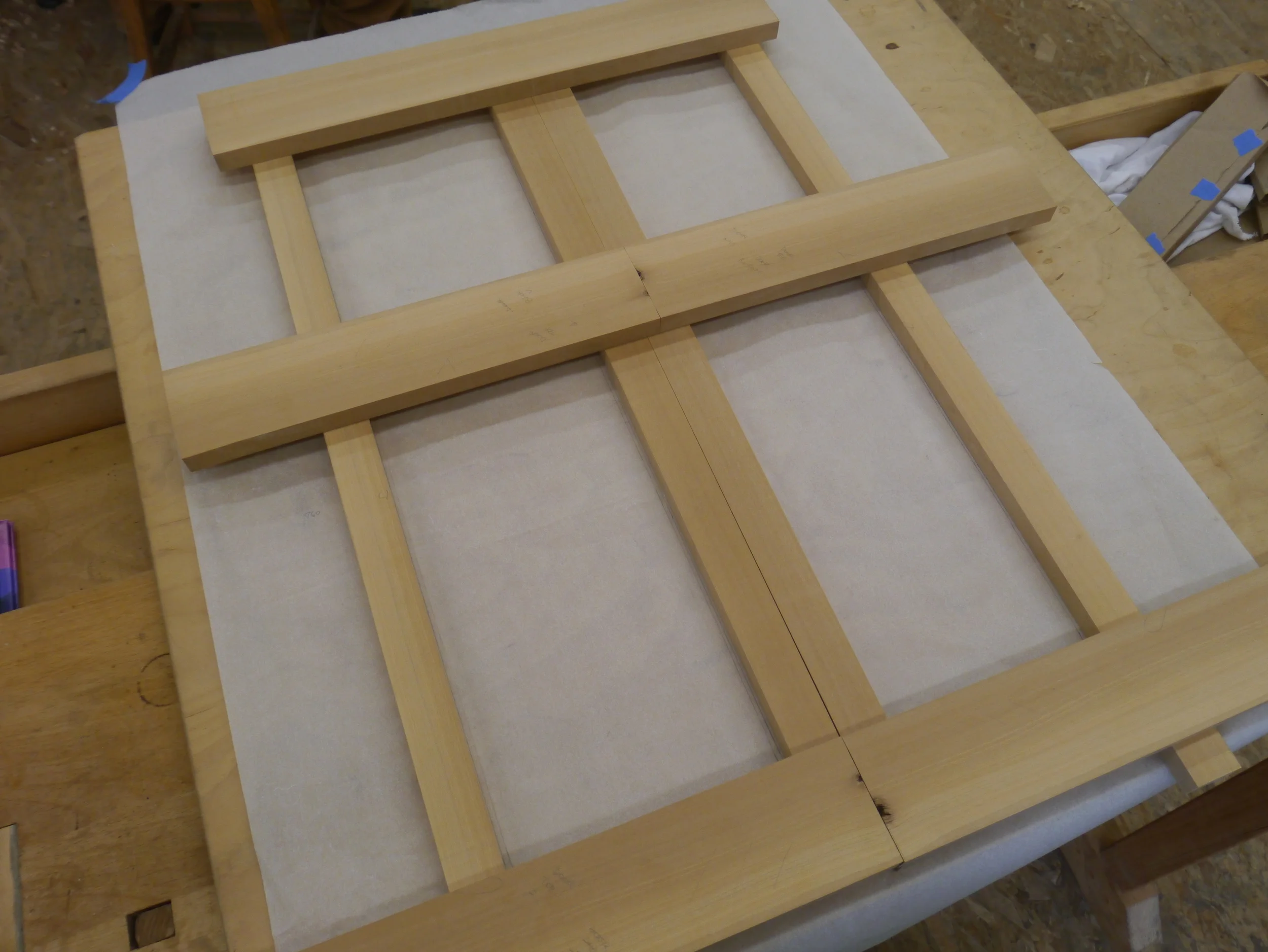
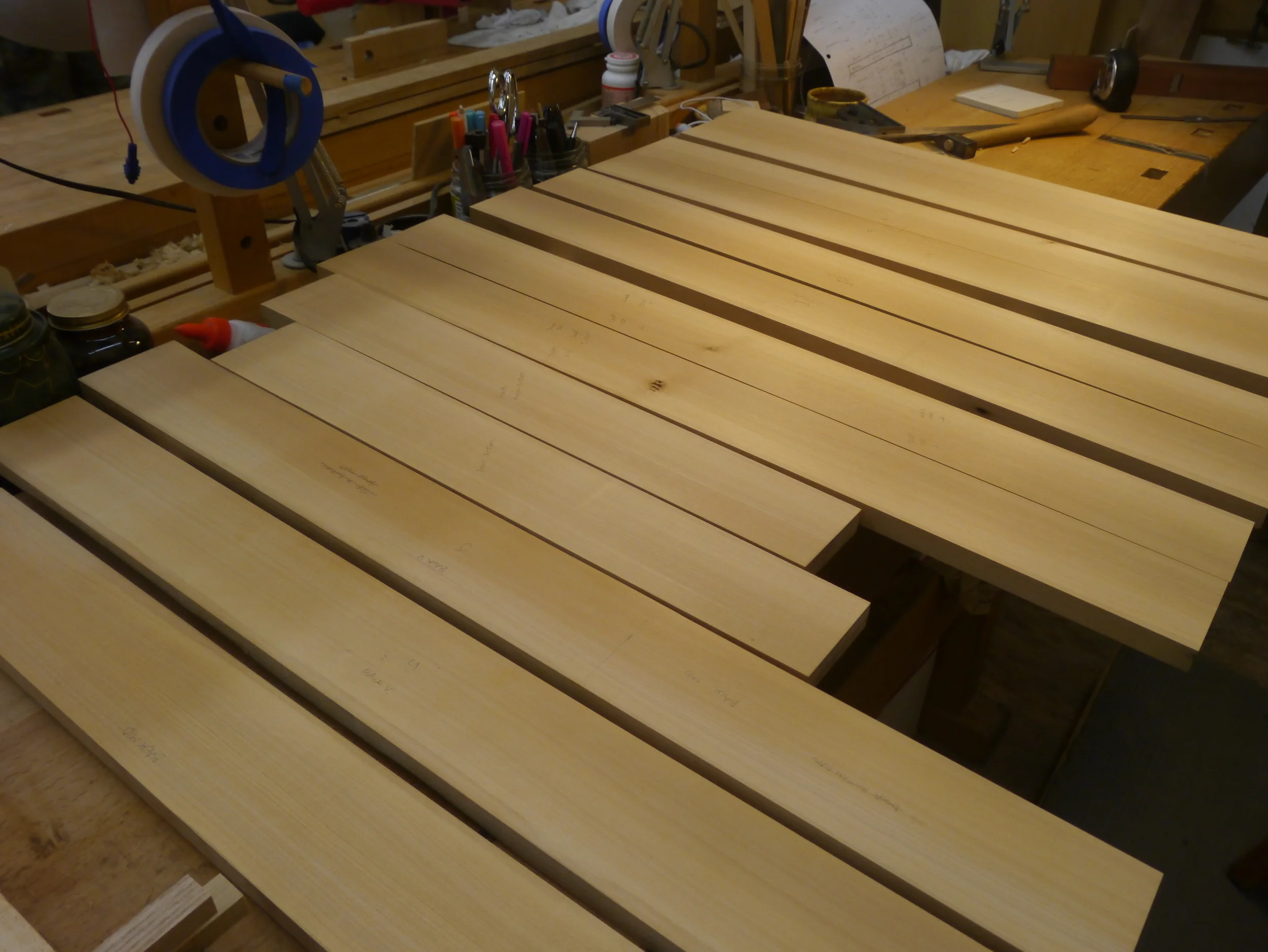
     Parts for frame and panel doors
    Parts for frame and panel doors

    These days I am working on a new cabinet. The past few weeks I spent selecting material, slowly milling stock down to final dimensions, edge jointing, turning pieces over and over, looking for parts… it has been quite the trip already, though I am just getting going.

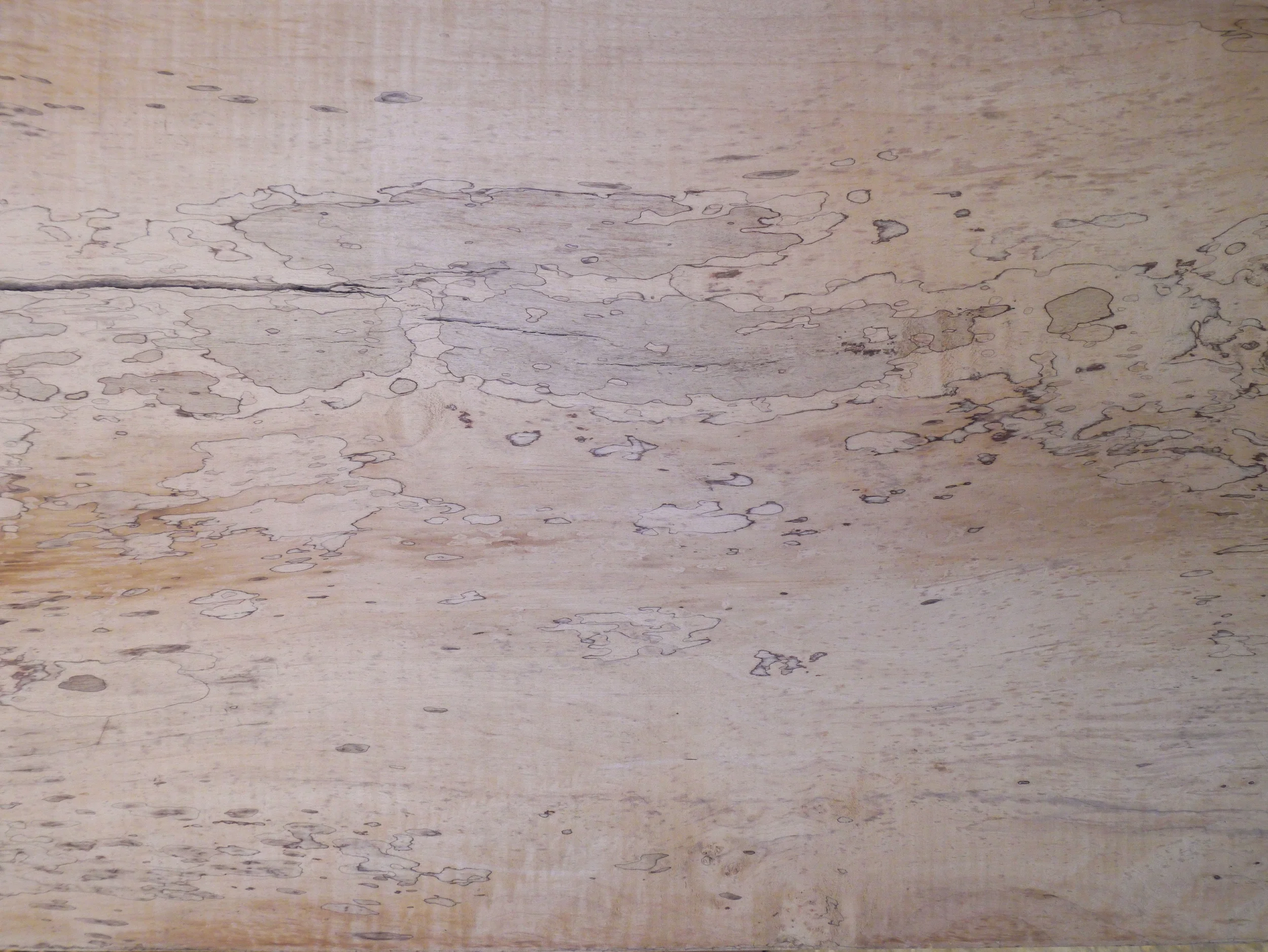
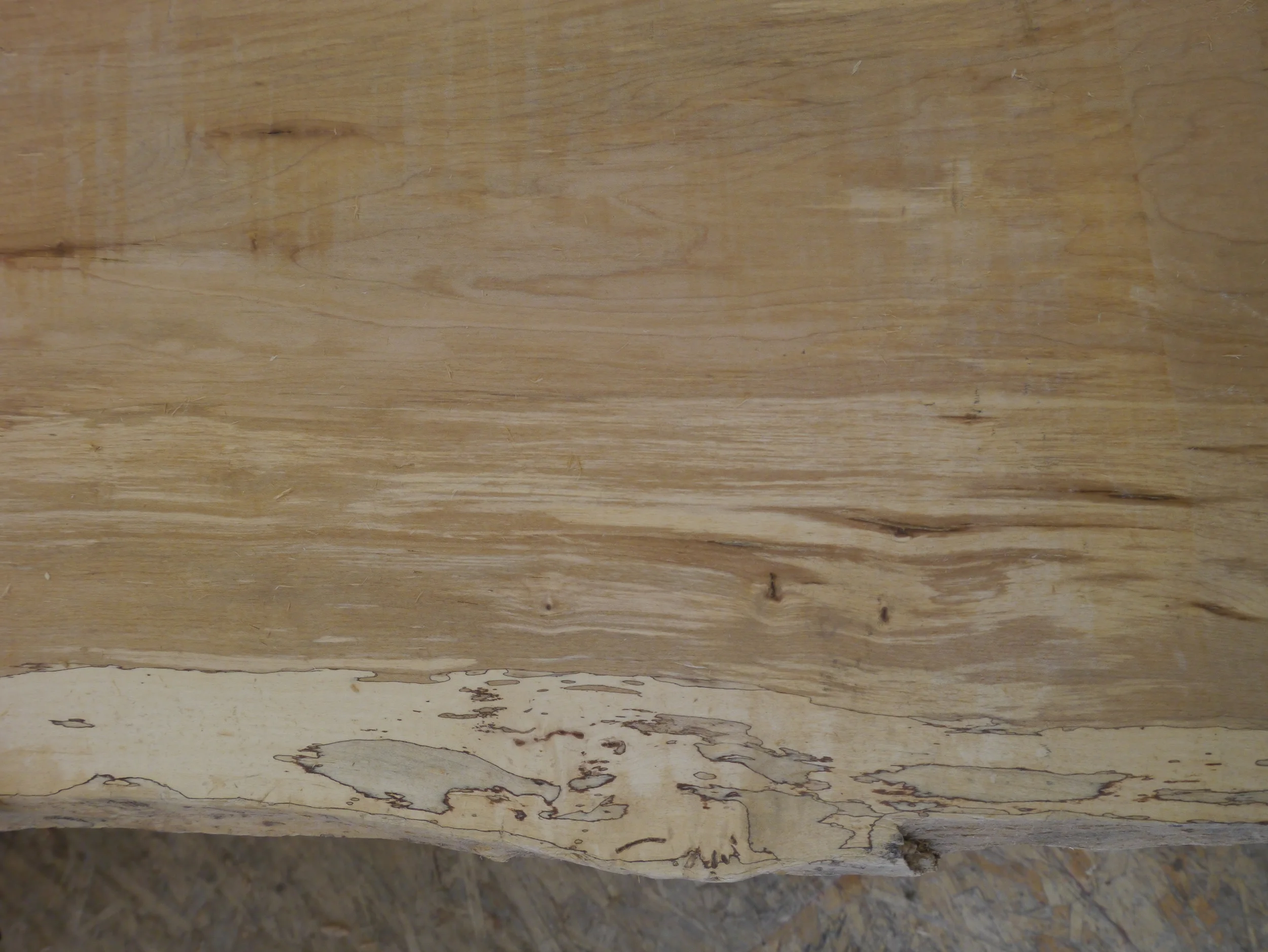
    It really started with a rather large piece of spalted Chestnut that Robert spotted on our last wood run. With one look I was hooked on the delicate, psychedelic spalting, cream dappled with purplish brown and greyish blues. Though it was mostly too decayed to use, soft and full of bug holes, I clung onto this piece out of pure attraction, convinced that I would find a use for it, knowing at the very least I would simply admire it.

     What started it

    As I approached the completion of my second chair, I felt a bit tired. Unsure if I wanted to take on the complexity of a cabinet right away, I thought about some small simple projects, making some tools. Maybe a practice cabinet to refresh my memory. But my hesitation dissolved upon John starting his Composing piece this session, which reminded me of some of the most fun parts of our work: looking at wood, envisioning, finding clues in the grain as to what it could be.

    So I declared, life is short, I want to a piece. 

    It came together one evening after a week of deep indecision over what to make. Robert pointed out a cabinet by JK which I had been talking about for some time, out of ash with glass and spalted maple in the two frame and panel doors. I could use the spalted Chestnut that I so adored for the door panels, and I had been wanting to practice frame and panel construction… it seemed like the right thing. I just needed something that would go well with the Chestnut, with its lovely matte texture and creamy tones.

    Robert suggested Boxwood, something clicked, we knew it would be a perfect match. He brought out a plank from his shop and there it was, decided. Delighted and overwhelmed by the amazing wood in front of me, I had the beginnings of my cabinet in European Boxwood. 

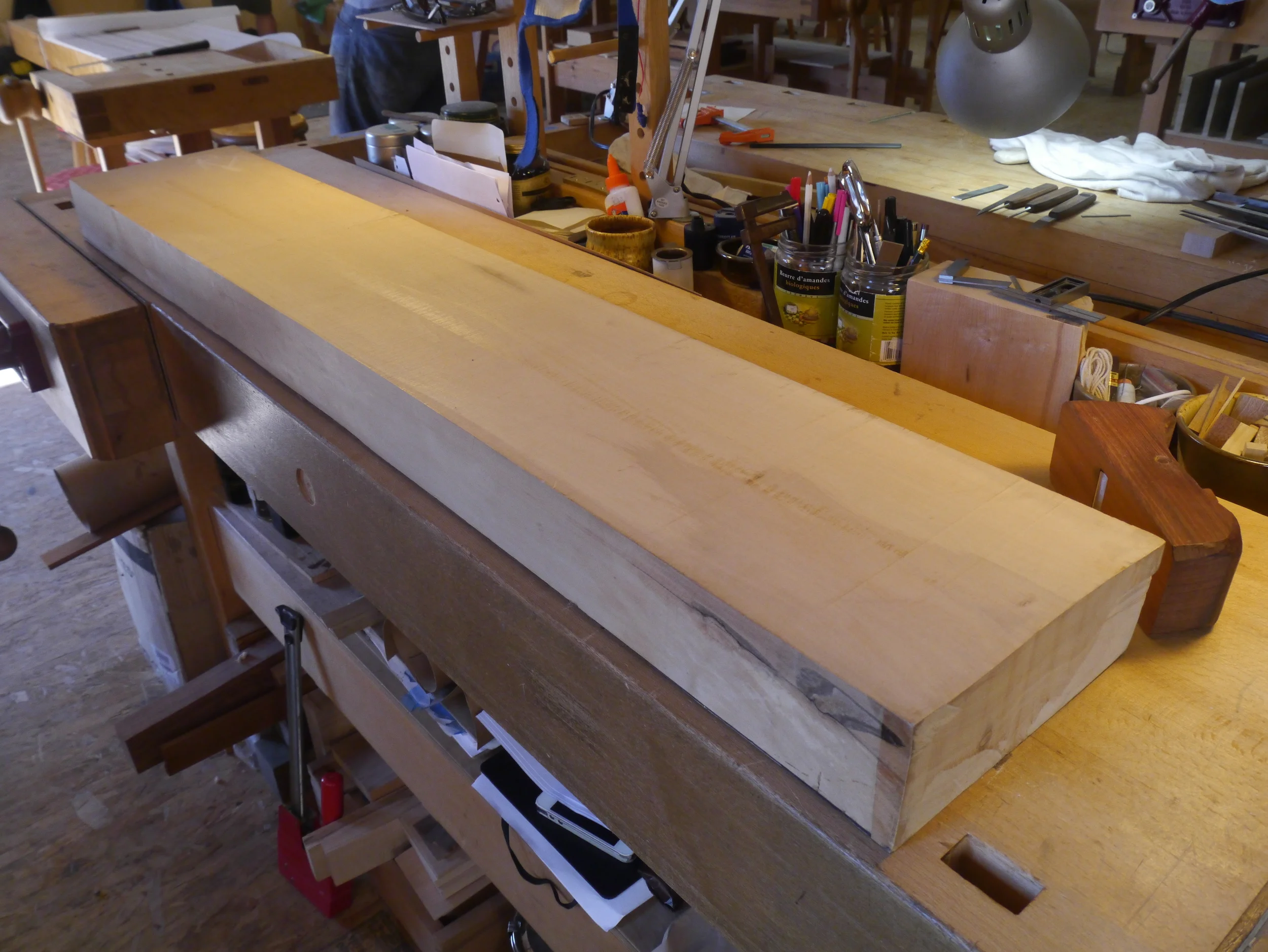
     European Boxwood
    European Boxwood

    The pictures go a little way in showing how glorious this plank of wood is, so graciously gifted by my teacher. Four and half feet of wonderfully straight grain, three inches thick and ten inches wide, of a species rare in large sizes… dreamy! The colour is rich and warm, the smell like butter. I have noticed that insects passing through the shop love to stop by on the freshly milled pieces.

     Life is good
    Life is good

    I took slices from the edge of the flat sawn board, giving me mostly quartered pieces. What a blessing to have thick stock. And just one knot to be worked around. I rejoiced in my good fortune, there would be enough wood to keep things full size. It would be tight, but just enough.

    Then, disappointment when I resawed my piece of Chestnut. The graphics of spalting on the inside of the plank were unexciting, hardly as spectacular as I had imagined from the outside. As hard as I tried, it was difficult to find two pleasing sections while avoiding the extremely punky areas. 

    Robert and I started talking other options, though I would not give up on the Chestnut just yet. We looked at a couple of different woods from his shop and I pulled pieces from the wood collection at school. Nothing fit the cabinet I had in mind. Determined, I resawed a piece of spalted maple with similar tones. It could have worked, maybe, and in fact quite beautiful in itself, but did not quite match up to the Boxwood…

     Spalted Maple
    Spalted Maple

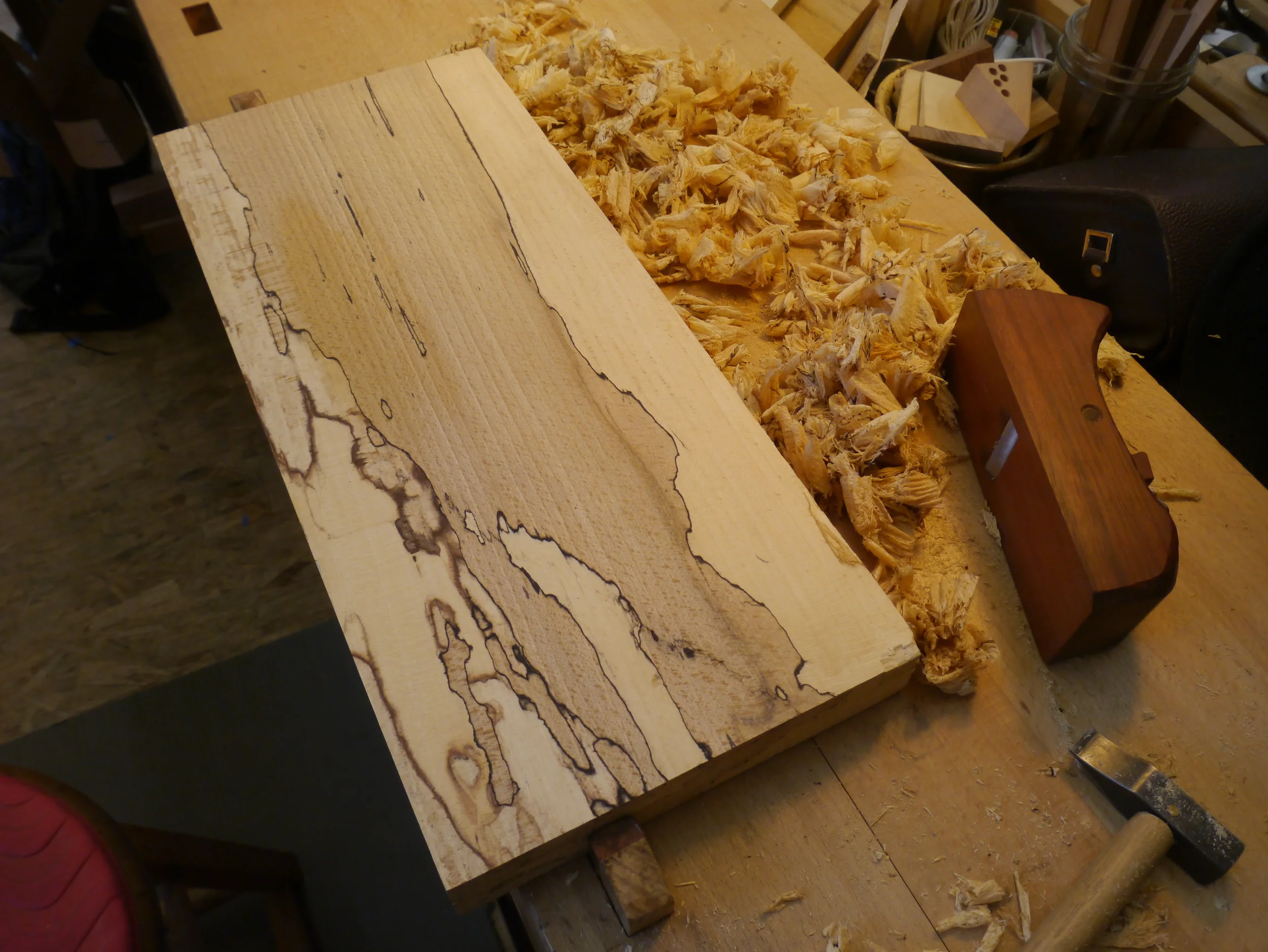
    Robert perhaps sensed my discouragement, and told me he had one more option. I returned to the school after lunch to find this piece of spalted Beech sitting on my bench, recognising it to be wood from JK’s shop.

    Well, I cannot describe the feeling of receiving such a thing. In fact it is hard to talk about at all so I will keep it close to the chest.

    What I can share is that this gift resulted in the most enjoyable hour I have experienced in the shop to date – slowly and gently flattening this piece of wood by hand. 

  • Relationships

    At the beginning of the week, I submitted the first chapter of Heart Hand & Eye to my editor. It had been a lot of work, and as of late had occupied much of my shop time. This weekend would be different, I returned to my cabinet. 

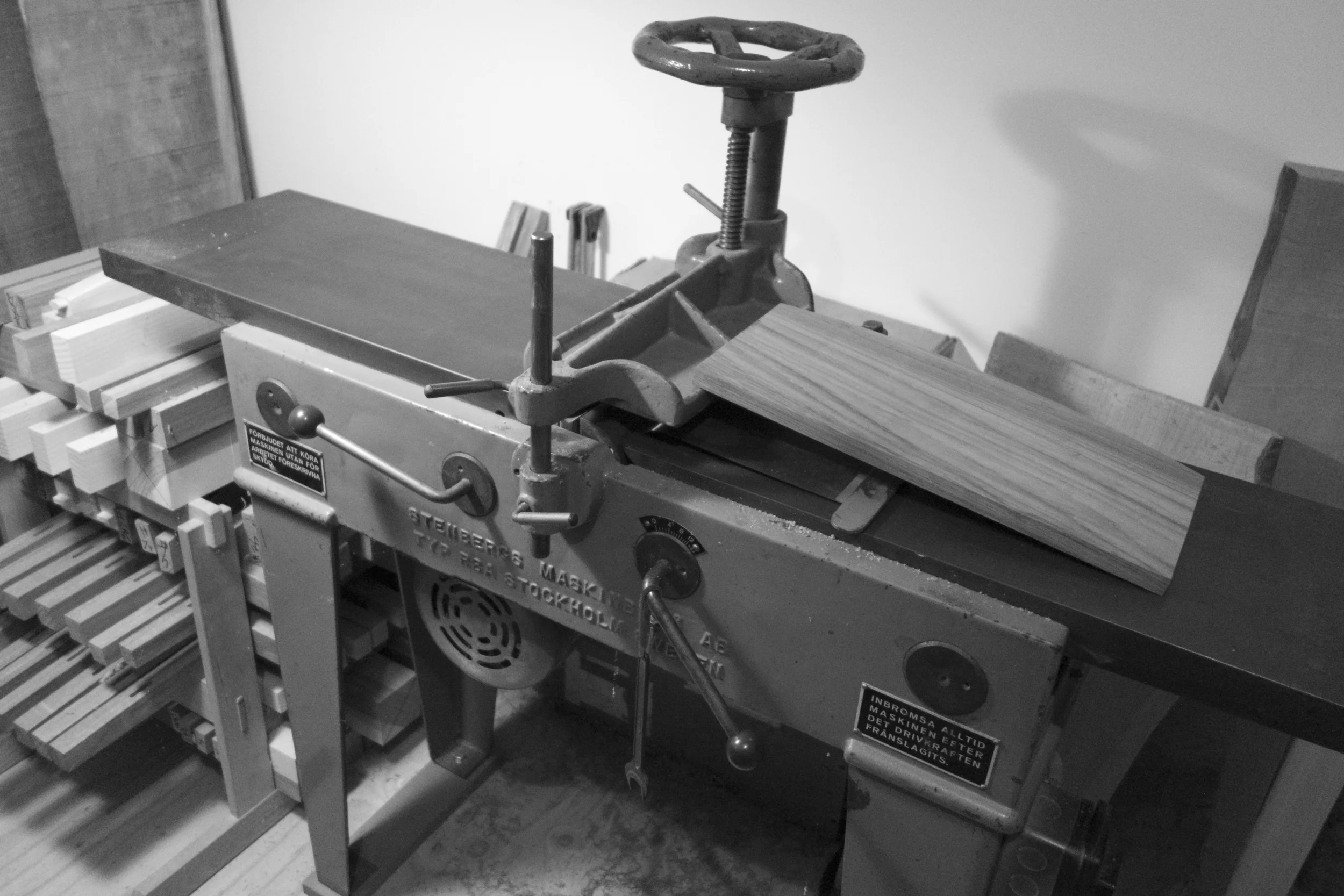
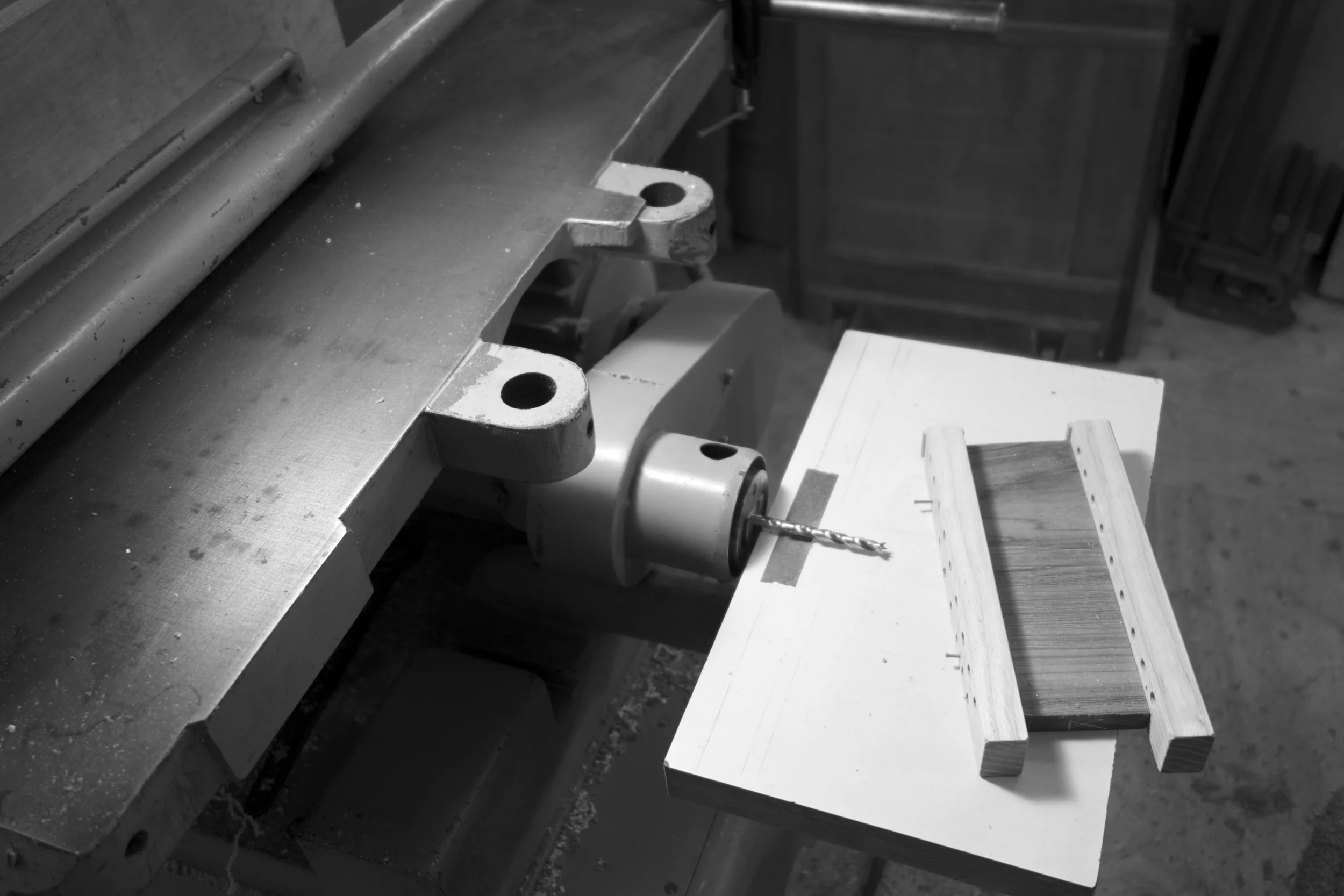
    Saturday afternoon I spent milling the stock for my drawer pocket. A few days ago, I realized that table saw was double cutting on the sliding table side of the saw. I began dialling it in, while I finished dimensioning the parts for my drawer pocket on Jim’s fine old thick planer on Saturday afternoon.

     dimensioning stock on Jim's fine old Stenbergs jointer
    dimensioning stock on Jim’s fine old Stenbergs jointer

    Sunday mourning I finished up with the saw ensuring that the blade’s relationship to the sliding table and the rip fence were consistent, and that it was cutting square in both planes. I often remind our students that fine cabinetmaking is really all about relationships. The relationship that exists between the wood, the tools and the maker, yes, but in many of the facets of our work. This past week, the students and I explored dovetail joinery. When you think about it, the cutting and fitting of a dovetailed joint, is really about the relationships. Between the hand and the eye, the hand and the tool, the tool and the wood, the wood and compression, the wood and the cutting angle, the tool and the stone, the pin and the tail, and on it goes. I enjoy cutting dovetails, and find it almost therapeutic, it serves as a fine example of the relationship we share with our work. 

    In dimensioning my stock, I left things a bit oversized, and kept this in mind when I laid for the dowel joinery, allowing for some dimensioning and shaping to be done after the joinery was cut. An example of this is, I kept enough thickness on the top spacer, so that I can fit it to the slight cup in the bottom side of the top that developed through careless storage on my part and recent spikes in the humidity this past summer. It really is all about relationships. 

    I finished cross cutting the parts to final dimension and laid out the doweling jigs. In this case, I use the other side of a the doweling jigs previously used for the carcass. I then drilled them on Jim’s fine old mortiser.

     drilling on Jim's fine Stenbergs table saw and mortiser
    drilling on Jim’s fine Stenbergs table saw and mortiser

    I cut and planed a bit of taper into my drawer template, that would leave my pocket slightly wider at the back. I removed the jigs from the ends of the vertical partitions, and transferred the jigs to the corresponding parts. I drilled those with and electric hand drill, fitted with a simple shop made wooden stop. When doing the top, I drilled with the spacer in place, which will allow the drawer to run just below the wooden latch on the underside of the top. At the end of the day, I dry fit the pocket into the carcass and began to adjust adjust the dimensions. Be well and enjoy your work, I know I am.
    ​Robert

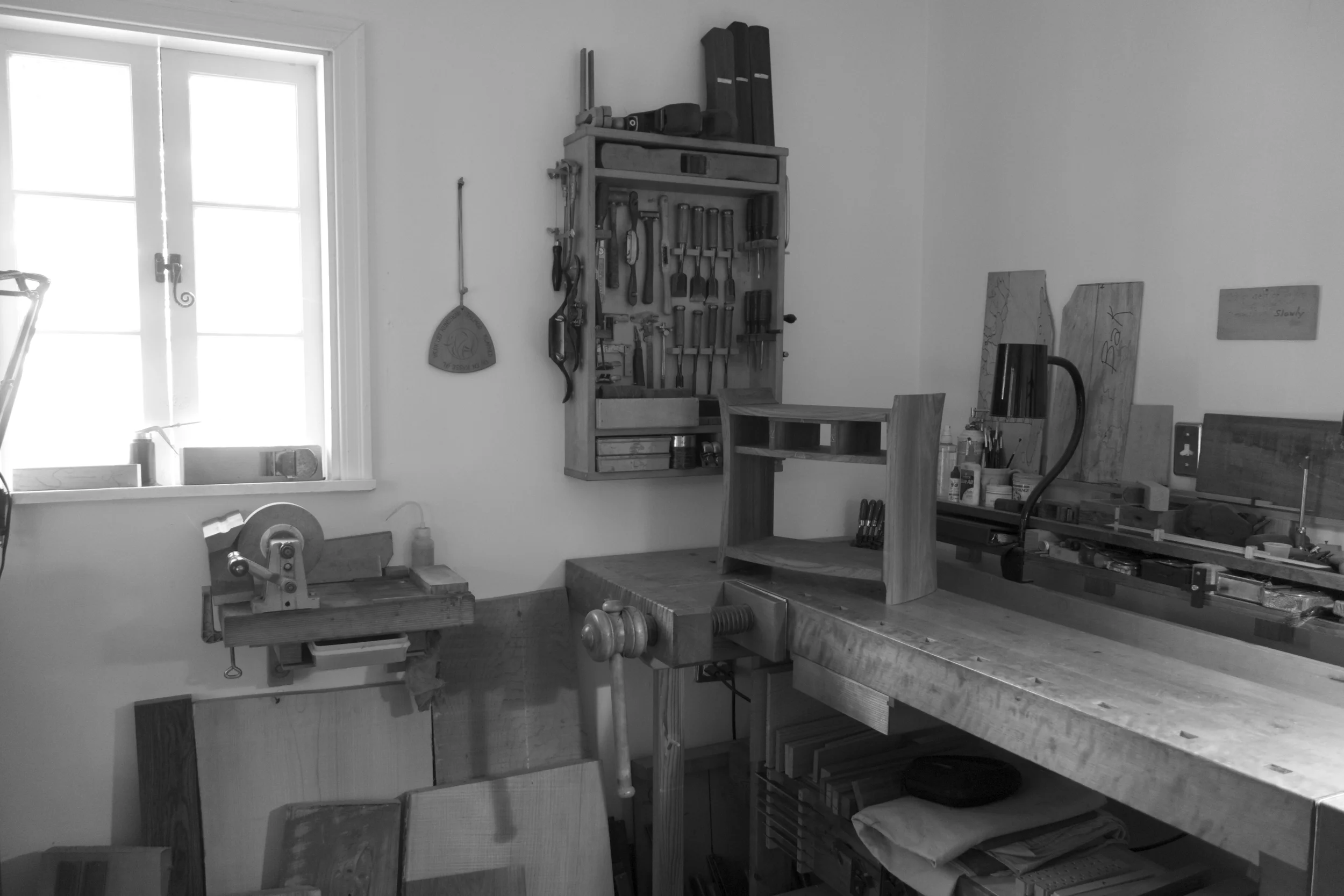
     Sunday afternoon in the shop
    Sunday afternoon in the shop