Welcome to WordPress. This is your first post. Edit or delete it, then start writing!
Author: inside
-
the other end of the plank
In the fall of 2009, I lost two very influential people in my life. I felt my passion for the craft and life for that matter fade. I struggled, and allowed traditions once dear to me, slip through the cracks.
After Jim passed, I found it difficult to listen to Jim’s voice, and the lectures he provided me to pass along to our students, were set aside, waiting for the right time. At the beginning of Caroline’s second year, I recognized a spark, one that needed to be kindled. We began listening to Jim’s lectures again, each Friday after class. I later added a slideshow from the archive he passed along to the school. Gradually, I found it was easier to listen, and my feeling of loss was replaced with that of healing and hope.
There is a passage in A Cabinetmakers Notebook that has always been very dear to me. On page seventy three, third paragraph, it reads:
“ Looking back on it, I realize that not everyone would have done it so consistently. I survived by simply refusing to do things because people wanted me to do them, or resorting to some sort of small series production and doing things multiply – two or three or four at a time. I made one object at a time because of the wood, because of the tools, with a certain idea and hope, and somehow these objects won friends and gradually, gradually, my confidence and experience increased. But for a very long time, it was touch and go. Even now, although people may think that I’ve got it made and things are going fine, even now I am only carrying my end of the plank. Someone else who is sharing life with me and has believed from the beginning in what I am trying to do is carrying the other end of that plank.” – James Krenov
I read this passage when I presented my first piece, as a student at the College of the Redwoods, in honour of my soul mate, who has encouraged and supported me my entire life as a craftsman. When we set up the school, I felt it important to formally acknowledge the significant others in our lives, those who support us as we followed our dreams. At the end of each program, I would ask a student to read the passage. A few years ago, this tradition too had managed to slip through the cracks.
Nondas and his wife Melissa visited our school a year ago this past fall. When they contacted the school, and suggested their schedule, Yvonne suggested they join us for our Friday Elephant and Jim’s lecture. I immediately recognized Nondas’s reverence for the craft, and JK. I remembered how carefully he handled one of Jim’s planes, as I handed it to him. This past February Nondas returned and joined us for Impractical Studies, and stayed on for Vidar’s Chair in the summer term. Melissa, spent much of the time commuting between Roberts Creek and Alaska, enabling Nondas to continue his studies. It was on a Friday evening during one of her visits, Melissa said to me, that she had recognized that evenings lecture as the one they had heard during their first visit to the school. It occurred to me then, that it was time to bring back another tradition. At the end of the summer term, students, alumni, family and friends, gathered in my shop to listen to one of Jim’s farewell addresses after which time, I called upon Nondas to read the passage.
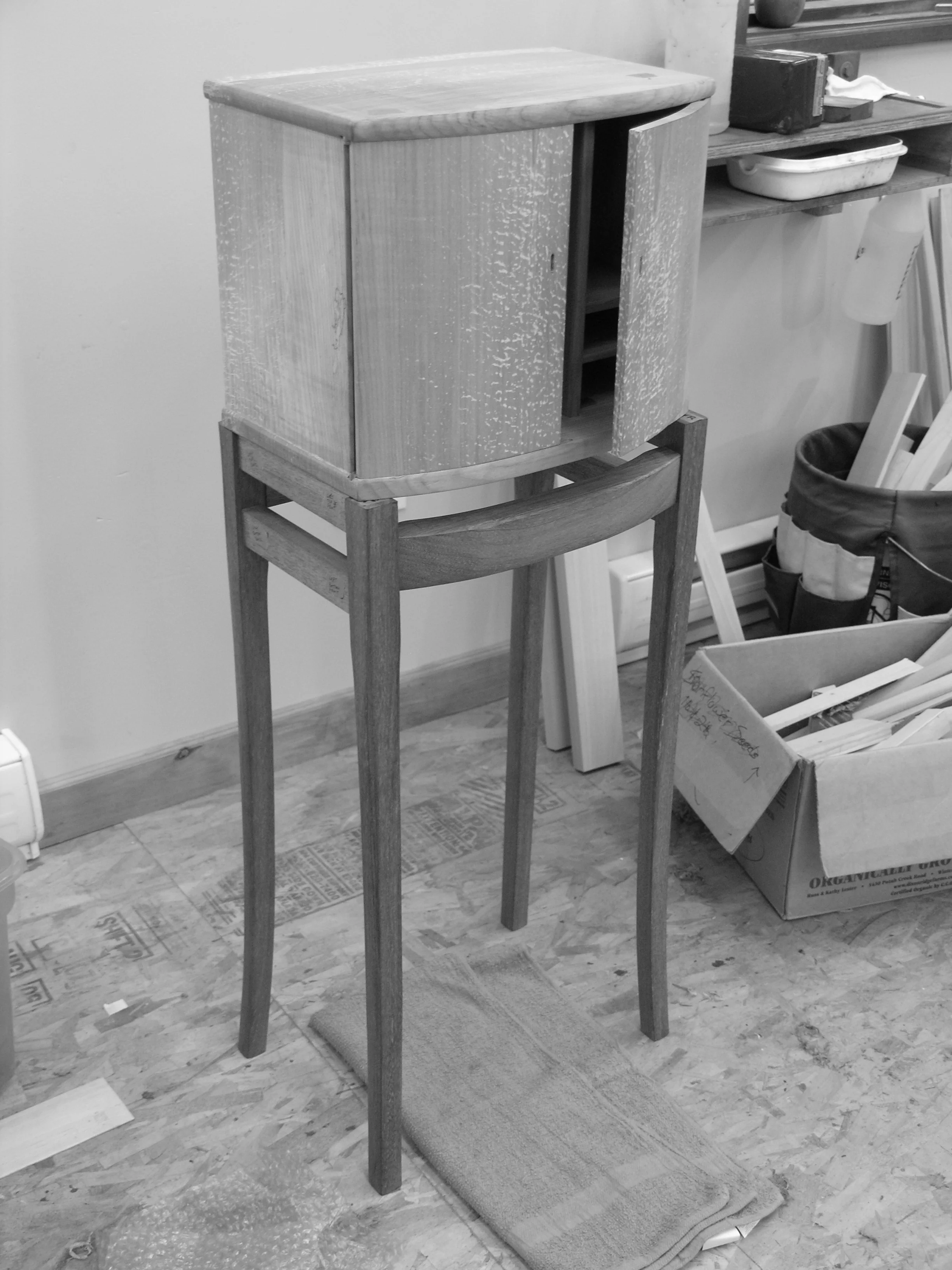
John’s composing piece nearing completion At the end of this past term, I asked John to read the same passage. This was John’s third term at the school in the past year. John arrived with very little experience in the craft, it has been a real pleasure to watch his progression as a craftsman, his focus and dedication to the craft has been an inspiration to witness. John’s lovely wife Haydee joined us for a couple of days in each of his last two terms and kept the home fires burning while John pursued his craft education. John’s fine cabinet in spalted big leaf maple on a stand of kwila is shown nearing completion.
Having completed Impractical Studies this past summer, Alberto returned for the Upward Spiral program and completed a fine reproduction of JK’s pipe cabinet in Garry oak. The wood was harvested locally and was selected by Caroline and myself, with this cabinet in mind. Alberto is in his third term at the school and making templates and selecting the material for Vidar’s chair.
In this past fall term, we had three students complete the Impractical Studies program. We are grateful that all three will be staying on at the school to complete the Upward Spiral program this term. Andrew and Jake will be making JK’s pipe cabinet and Mike will be making JK’s jewelry box.
Caroline is in her third year of study at the school. In the past term she provided our students with an afternoon consult each week, and on occasion supplemented Robert’s lectures with demonstrations of her own. In the coming term, while continuing work on her boxwood and beech cabinet, she will be offering our students two afternoon consults each week. As a teacher I am filled with a deep sense of pride watching her work with our students. Yvonne and I are so very grateful to have this fine young craftsman and dear friend with us here at the school.
Following our winter term, Yvonne and I will be heading to the Tree of Knowledge School in Israel, where I will be teaching a six day class on drawer making and fitting including drawers along a curve. The school is located in northern Israel and was established by alumni Oren Feigenbaum and Nathan VantHof.
Over the break, I managed to spent some time with a few special people in my life, and said goodbye to an old friend. After parking our 1987 Westfalia two and a half years ago we found it a new home. While I was sad to watch as it rolled down the road, I realize that the lifestyle changes that we have made in the time since parking it have been positive in every way. A year long experiment, has lead to a life changing experience for Yvonne and I. We are very fortunate to live and work where we do, and while I am not naive enough to think that everyone can be without a vehicle, simply, it works for us.
Heart Hand & Eye continues to progress, slow but steady. The book has been a lot of work and a steep learning curve for me. The publisher and the editor have been very supportive and I am grateful for their patience.
“seems I’m talking my whole life, its time I listened now” – Mike Rosenberg
Over the break, I was able to spend time in my shop everyday. I worked on my cabinet, on chairs with Gary, and on some days, I just puttered. It was during this time, that I realized just how meaningful this time is for me and that I am not quite ready to share it yet. In the coming term, I will focus my time on teaching, writing and working in my shop. Perhaps when I complete my little cabinet, I will having something more to say. Until then, be well and enjoy your work, I know I am.
-
Welcome, Winter
This week we reopened the school to a full class and some familiar friendly faces. Welcome and welcome back!
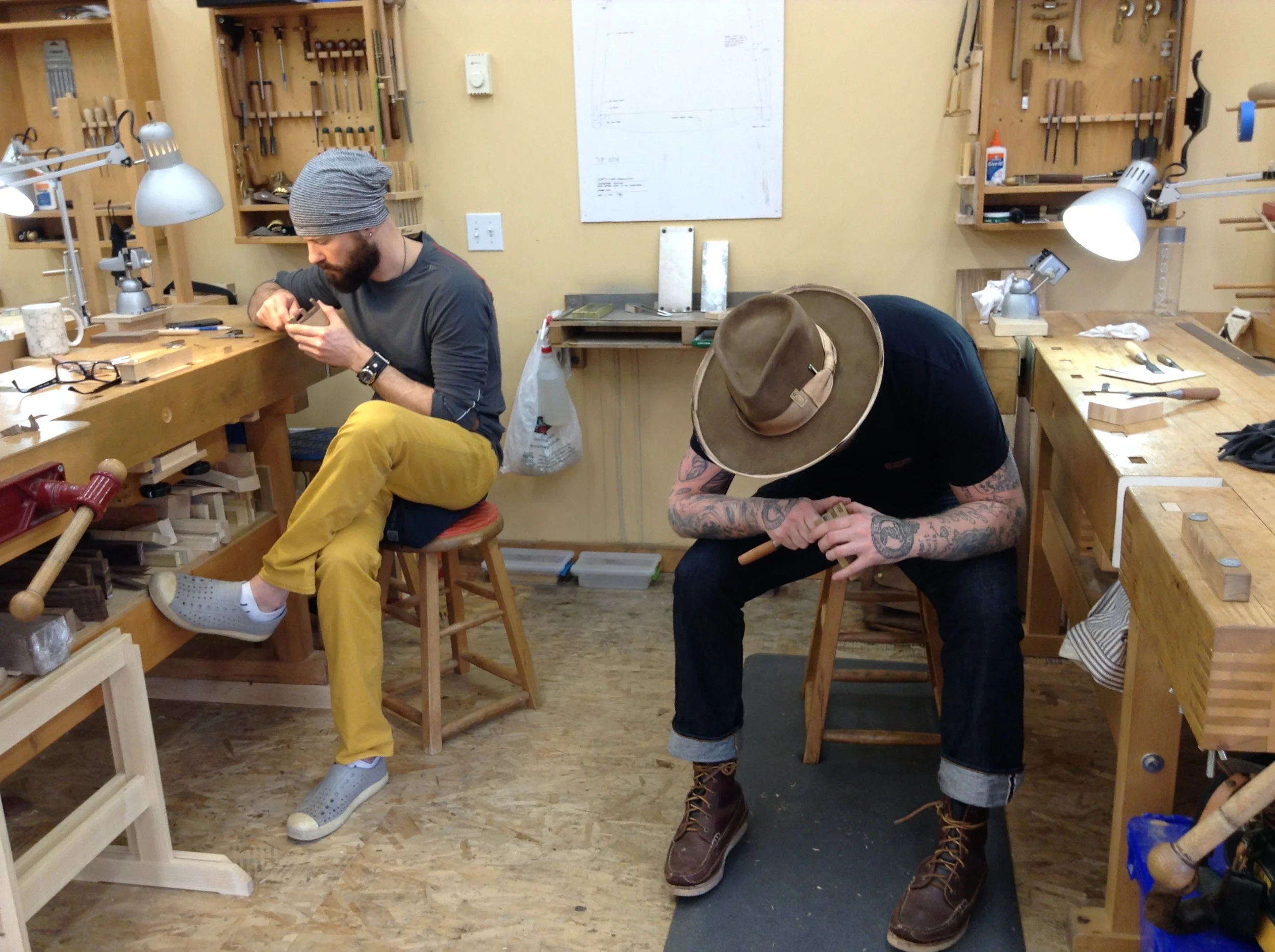
Upward Spiral buddies This first week of the program introduced the idea of grain graphics in wood, a central aspect of our work. We discussed selecting our material with intention, rotating the orientation of the growth rings in a piece when milling, always aiming for the grain to be in harmony with the curves and profiles that we shape in each piece.
We have added chainsaw milling to this first week to expand upon these concepts, showing how a log can be sawn with the same consideration to grain orientation, yielding boards with the best possibilities for grain that is harmonious with our work.
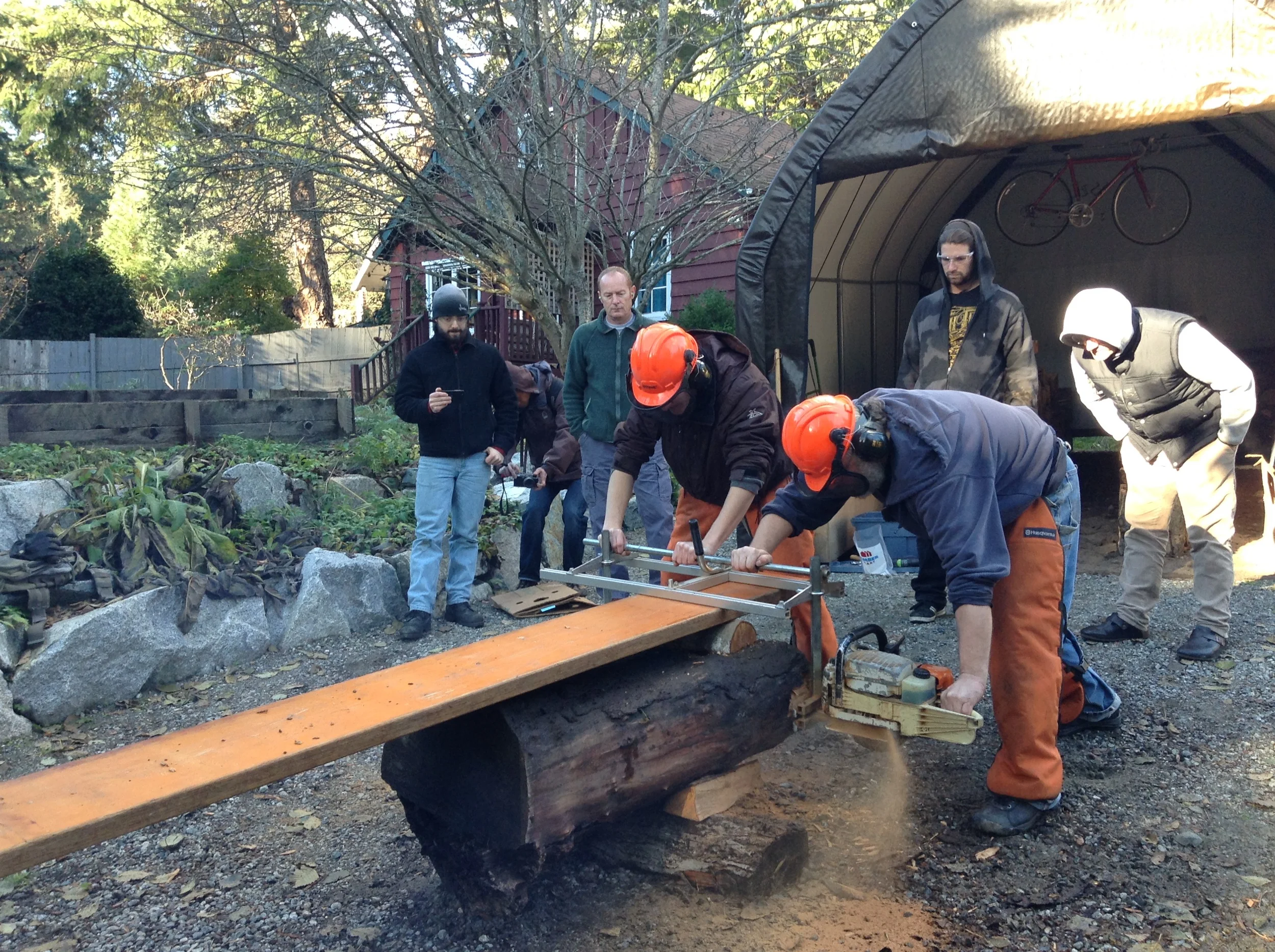
Robert and Will make the first cut 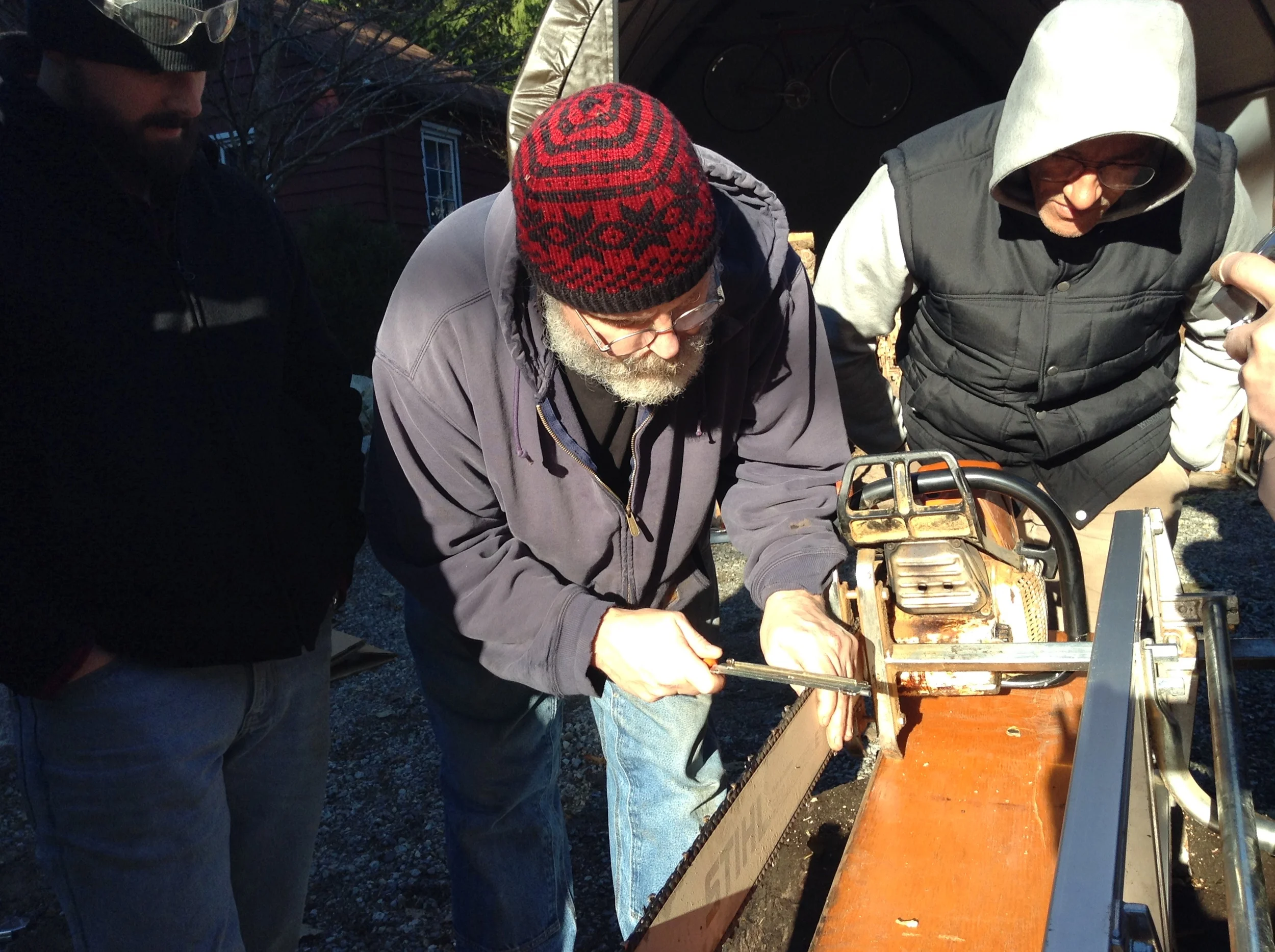
Sharpening between cuts The students gave the Alaskan mill a go, sawing up an Arbutus log that Robert has had for a couple of years.
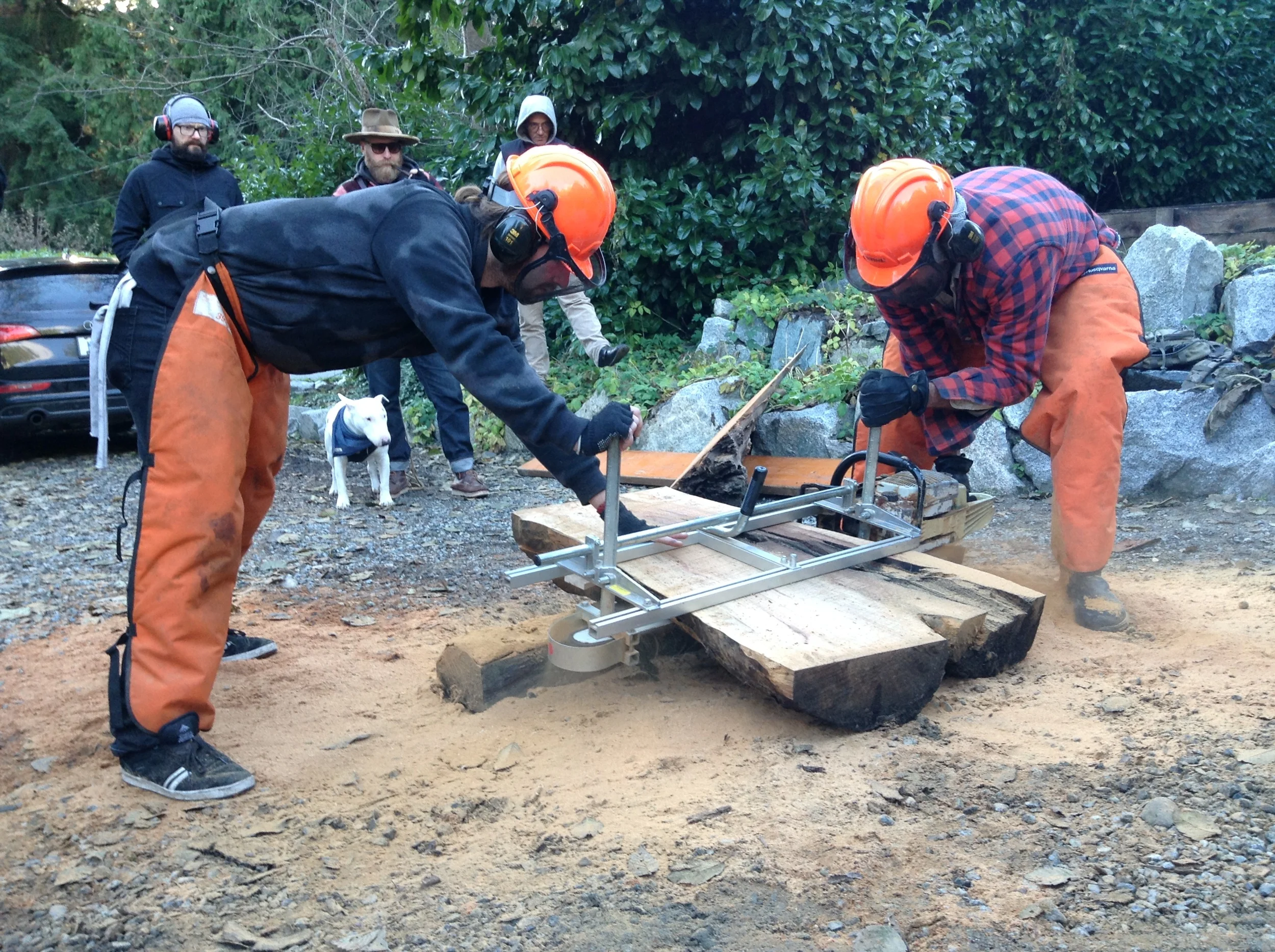
Spencer and Mike make a cut Thank you all for being here this winter, I am excited as ever to be back.
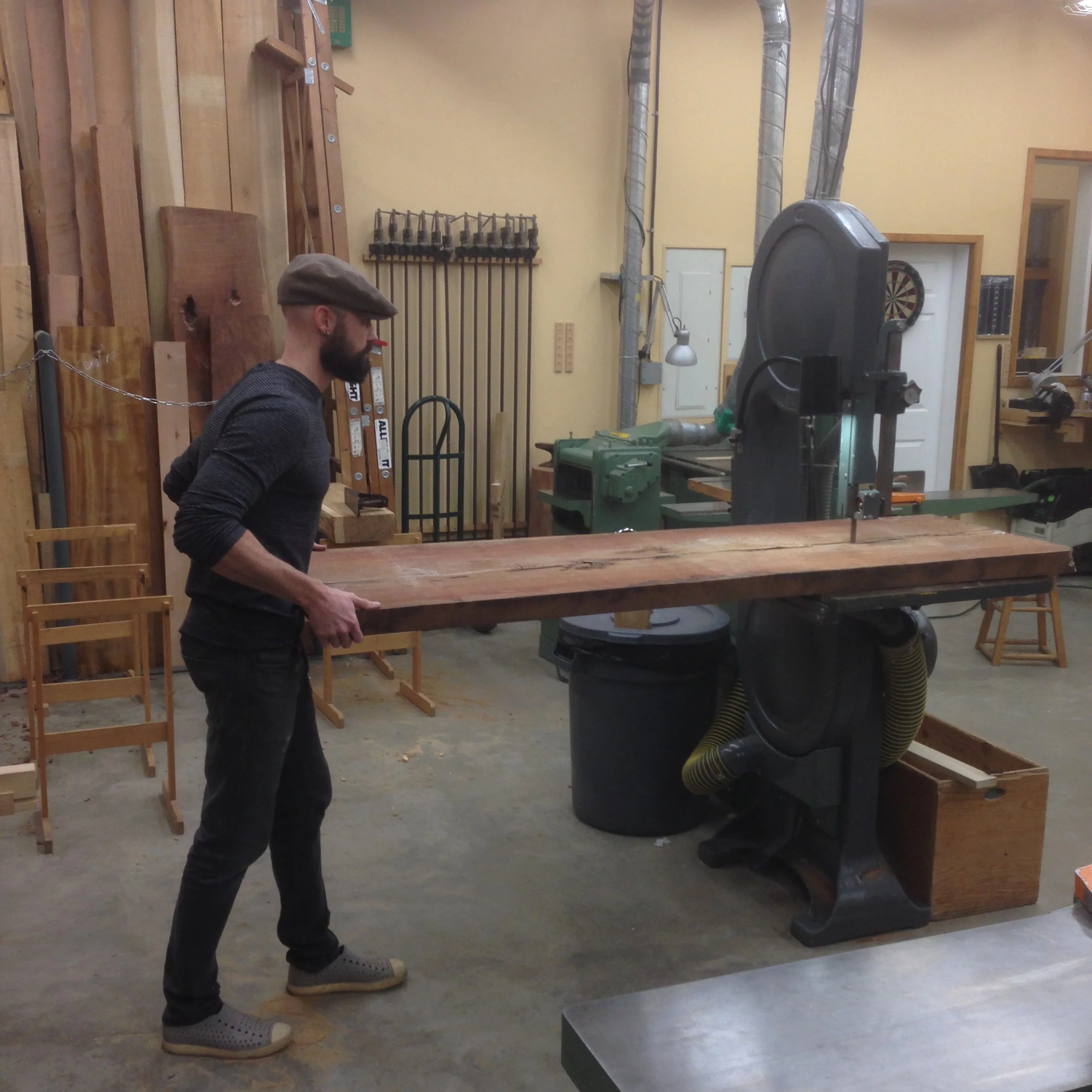
Jake cuts Claro walnut -
Farewell Fall Session
Last week we wrapped up our fall session with a final Elephant at Robert and Yvonne’s home. We shared a delicious potluck dinner and several special closing rituals, including a farewell address from JK in Robert’s shop and a bonfire, on a wonderfully clear night.
I completed the frame and panel joinery on my doors earlier in the week, enjoying a grand opportunity to mortise for the mid-rails of my doors on JK’s table saw mortiser in Robert’s shop. What fun!
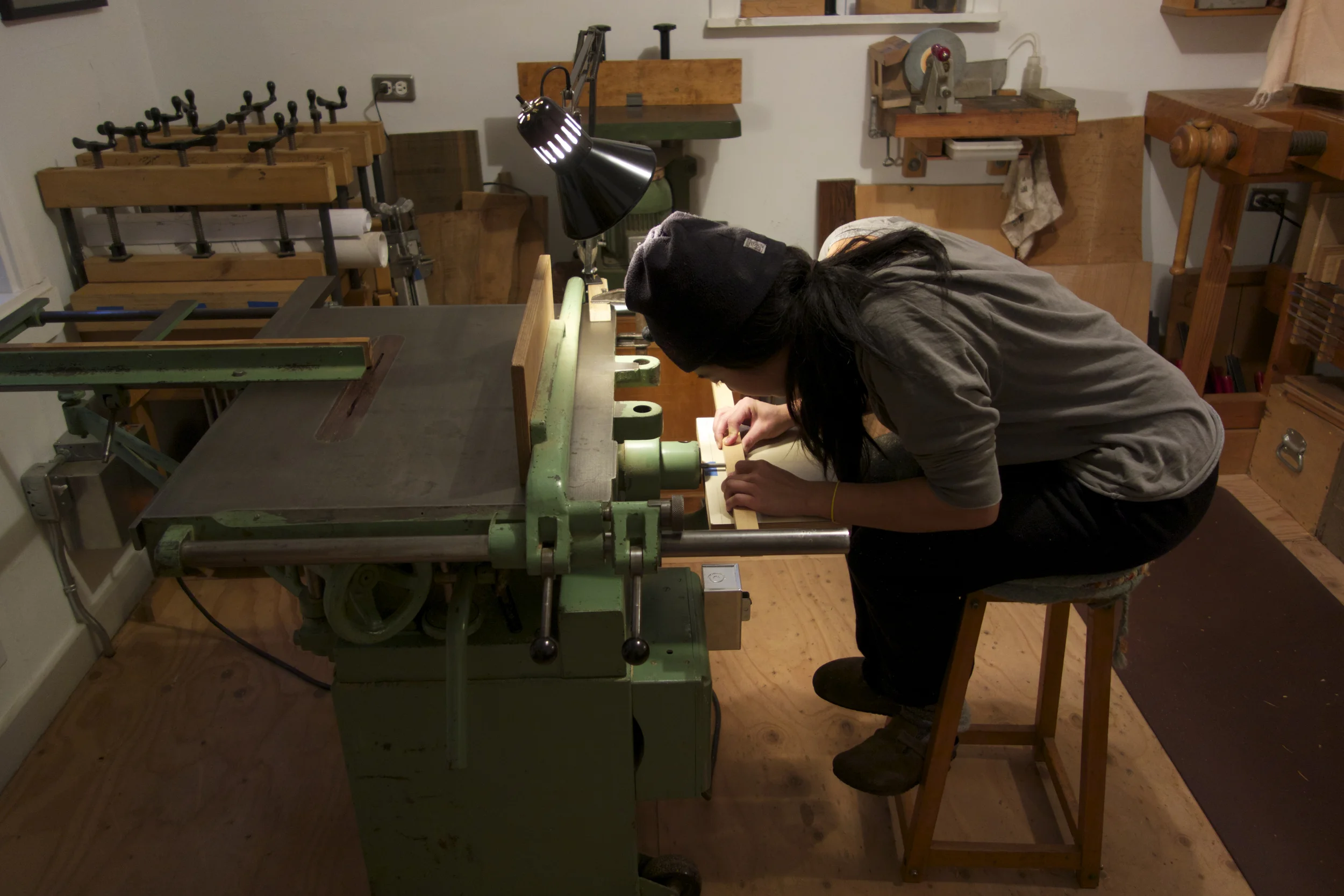
Mortising my mortises I got three slices out of my piece of spalted Beech, giving me several combinations for the door panels. Stoked to finally lay down the frames and preview my options.
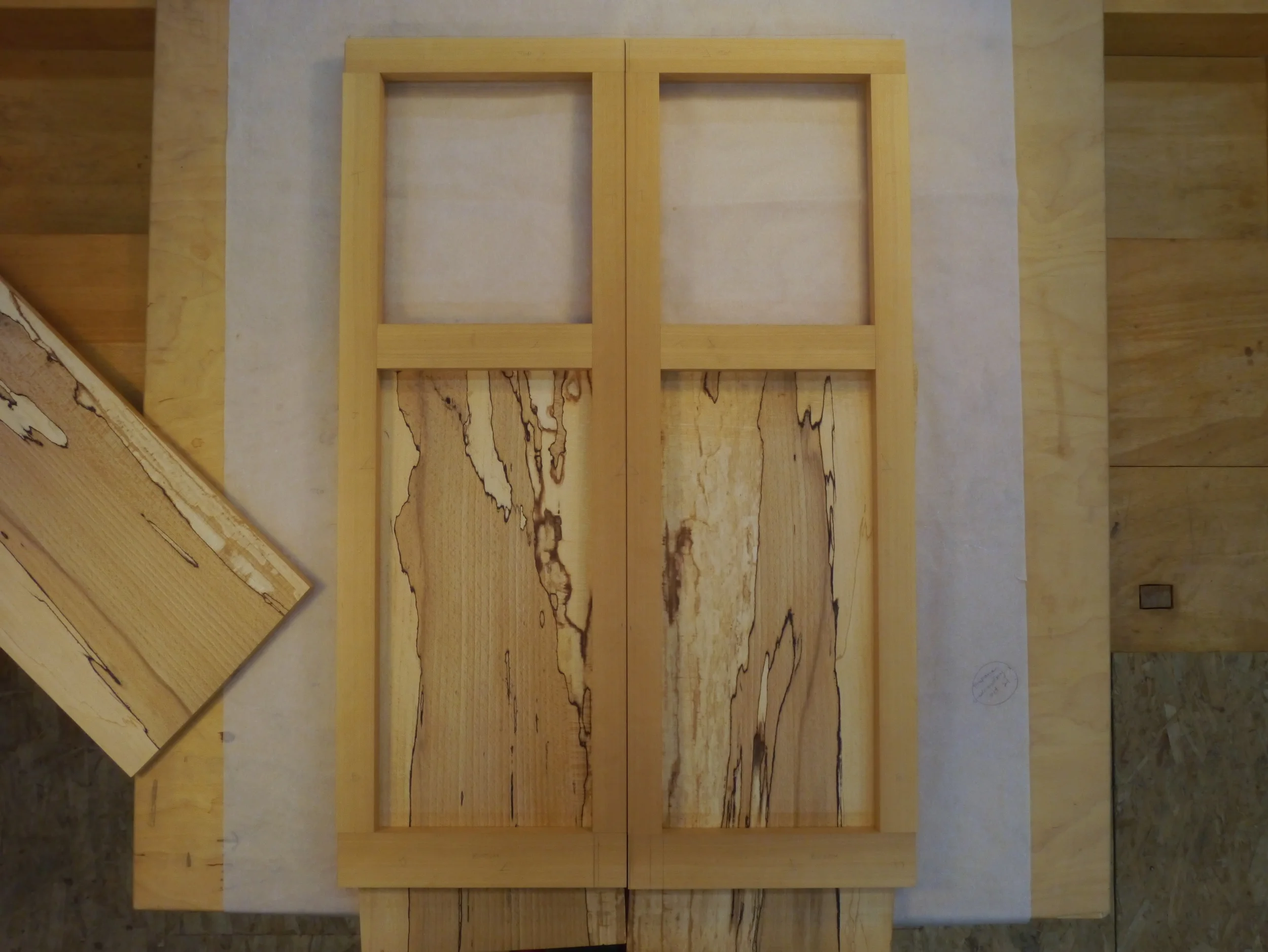
A preview I also finished up a little frame out of Arbutus that I had been working on, to house a print for one of my oldest and dearest friends Wei-Ling. I am coming to love the open mortise and tenon joint, strong and simple, and the more I see it the more I am struck by its straightforward good looks.
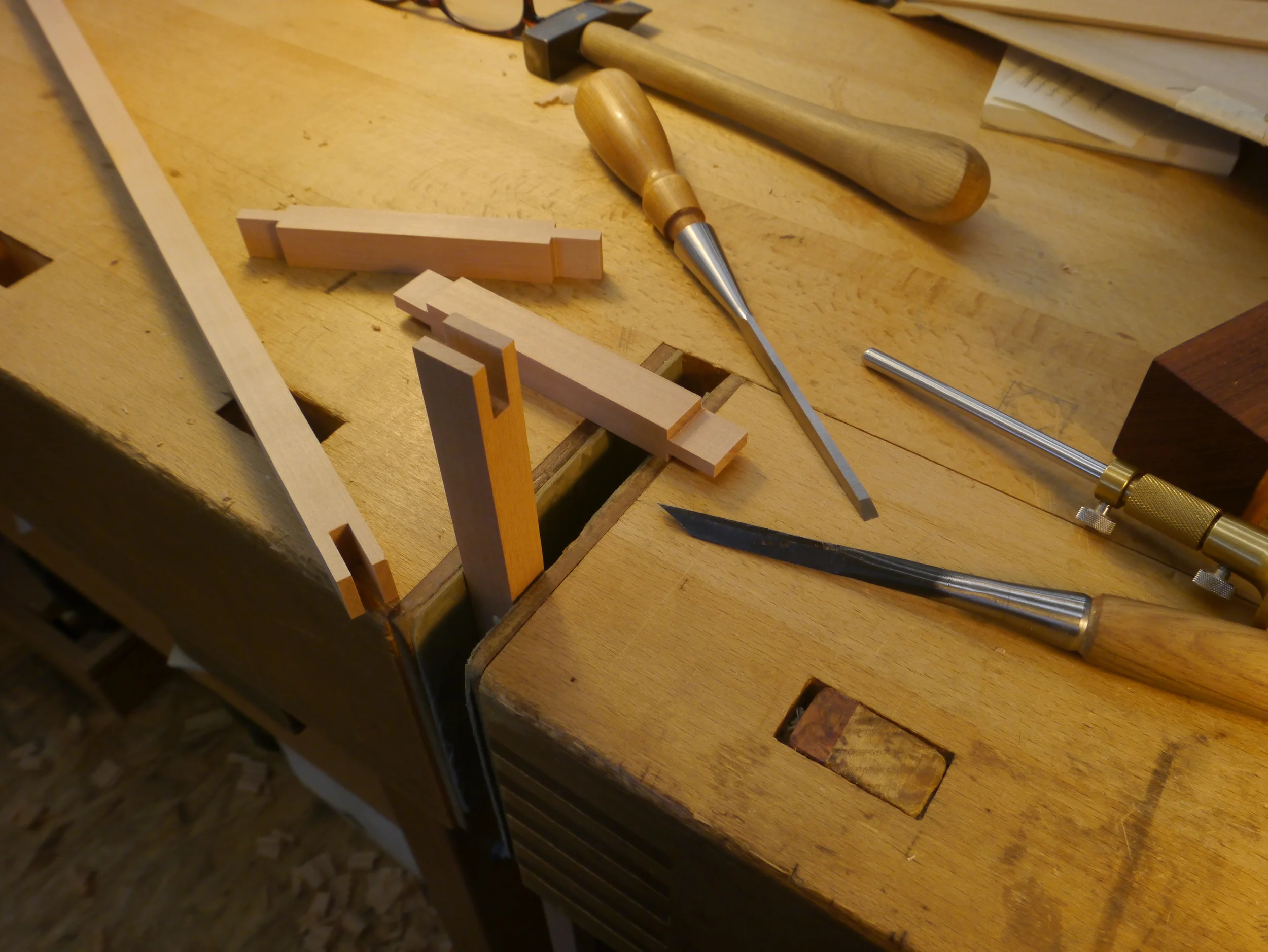
Open mortise and tenon 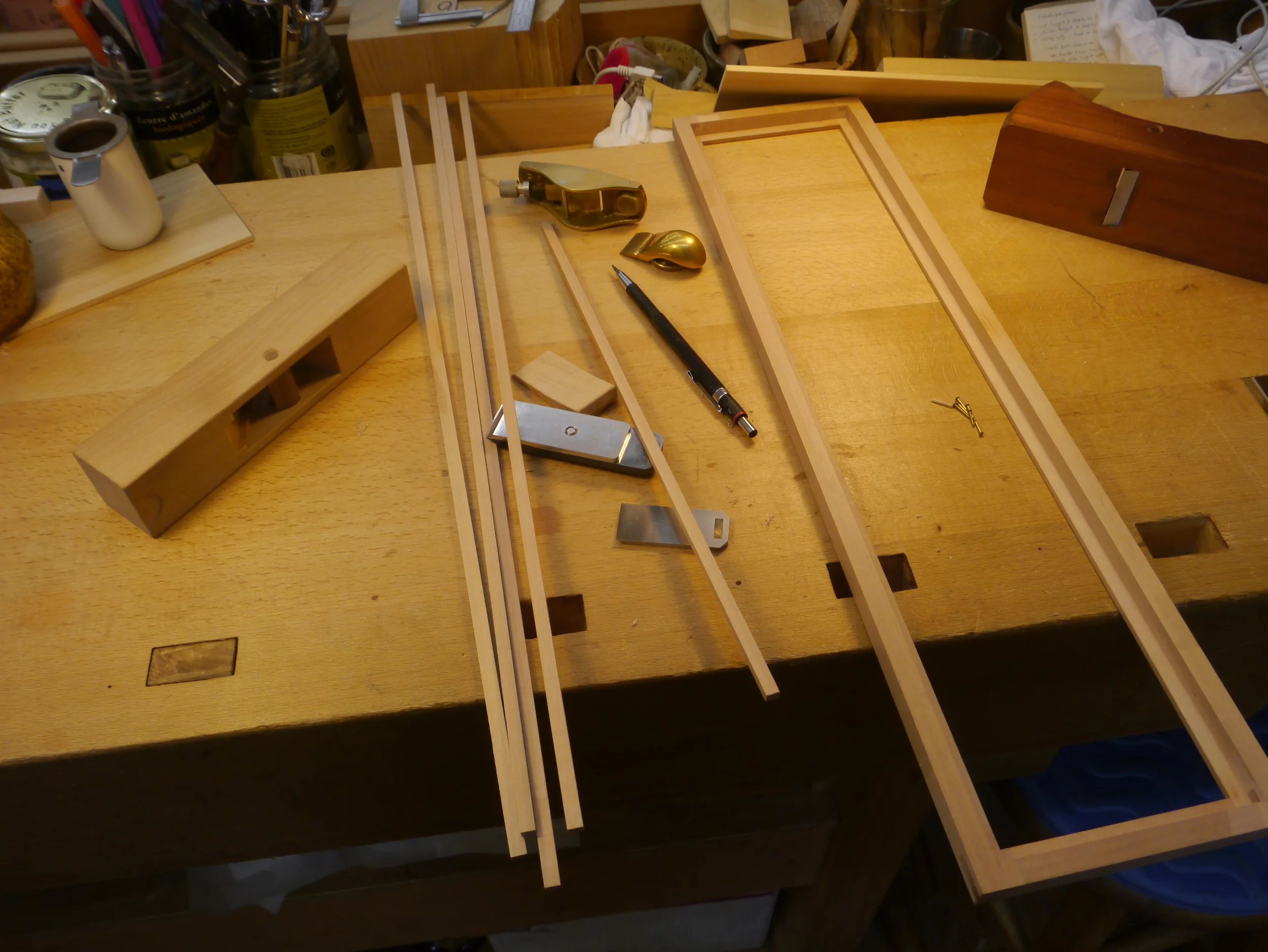
Rabbet run, frame assembled, ready for strips and pins It is my first time using glass in a frame, and I find something so very elegant about this method of pinning it in a rebate with narrow strips of wood, nicely bevelled and edges softened.
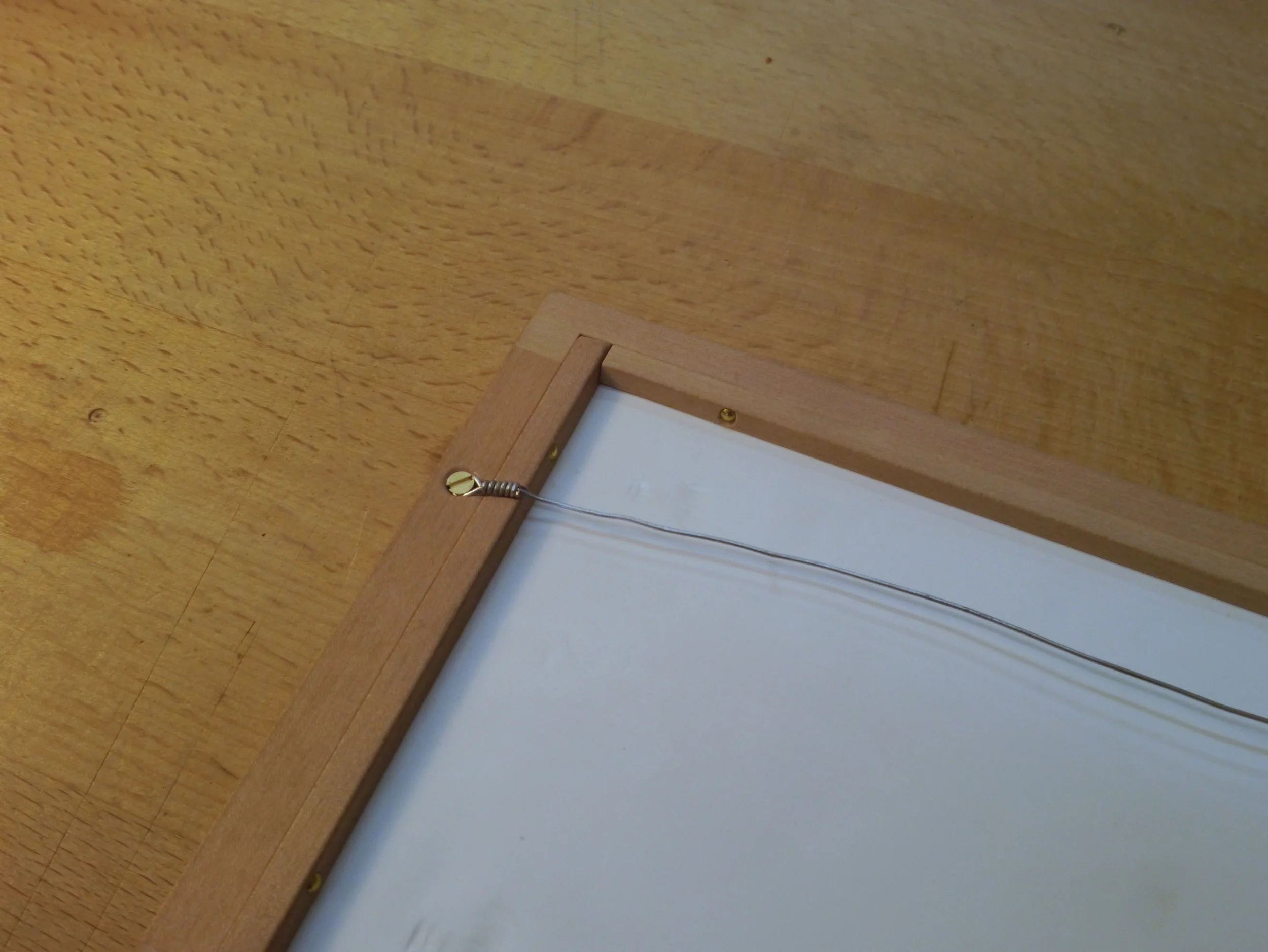
Hanging wire I spent a good part of a day exploring how the frame would be hung, finally settling on a simple wire, wrapped around brass screws set into the frame. Robert suggested I carve a little groove in the strip for the wire to sit in, a neat touch.
I am very much looking forward to getting to this stage with my doors next session, which will have glass above and beech below, pinned in rebates the same way.
To the fall session, it has been a pleasure working with and sharing a shop with this awesome dedicated group of craftsmen, most of whom are returning next session for Upward Spirals and a Vidar’s chair. Enjoy your break and see you guys soon!
-
my hands remembered something
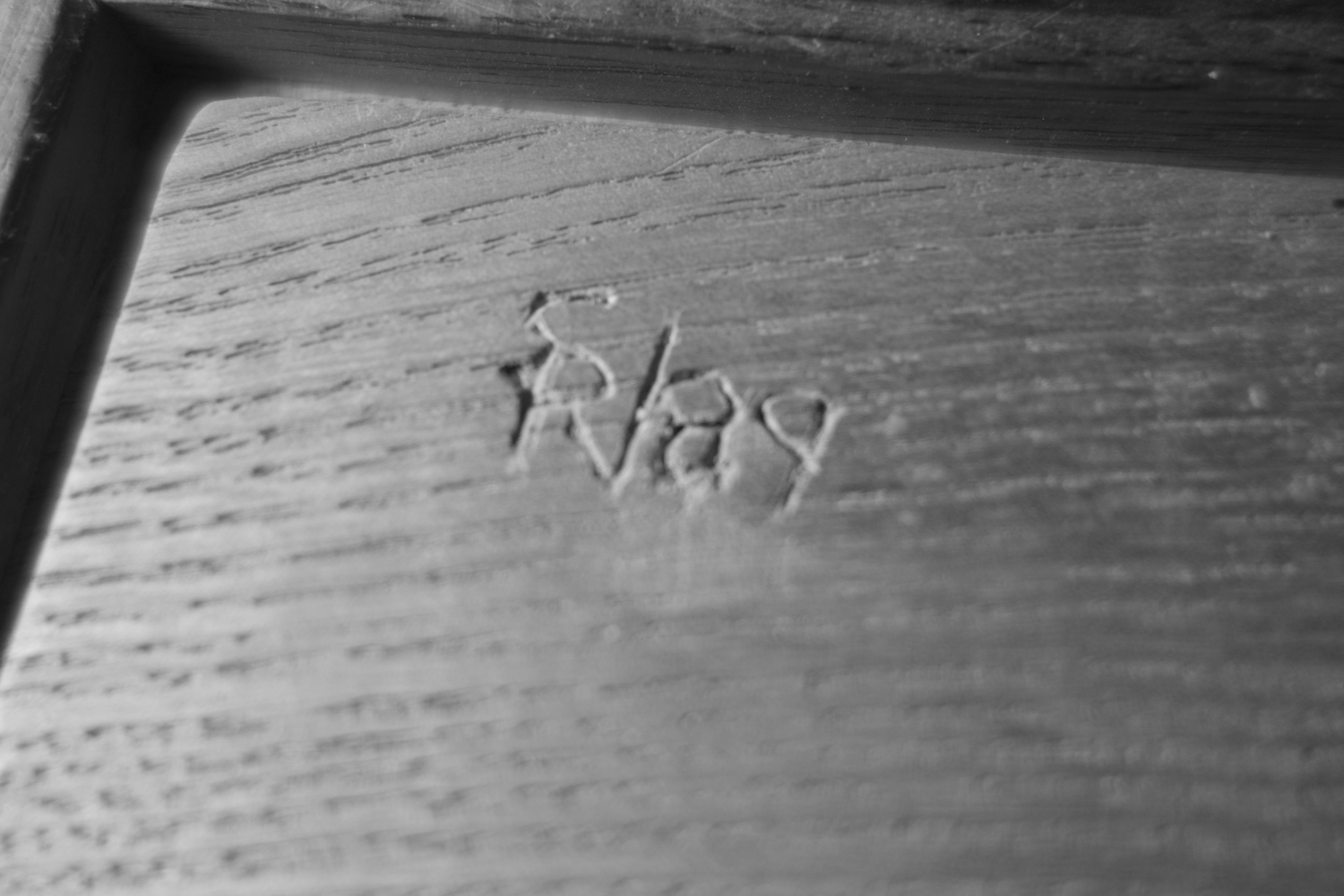
RsVN This past week, I set my cabinet aside to organize the shop a bit. A few weeks ago, Yvonne was doing some cleaning and sorting, and came across a wall cabinet that I had started in 1989. It was in the early nineties, that I started leaving the S out of my carved signature. I think mostly due to my lack of carving skills at the time. The cabinet is in Canary wood, with a quarter sawn ash back. The wood was purchased from a little lumber yard in Saskatchewan, where the wood was stored in a barn and old school buses. It was an early attempt at dovetails.
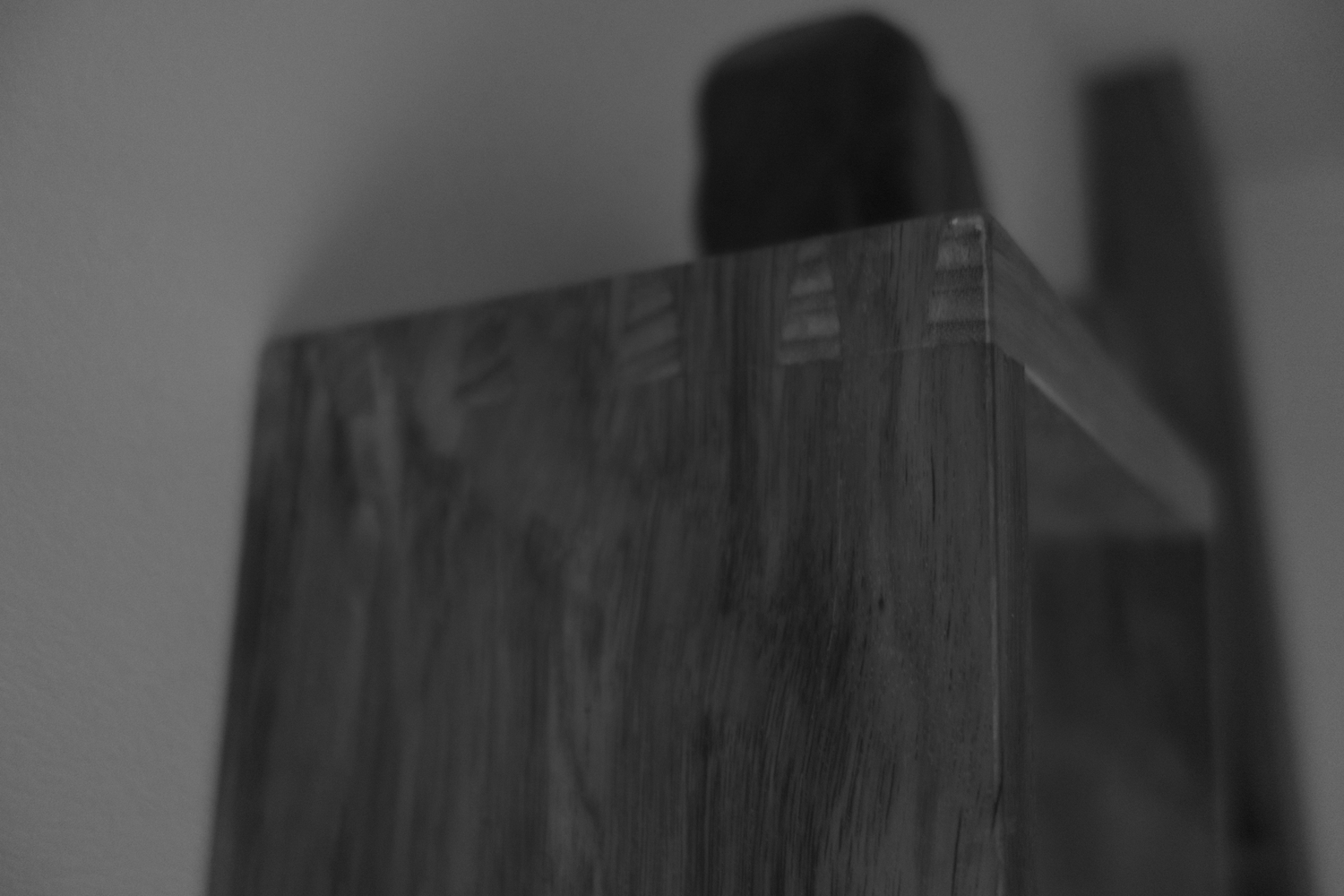
dovetails in canary wood I was unsatisfied with my abilities, and quickly lost interest in the piece. We began to use it in its unfinished state for various purposes around the house. We used it for several years at home to hold our music cassette tapes. It eventually made its way to my shop, and I used it where I used it to hold hardware and bits. It held several of my planes and other handtools, when I went to the College of the Redwoods, and after several moves, after returning from California, I had completely forgotten about it.
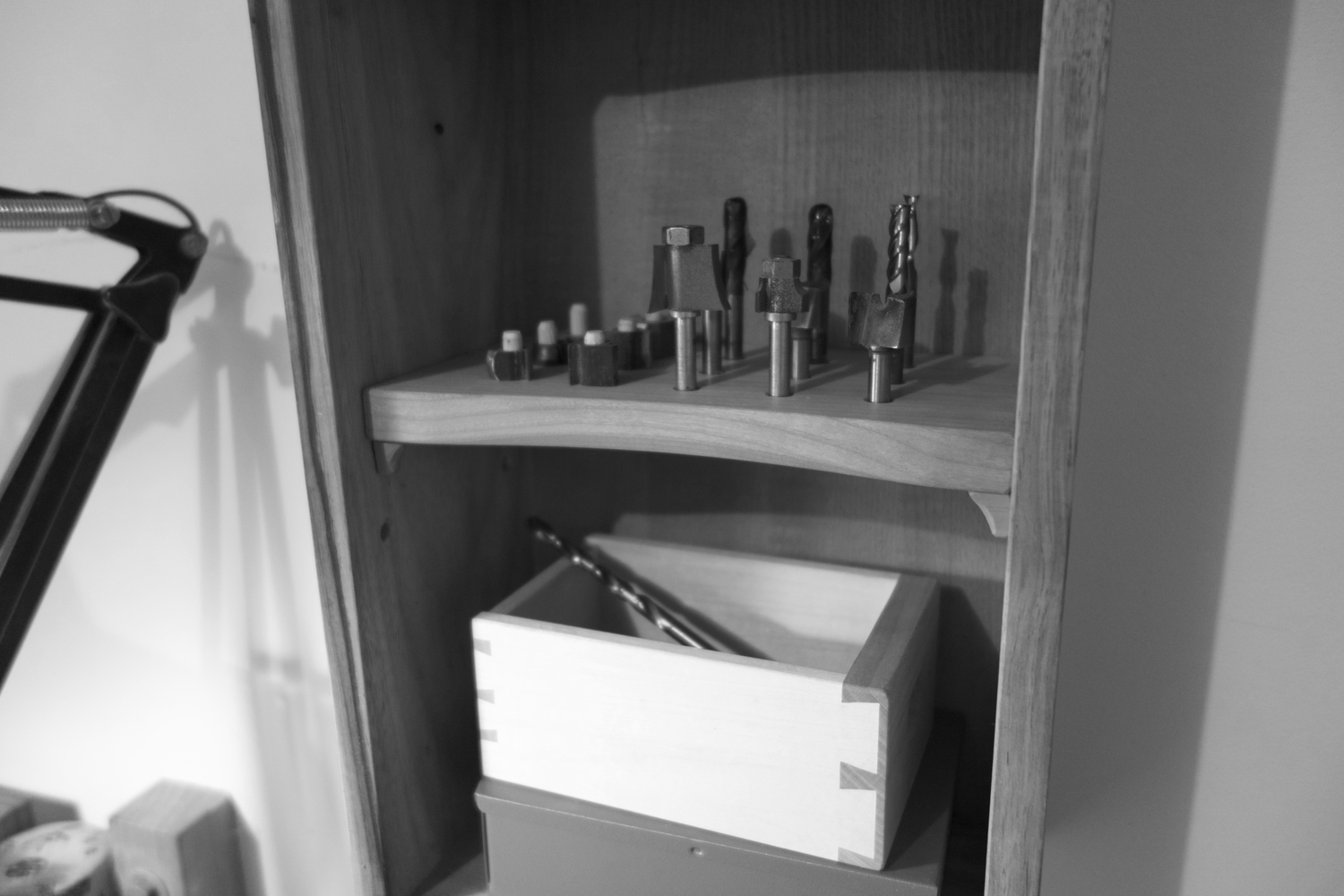
tooling I was needing a place to house Jim’s tooling in my new shop, so I thought I would take some time, to make a few shelves. As the cabinet was already assembled, I decided to drill for the console holes through from the outside. I made a little drilling jig, and clamped a backer in place so not to blowout on the inside faces. I chamfered all of the holes inside and out, and mounted it on the wall to the left of my bench.
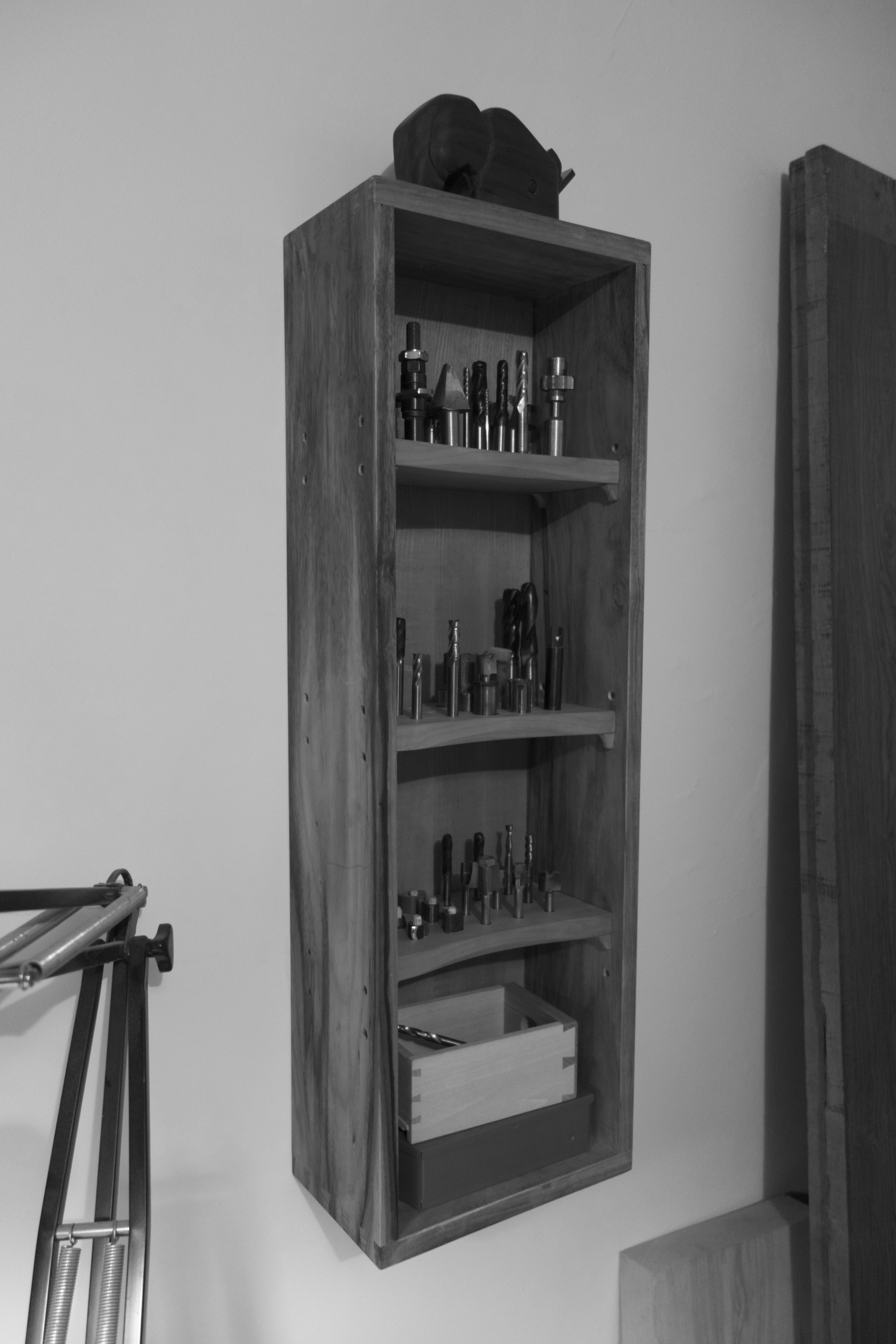
tooling cabinet I cut three shelves, from a piece of cherry that I had made a bed from years ago, and drilled the holes for shaper bits and end mills. I fit them to the cabinet with a plane, and cut and shaped a little curve along the front edge.
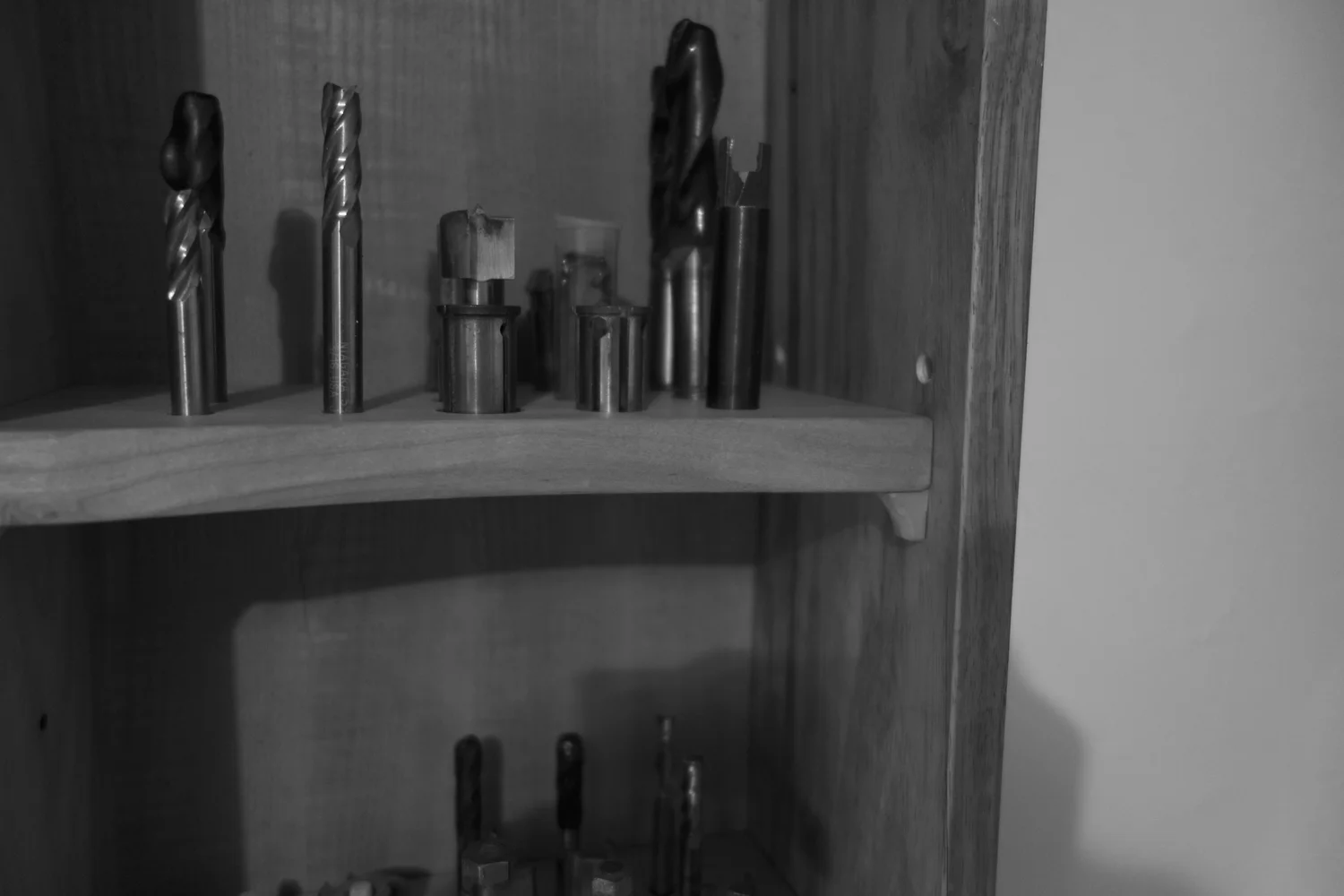
tooling While carving the consoles, I was reminded of a story that Jim shared with us when he retired from the College of the Redwoods in 2002. In the following years when he lectured for our students at IPSFC, he would share it again now and again with us. The article was about the potter Eva Zeisel, and appeared in the New Yorker April 13, 1987.
“You must imagine glazes, possibly highlights sliding around the hills and valleys of an object, emphasizing the breaks of it’s surface. You must imagine that a glossy surface might be dark, and that reflections intrude into the shape, that receding surfaces have a tendency to disappear by shading. You must imagine how handles feel and how pots balance in your hand before they exist, and the shape of the flow continuing the line of the spout, and the shape of the plate or handle so that it does not slip out of your hand when you pick it up. You must also imagine the innumerable outlines or profiles which will delineate an object while either you or it moves relative to the other. You must imagine the lines.” She writes of the complex relationship of “something to nothing” saying of decoration, “When does it impress you as jewelry? And when does it become tedious or even not decreeable by its abundance?” “When do emotions you want to convey become caricatures? What does a sixteenth or thirty second of an inch here or there do to your design? Is it relevant? You must feel this out by watching the renounce of your emotional response.”
I learned from her daughter that she was working twelve to fourteen hours a day. The next time we spoke, Eva said “ Ive been carving spouts and handles all day. My hands have remembered something. Not my mind but my hands.”
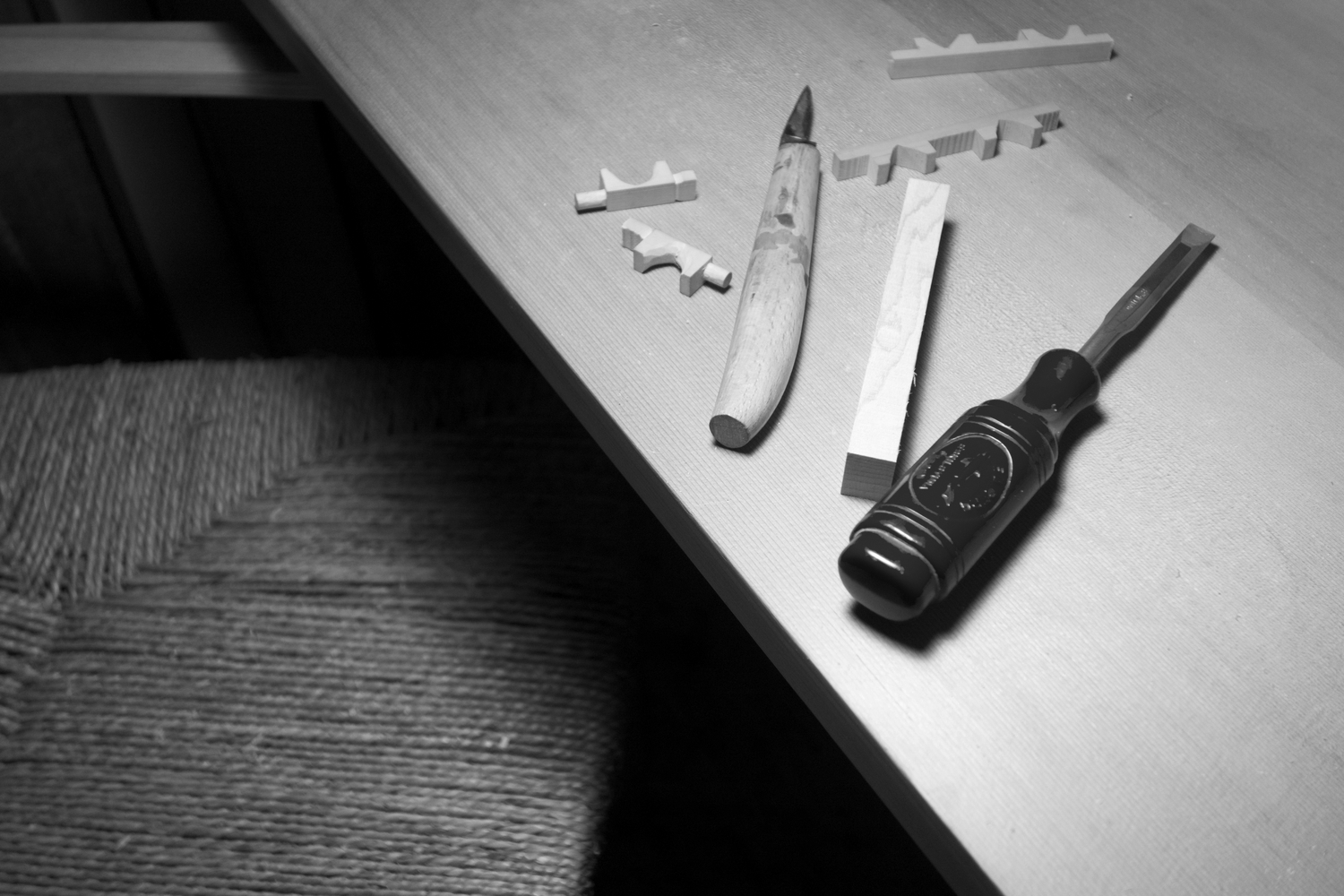
carving consoles The last couple of mornings I spent carving consoles in my shop before heading into the school to teach, have been the most enjoyable time I have spent at my craft in a very long time. I used a couple of Jim’s knives and chisels and sat in a very comfortable chair designed by Jim’s dear friend, and made by one of my students also a dear friend.
Be well and enjoy your work,
Robert -
Advice not taken – finding my way
The year I left California to return to Canada, with the hopes of finding a place to teach the craft that was so dear to me. A dear friend gave me a piece of advice, suggesting that I build one piece every year. The If I could add to this I would say build it from your heart. Since leaving the College of the Redwoods fourteen years ago, I regret I did not do this. This advice, came from one of the most soulful men I know. I had the good fortune of having Michael Burns as a teacher, and I regret not doing anything and everything to make it happen. Since setting up my shop at home, and taking on the book, I have struggled to find my way back to the craft that inspired me all those years ago. Since first reading A Cabinetmakers Notebook by James Krenov in 1987, our lives have followed a road less traveled, for which I am so grateful. It was that book, and the conversations between Jim and I in the years that lead to the opening of our school in the spring of 2004. I realize now, that while I have gained the passion for teaching, somewhere along the way, I lost something more important. I have recently discovered the importance of working daily from the heart.
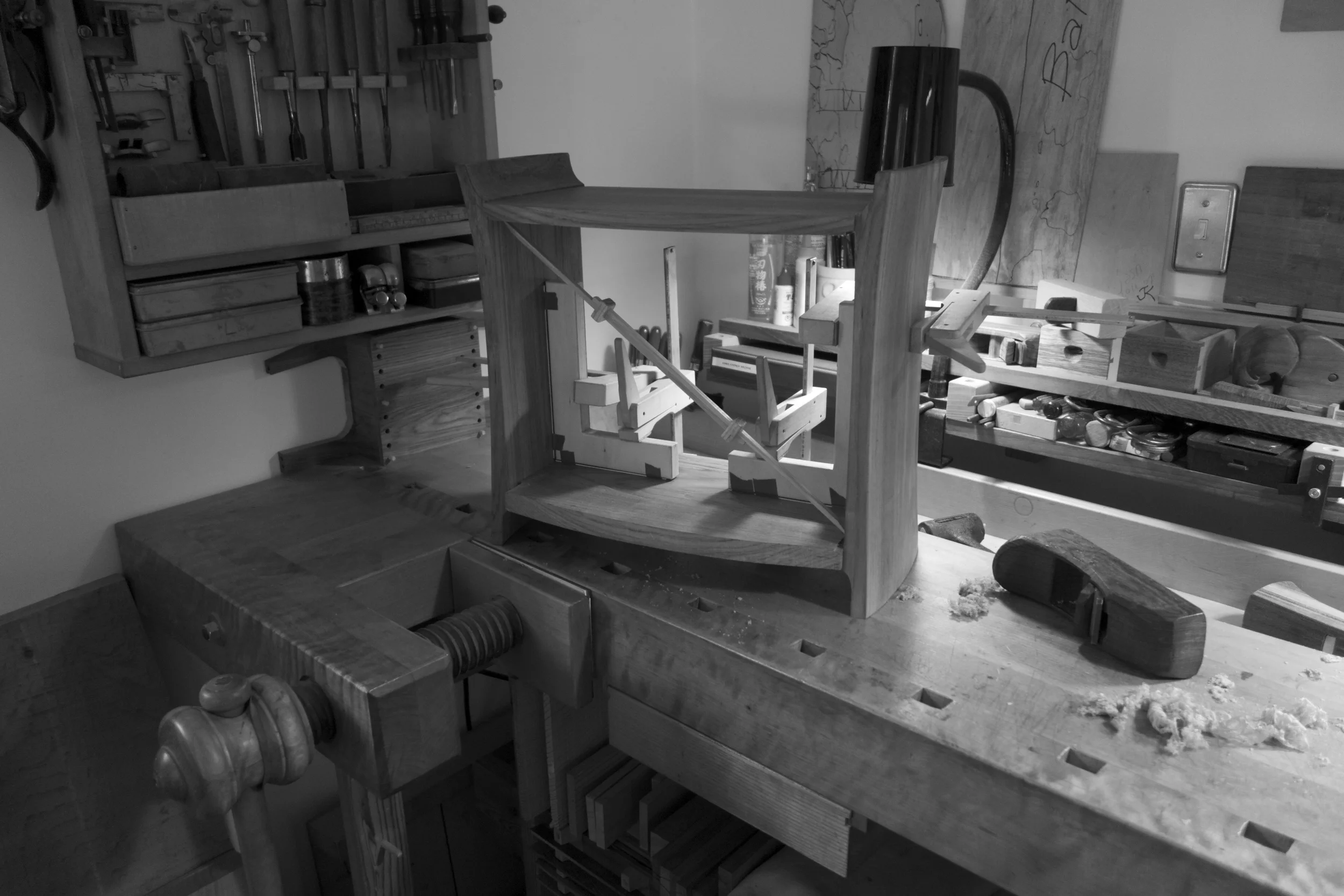
Sunday morning In working in my shop a few hours each morning before heading into the school to teach, I do not really feel I have enough to update every week, but will do my best. Since my last entry, I have completed the drawer pocket joinery, mortised for the hinges in the cabinet, cut a few curves and made a new bottom. I have moved onto fitting the door and running the rabbet and lip where they meet. Heart Hand & Eye is progressing well after taking some very good advice from my editor. Every day at the same time.
Be well and enjoy your work,
Robert -
The Last
Three weeks ago, we began our fall session of our Impractical Cabinetmaker Program. While I enjoyed our break immensely, having spent most of it in the shop and in our yard, I felt ready for the return to teaching and what has become our way of life. Over a decade ago, after suffering a non shop related injury which made it difficult for me to continue with my work, at least on a full time basis. I took the advice of two people very dear to me and turned my attention to teaching. Fifteen years later, and after much personal reflection, I have come to the realization that teaching has become, and will continue to be cherished aspect of my life. It may not have quite the appeal to some as the solitary life as craftsman, but it, combined with having a place of my own to work again, has given me balance in my life. This past summer I entered another stage in my life as a craftsman, I began to write. The first chapter of Heart Hand & Eye is due to be in my editors hands this coming Monday. I am very much looking forward to working with John Kelsey on this book. I will continue on my cabinet and chairs, a couple hours each morning, before heading into the school, in preparation for our tenth year anniversary exhibition next May. The rest of my day will be spend teaching, writing, and enjoying this beautiful place we live.
What has made all this possible, is my soulmate, my partner in life and work, and her unwavering support throughout my journey as a craftsman. I no longer look at my life as a craftsman, teacher and writer as separate entities, the teaching and writing is just part of my life as a craftsman.
For several years, we tried bringing in alumni to assist with the program. There never seemed to be a good fit, and to be quite clear, I blame myself for this. As someone who has always been very passionate about what I do and how I do it, and having made a promise to an old friend to always stay the course, there was very little room for deviation from our mission. We decided to let the idea go and focus on getting the program where I it wanted to be. After trying variations of the conventional nine month program, including a second year and residency, we went our own way. We opted for four ten week programs providing us with a comprehensive full year program, with four intakes a year. Focusing on what we do well and formalizing our commitment to the education of craft, honouring JK’s legacy. The Impractical Cabinetmaker Program is entering its second year, having replaced our Artisan and Craftsman programs and thus far has been very well received by our students.
David Welter, a dear friend, was one of my teachers when I was student at the College of the Redwoods. He is a true Krenovian, and has been the guiding light for the program there for many years. A few years ago, after trying various alumni in part time teaching roles at the school, and not finding the right fit, I shared my disappointment with Yvonne. She smiled and said, “Don’t worry you’ll find your David Welter for our school someday.”, and while I admit that comparison raises the bar, We found him. Or should I say her. It was two years ago this past August, that I arrived at the bus stop a couple of days before our fall term, to take in our recycling, that a young woman asked me if I was Robert. She introduced her self as Caroline, “I am one of your students”. We chatted at the stop, and on the way into Gibsons. When I got off the bus ahead of her, I had no idea the impact she would have on our school. It was obvious from the start that she really understood what our school was all about. Passionate about our material, with a strong reverence for the craft and to JK. When she was nearing completion of her first year, she suggested that she wanted to stay on for a second year and a residency. Ironically it was about the time, when after years of development, we were ready to phase out the second year and residency programs in favor of our Impractical Cabinetmaker Program. After discussing it with Yvonne, we agreed one last one.
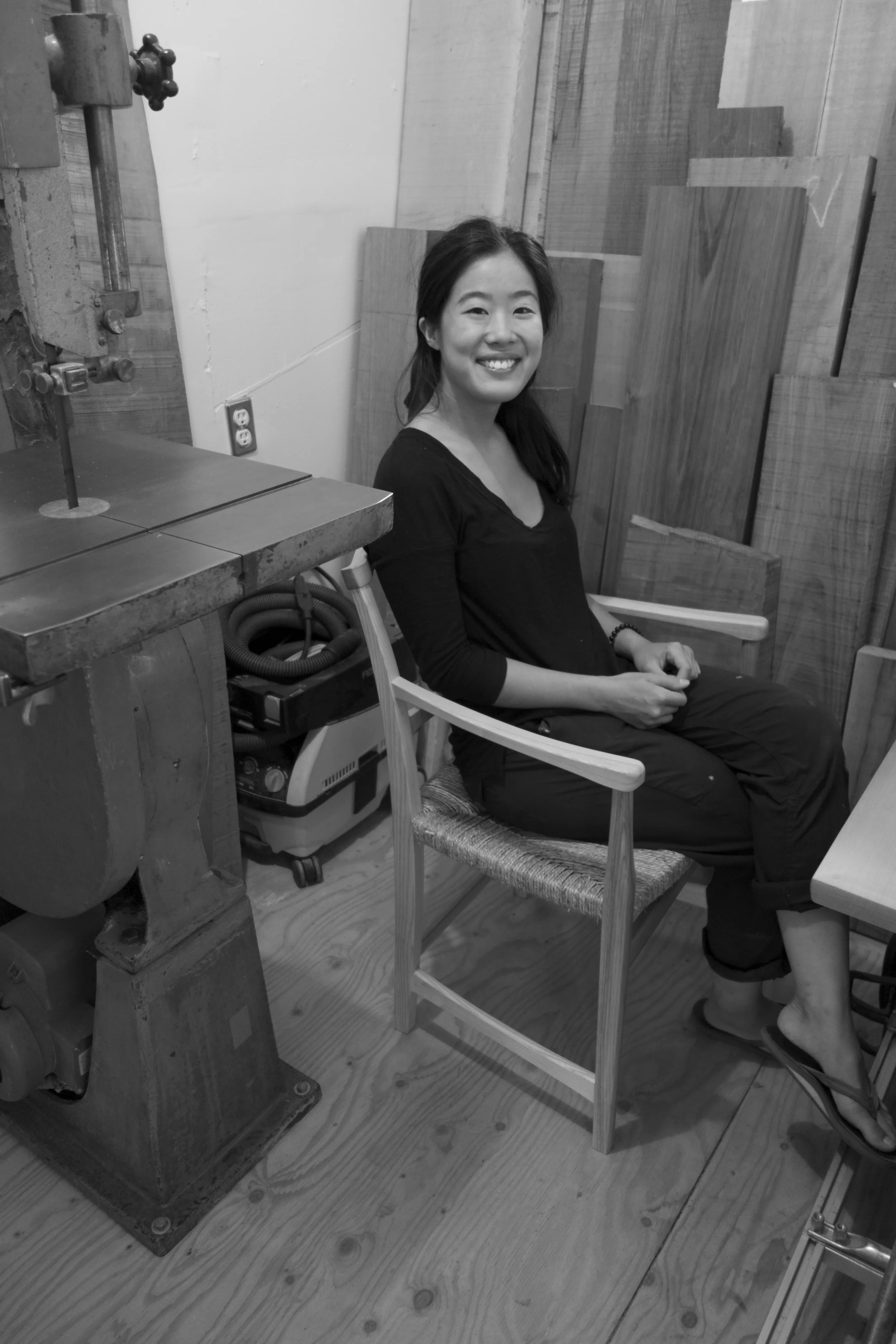
Caroline Woon – Resident Craftsman & Teaching Assistant In the last ten week session, Caroline worked along side Nondas, in Vidar’s Chair Program. I asked her to make another Vidar’s chair, this one for my shop. The chair would be used to demonstrate the process of making the chair. When we spoke about it for the first time, I suggested that, as it is a shop chair, there was no need to finish it completely. One arm shaped, the other off the bandsaw would be fine. During the last break, she delivered it to my shop. As I write this I am sitting in a fine chair that has but one tiny bandsaw mark left, in the top of left arm, which Caroline choose to leave as a reminder of our initial conversation, the rest of the chair is flawless, consistent with her work. This fall she has begun the transition from student to teacher, as she provides our students with individual consults on Thursday afternoons each week, after my afternoon lecture. As I write this, I am so very grateful for her presence at our small school.
Be well and enjoy your work,
Robert -
A Sign
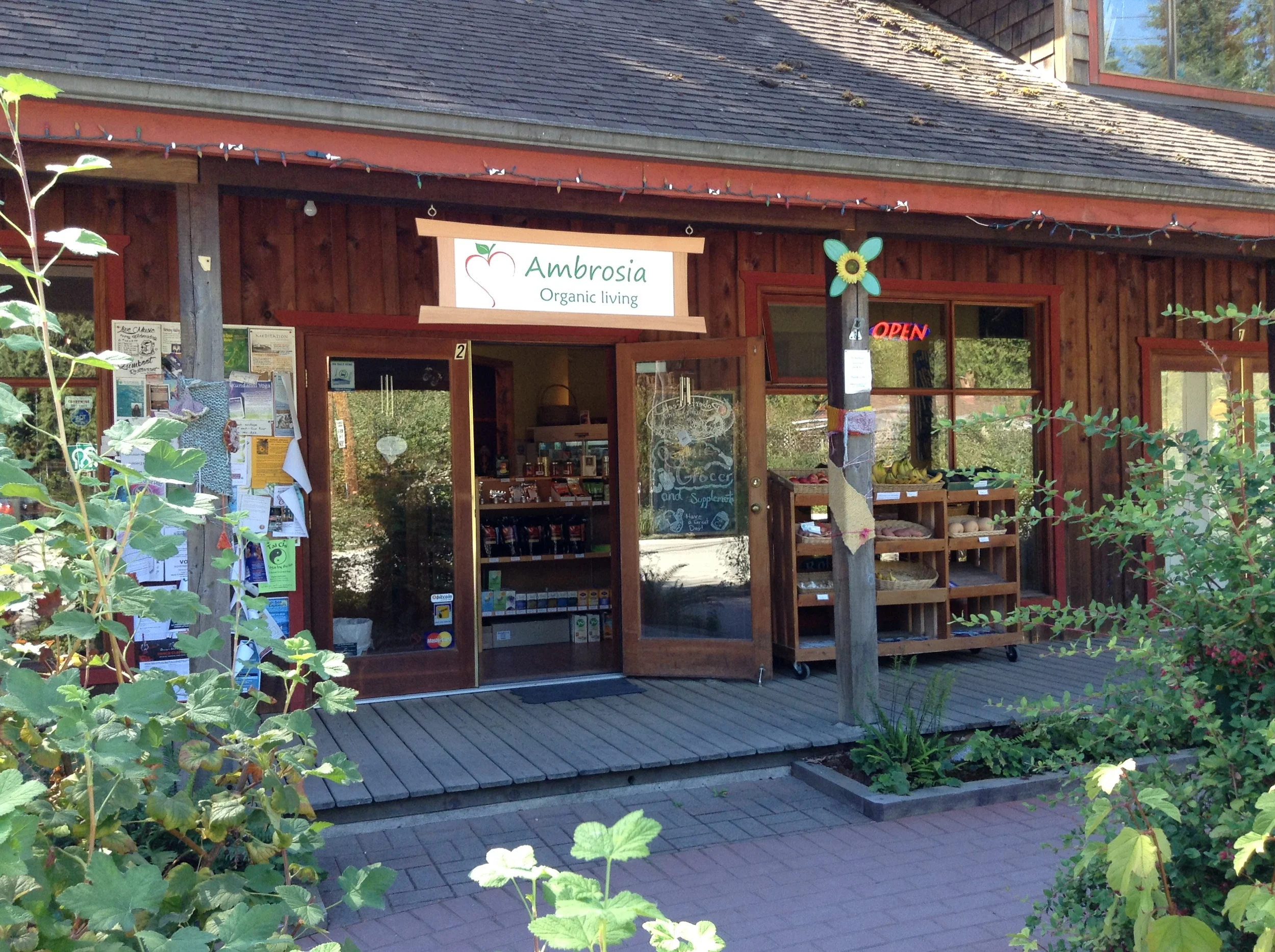
My friend Ian recently asked me to build a sign for the local health food store, which he owns and operates. He gave me couple of lengths of beautiful Douglas Fir and a design he had drawn up… and this week we hung it in front of the store.
I was delighted to do some work for a good friend and an awesome local business just a hundred feet away from the school. I do lots of grocery shopping here as the store carries a great selection of local and organic produce, free range eggs, organic meats, bulk foods, health and beauty products, as well as locally made art, jewellery and gifts. Gladly I received store credit in return – thanks Ian for the awesome exchange!
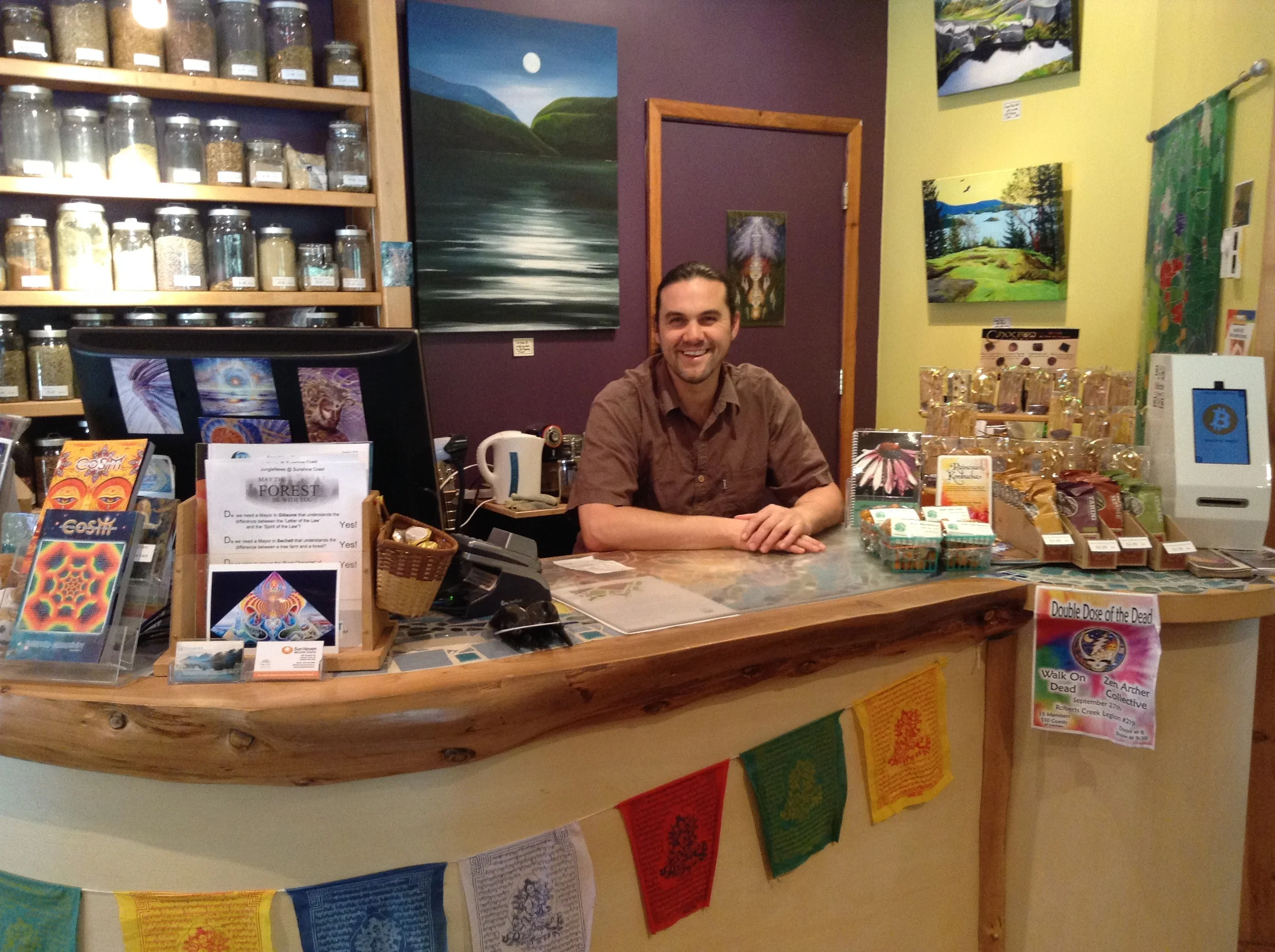
Hello Ian! I really enjoyed this project after working complex angled joinery for some time… nice and simple 90-degree mortise and tenons but at a larger scale than I am used to working. The hardest part was finding a perfectly sized router bit to run the grooves for the panel.
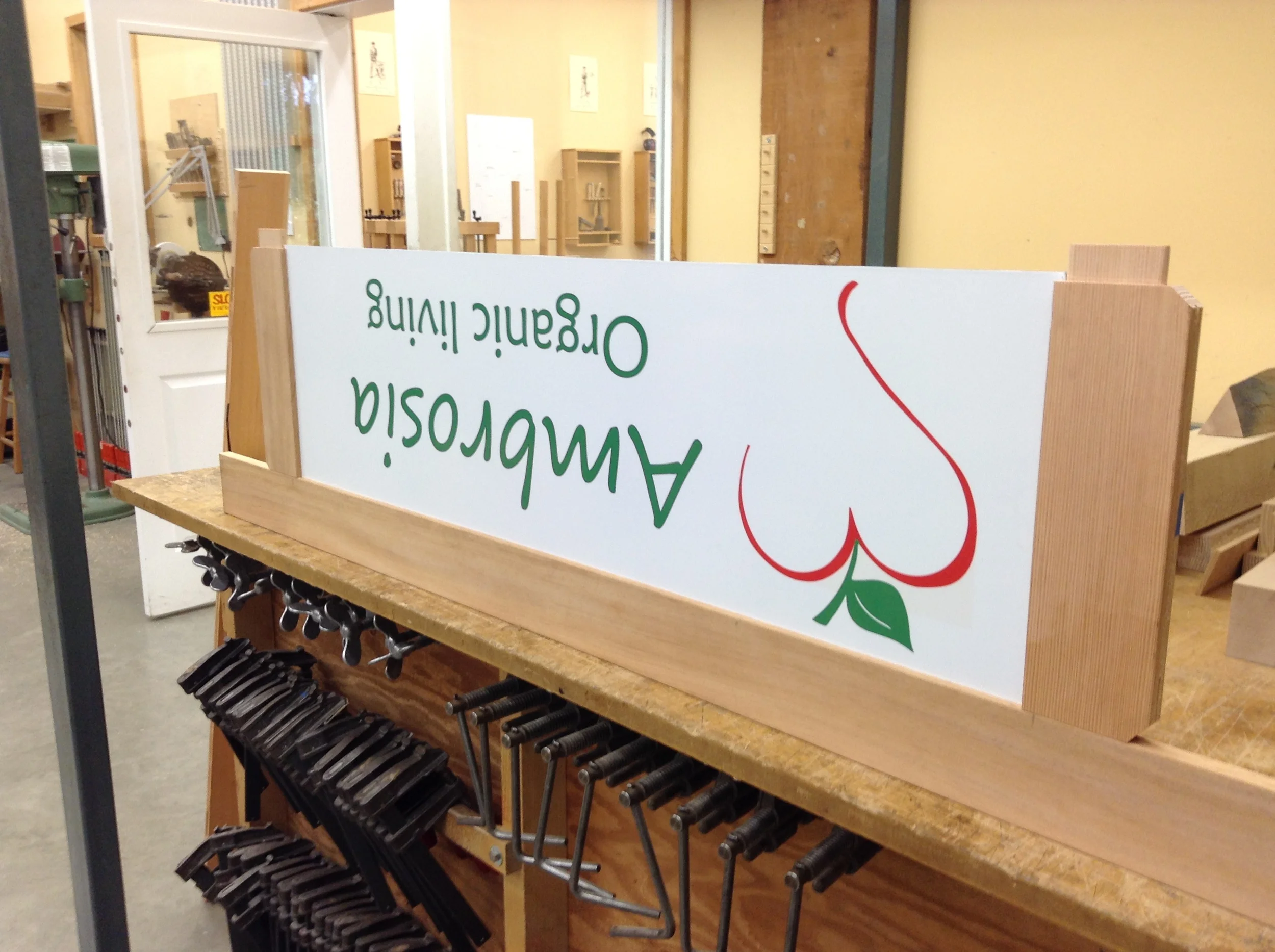
Fitting the panel It was my first time working with Douglas Fir and I found that I loved its smell as I mortised and cut curves on the bandsaw. It was fun planing although it had some sections of reversing grain that tore out deeply even with the lightest cuts, so I scraped and sanded a bit.
Gary, dear friend of the school and relief teacher, gave me some finish intended for outdoor cedar called Cedar Seal. We figured it would work just fine on the Fir and its quick-drying, low-VOCs, one-coat application was highly appealing. It left the wood looking natural and warm after it dried and I was very pleased. Thanks, Gary. It’ll be interesting to observe how it holds up to the rain and sun.
-
The Start
A busy month has passed since my last entry and I am super stoked to be back in the shop this week for our fall session.
On Monday we welcomed a small group of new students to the school, and returning students John and Alberto to the Composing and Upward Spiral programs. It’s wonderful to have you both back.
Thursday signalled the start of something new for me. In the morning I finished weaving the seat of my chair, marking the end of a year and a half of going deep into Vidar’s chair, building another immediately after completing my first one and guiding another student through the process. I felt a great sense of accomplishment to have reached this point, tired and happy.
Then I jumped into my first round of individual consults with the students following the afternoon lecture, which I shall be doing once a week this session. My excitement for this work rose up quickly as I talked to our new students about spokeshaves, my most used and loved tool for this last period of chairmaking. I loved feeling their shared excitement as they got to know their tools, shaping their Gumby legs to gleaming sheared surfaces.
After cleanup, I delivered my chair on foot to Robert’s shop at home, just 300 metres up the road from the school. It gave me great joy to set it down at Robert’s red cedar writing desk, knowing it will live next to JK’s bandsaw, surrounded by planks of precious wood that have been with my teacher for many years.
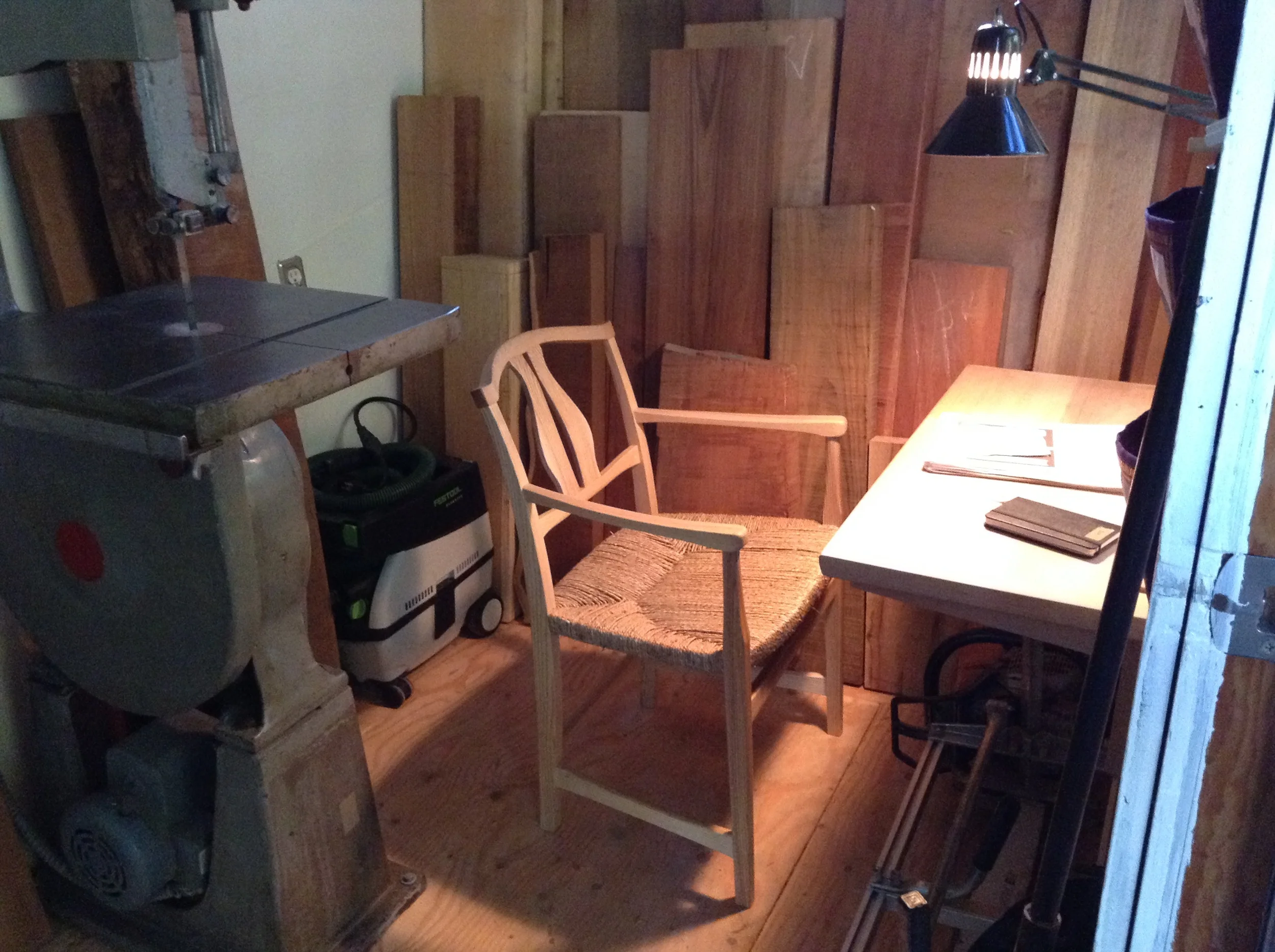
Robert and I then sat down for some tea. Sometime during our discussion of my next project, Robert had an idea, went into his shop and came out with an incredible plank of European boxwood. The wood is hard and heavy, butter yellow, with the smoothest finest grain. Then Robert handed me one of JK’s planes and plane hammer and I took a couple of shavings.
-
Living Simply
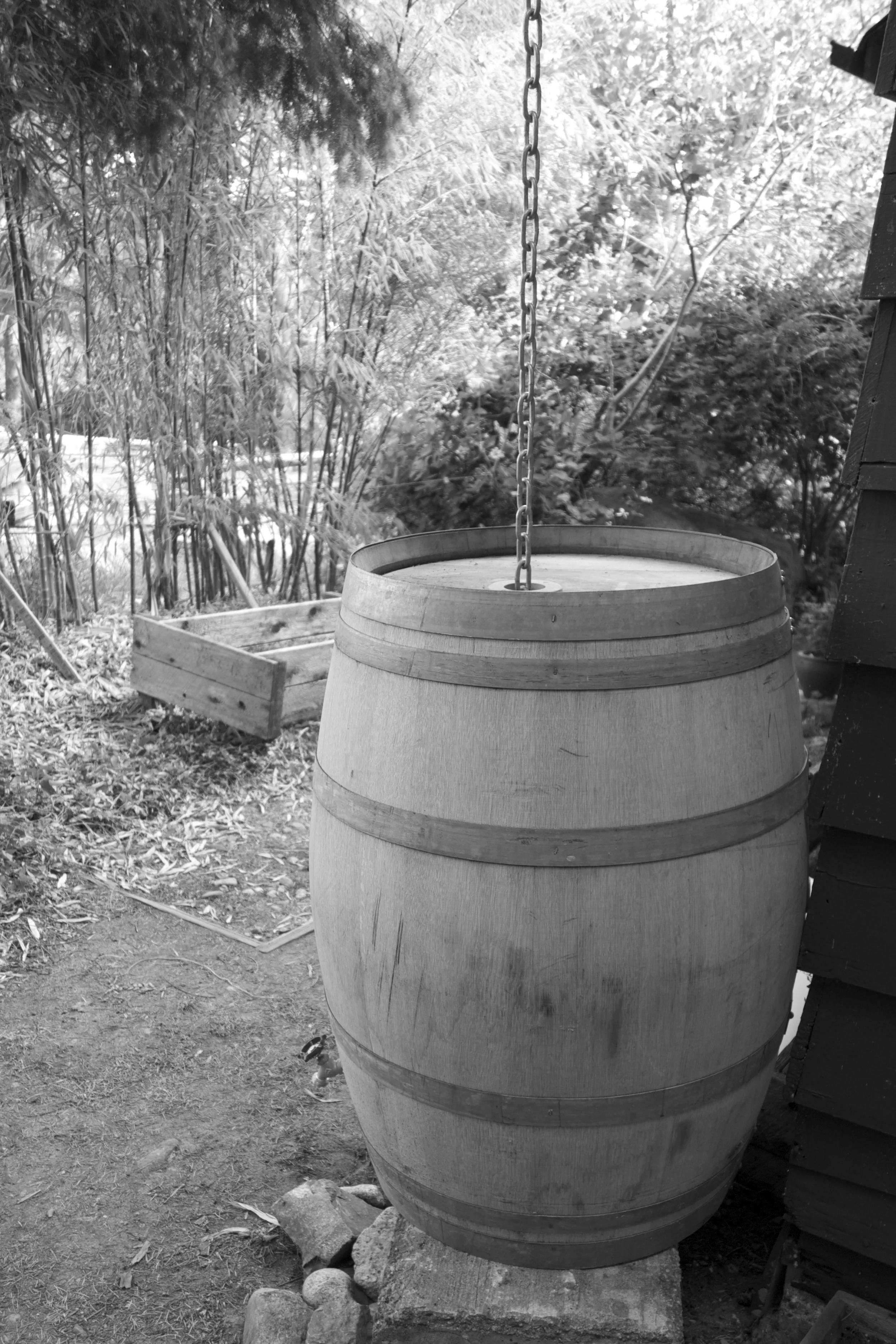
collecting rainwater “I live in a beautiful place. I work at something I love, I make enough money to live, and my demands on the world’s resources are very meagre. What’s so unusual about this idyllic circumstance is that there is plenty of room for more to join.” – John Brown
This is one of my favourite quotes by one of my favourite authors, one I write on the board, at the beginning of each of our sessions, as I really do feel it best conveys what our little school is all about, or perhaps at very least, my hopes for our students. With the doors for my cabinet roughly shaped, and the rest of my stock resawn and resting, I set my work in the shop, and my writing aside and turned my attention to home preparations for the fall.
A few weeks back, when Caroline and I were on the wood run, we picked up a couple of oak wine barrels. This past week, Yvonne and I converted two of them into rain barrels for our home. We have always collected rain water using old buckets and containers, but this gives us more capacity and a simpler solution to changing buckets during the rainy season. We will eventually add two more at the front of our home.
Today, I steered our old 1987 Volkswagen Westfalia out of the shed, and down to the road. It was with a heavy heart, that I put out the For Sale sign. It was two years ago this past May when after doing significant restoration work on it, the transmission went. At the time, having invested significant time and money, we made the decision, to lessen our carbon footprint further, and see if we could survive a year without a vehicle.
We live just a few hundred meters from the school, and the Sunshine Coast has a wonderful public transportation system. Even when I travel to teach, I can pick up a bus across the street from the school in Roberts Creek and arrive at the International Airport in Vancouver in about the same time as it would take to drive. I use the bus to pick up our groceries and other necessities. We use a wheel barrow to move offcuts and heavier items to and from the school. We shop locally, and we were delighted to learn that many of our suppliers deliver for a modest fee. We are able to rent a truck locally to go on wood runs. Meanwhile, two years later, It was easier than we thought, and while I am not naive enough to think that it is for everyone, it fits our lifestyle.
Tomorrow, with the shed nearly empty, we will begin to haul and stack the wood that will keep our little cottage warm in the coming months. As we stack our wood, it is my hope, that John Brown will be smiling upon us.
Be well and enjoy your work,
Robert